Search myodfw.com
Showing 101 - 120 of 903 results
This is your one-stop platform for learning how to hunt and fish in Oregon. Look at the learning opportunities to participate in one or more of the many statewide workshops offered to adults. Enjoy the great outdoors even more by building your confidence and expanding your knowledge! Youth required hunter certification: hunter safety conventional courses and field days Choose between a full conventional course or complete one of the ODFW approved online education courses plus an in-person field day. Sign up for a location, date and time that works best with your schedule. Hunter safety education events are offered year-round…

ROSEBURG, Ore. – Learn how to hunt waterfowl or sharpen your skills in one of three waterfowl hunting workshops in Southern Oregon offered by the Oregon Department of Fish and Wildlife. ODFW hunter education specialists are teaching the workshops: Oct. 3: Klamath Falls, 6 p.m. – 9 p.m., Klamath Wildlife…
SALEM, Ore.— If you are considering registering for a youth pheasant hunt, it is not too late. More slots have opened for many youth pheasant hunts being held statewide this month after duplicate registrations were removed from the system. "We've heard some parents have been unable to sign up their…


Features: Similar to the greater scaup in appearance and habits, but smaller and lacking the white on the primaries. In the field, however, the black-and-white drakes and brown hens are very similar to greater scaups. Habitat: In general, the lesser scaup is more likely to be found in interior or freshwater habitats while the greater scaup is more a coastal bird. Techniques: Scaup are rafting birds attracted to large spreads of scaup decoys. Popular hunting destinations include coastal estuaries and lakes, where most hunters hunt from a boat. However, in the marshes of eastern Oregon, there can be good hunting…


Features: Hungarian partridge have a gray-brown body with reddish brown barring on their wings, back and tail. Their beak and legs are gray. Habitat: In eastern Oregon, the best partridge populations exist in Columbia and Snake River basin counties. Although some birds may be found many miles from farming areas, the bunchgrass and sagebrush foothills adjacent to wheat and other farmlands provide the best habitat and the most stable populations. Technique: "Huns" are swift and challenging birds to hunt, usually bursting from the cover with a startling squeal and clatter of wings. They are typically hunted incidentally to pheasants or…


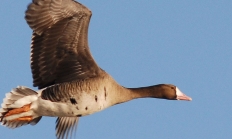
Features: The distinctive white band across the base of their bill gives this goose its name. It is medium in size with a gray and brown body. Adults have d ark brown and black spots on their chests and breasts give this goose the "specklebelly" nickname, while the young of the year birds are a nondescript gray with yellow legs and bills. Habitats: The white-fronted goose grazes on a mixture of grasses and grains. It can often be found in agricultural lands. Techniques: Hunting white-fronted geese is not for the faint-hearted. Scouting is necessary. And since they're mostly found in…
Features: Both the male and female are gray or reddish-brown on the body with dark bars and spots throughout. They have variable tail colors but always have a black band near the tip. Habitat: Ruffed grouse are most commonly found in brushy riparian areas in eastern Oregon and in early-aged mixed woodlands in western Oregon, though birds may be found in pockets of good habitat nearly anywhere. Technique: The ruffed grouse is a bird of the edge, so look in edges of meadows, clearcuts, and where brushy growth meets timber. In September, when most ruffed grouse hunting takes place in…

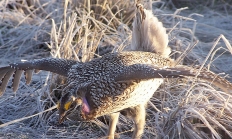
Features: Columbian sharp-tailed grouse are brown-gray with small black and white markings, a white underside, and a short tail that is white at the base. They are a medium-sized grouse. Both the males and females have a yellow-orange comb over each eye. Habitat: Columbian sharp-tailed grouse were historically found in most counties of eastern Oregon. These birds preferred the bunchgrass prairies interspersed with stream bottoms containing deciduous shrubs and trees. This habitat was particularly common in north-central Oregon and the Columbia Basin. Technique: In 1929, Oregon closed its hunting season for sharp-tailed grouse and it has never re-opened. By the…
The lush northwest corner of Oregon offers world class bird hunting -- from waterfowl hunting on the lower Columbia River to ruffed grouse flushing in the foothills of the Cascades. Opportunities abound close to Oregon's major metropolitan areas.

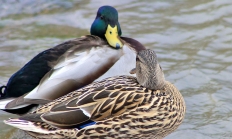
Features: During the fall, winter and spring months, males can be quickly identified by their distinctive iridescent green heads. Females are mottled-brown, with a dark brown stripe through each eye, an orange bill with black splotching and have orange legs. Immature ducks resemble adult females until the males develop more colorful plumage in early fall. After breeding season, males develop duller eclipse plumage beginning in June and resemble hens until mid-September. Wings of both sexes have a violet-blue speculum bordered in front and behind by a pronounced white stripe. Habitat: Mallards are the most common breeding and wintering duck in…