Search myodfw.com
Showing 101 - 120 of 840 results
Species and Subspecies
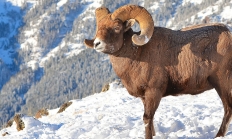
Features: The mountain goat is stockily built with black scimitar-shaped horns, large black hooves and prominent dewclaws, and an entirely white, woolly coat. Habitat: Rocky Mountain goats are found in steep and rugged habitat in eastern Oregon, including the Wallowa, Elkhorn and Strawberry mountains, and the central Cascades near Mt Jefferson. Techniques: Rocky Mountain goat tags are “once-in-a-lifetime” and less than 25 are available each year. Be prepared to hunt their steep, rugged habitat if you are lucky enough to draw a tag.

Species and Subspecies
Features: Oregon is home to more than 6,000 cougars, or mountain lions. Cougars are the largest members of the cat family found in the state and tend to be solitary, except for females raising young. Males in particular are very territorial. Habitat: Cougars are throughout Oregon, with concentrations in the Cascade Range and Blue Mountains. Lately, more cougars are being seen in northwest Oregon including the suburbs of Portland. Techniques: Hunting is open statewide under a general season all year, or until zone quotas are met. Most cougars in Oregon are taken while hunters are out pursuing other species like…

Species and Subspecies
Features: The most distinguishing feature of white-tailed deer is the tail. Whitetails have long, wide tails that can easily be seen, especially when they are startled and raise their tails. White-tailed deer antlers differ from mule and black-tailed deer in that there is one main beam with points coming off. Mule and black-tailed deer have antlers that fork on the main beam. Habitat: White-tailed deer share the same habitat as eastern Oregon’s mule deer. Deer both graze and browse. Forbs and browse (stems and leaves of woody plants) are favored forage during the growing season. Grasses are consumed during some…

Landing page
Big Creek Hatchery began operation in 1941. It was refurbished in 1957 under the Mitchell Act as part of the Columbia River Fisheries Development Program – a program to enhance declining fish runs in the Columbia River Basin. The facility is used for adult collection, egg incubation and rearing of winter steelhead, fall Chinook, and coho.
November 01, 2017
Article
Private lands account for just over half of Oregon's land base and include farms, range lands, wetlands, forests and stream corridors. To improve landowner-hunter relations and engage landowners in the conservation of fish and wildlife, the Oregon Legislature created the Access & Habitat (A&H) Program in 1993. The law established a funding mechanism to provide grants to private landowners, timber and agriculture corporations, sportsmen groups, natural resource agencies, and others for projects designed to increase public hunting access to private lands and/or improve wildlife habitat.
August 19, 2026

Article
The Western Oregon Fee Pheasant Hunts offer new hunters a chance to hone their skills in a hunt that’s close to home and a good chance to bag a bird.
August 31, 2026

Species and Subspecies
Wild turkeys are not native to Oregon but were first successfully introduced in 1961. Since then more than 10,000 turkeys have been transplanted to locations all over Oregon and continue to thrive in most game units through the state. Turkey hunting is a popular activity in Oregon and has grown more than ten-fold since a statewide spring season opened in 1987. Oregon’s six-week spring turkey season is among the most liberal in the United States. Hunters have an opportunity to take up to three gobblers during the spring season and up to two birds during the fall, one of which…

Article
Youth game bird hunt opportunities give young hunters a chance to hunt in a controlled setting with a focus on safety and success. It's a great way to start!
July 8, 2026
Article
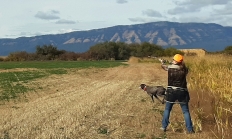
Rules for permits and releasing birds, pursuit seasons and competitive dog trials. Game Bird Release Permit.
December 19, 2025

Press Release
SALEM, Ore.— ODFW will host a series of free upland game bird hunts for youth hunters starting in September. The hunts will take place around the state and youth hunters (age 17 and under) who have completed hunter education by the time of the event can sign up now for…
August 6, 2026
Article
A beginner's guide to waterfowl hunting on Sauvie Island - Hunting in the Eastside Unit. Part 2 of a 5 part series.
Article
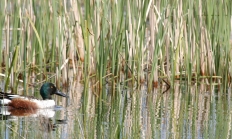
A beginner's guide to waterfowl hunting on Sauvie Island - an introduction. Part 1 of a 5 part series.

Zones or Areas
The transition from forested foothills of Mt. Hood to the beginnings of the Columbia Basin offers big game hunters an array of opportunities. The challenge can be finding public land or getting permission to hunt on private land.
Zones or Areas
This vast area covers the Columbia Basin through the Blue, Wallowa and Elkhorn mountains to Hells Canyon. Some of Oregon's most prized big game hunts are managed in this area.

Zones or Areas
Southeast Oregon, with its ponderosa pine forests, sage steppe expanses and aspen pocked mountains, is a very popular area to hunt mule deer, elk and pronghorn antelope.

Zones or Areas
This area extends from the eastern flanks of the Cascade Range through the Ochoco Mountains to the beginning of the Great Basin, making it a great place to explore.

Species and Subspecies
Features: Overall, medium-gray with a white underside. Gray, bushy tail has a white "halo." Habitat: It is commonly associated with mixed forest communities in central Wasco, Jefferson, Deschutes, and Klamath counties west, except for unforested portions of the Willamette Valley, to central Washington, Benton, Lane, Douglas, Coos, and Curry counties. It is active at all seasons and exhibits diurnal activity almost exclusively. Techniques: Most hunters use a small caliber rifle, and aim for the head to avoid ruining the meat.

Species and Subspecies

Species and Subspecies