
Search myodfw.com
Showing 121 - 140 of 408 results
KLAMATH FALLS, Ore. – ODFW is taking steps to protect native redband trout by requiring catch-and-release fishing for them and flies and artificial lures only (no bait) for all species from June 15 to Oct. 31 on Upper Klamath Lake and spring-fed creeks that feed into it. The waterbodies impacted…

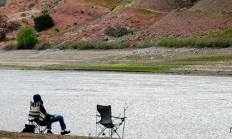
CLACKAMAS, Ore.— Anglers will be able to use their two-rod validation in the Willamette River for hatchery spring Chinook and all other fish except sturgeon from June 3-July 31. Two rods were not originally authorized on the Willamette River this year because the forecasted return of hatchery-origin adult spring Chinook…
SALEM, Ore. – Anglers will have additional chances to fish for wild coho this November as ODFW announces extended fishing opportunities in the Siletz, Yaquina, and Alsea river basins. At the request of the Oregon Fish and Wildlife Commission, ODFW staff evaluated the potential for additional fishing days beyond the…

Oregon's recreational fisheries for Pacific halibut and bottomfish are constrained by bycatch of yelloweye rockfish, an overfished species. Many of the regulations on these fisheries exist to keep bycatch of yelloweye rockfish within sustainable limits, in order to help the stock recover (for example, depth restrictions in the bottomfish fishery, and no lingcod during offshore long-leader trips). ODFW encourages anglers to reduce impacts by using descending devices to release yelloweye rockfish, and better yet, to avoid areas where they might be caught.
SPRINGFIELD, Ore.— The Commission voted 6-1 to deny a petition that requested crab fishery rules be modified to further reduce the risk of whale entanglement, while urging the department to continue its planned rulemaking process and engagement with NOAA fisheries to obtain ESA coverage. Whale entanglements have increased in Oregon…
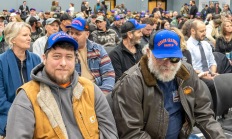
The Columbia River is renowned for its salmon and steelhead runs. In a year of good returns, over 1 million Chinook, coho and sockeye salmon, and summer steelhead travel up the river to spawn in its tributaries. Less known are the river’s excellent smallmouth bass and walleye fisheries. While most anglers fish this large river from a boat, there is plenty of good bank access at various parks, boat launches and beaches.
Klaskanine Hatchery was first operated in 1911 by the state of Oregon. In 1959 the hatchery was enlarged and renovated under the Columbia River Fisheries Development Program (Mitchell Act)—a program to enhance declining fish runs in the Columbia River Basin. The hatchery is now closely tied to the Select Area Fisheries Enhancement (SAFE) program and works closely with Clatsop County Fisheries (CCF). The facility is currently used primarily for rearing coho for SAFE commercial fisheries, as well as for adult collection and spawning of fall Chinook and as a rearing facility for fall Chinook and winter steelhead.
Enterprise, Ore. – Beginning Friday, Sept. 19 through Friday, Oct. 31, harvest of wild adult Chinook salmon (non-adipose clipped, ≥ 24 inches) will be closed in the Snake River from the Oregon/Washington border upstream to Hells Canyon Dam. During this period, anglers may continue to harvest adipose-clipped (hatchery) fall Chinook…
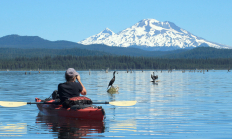
ODFW Marine Fisheries Research team is headed to Cobb Seamount with two Oregon State University collaborators to search for old female rockfish. The crew will be on The Pacific Storm, a former commercial trawler gifted to OSU and reconfigured as an oceanographic research vessel. Photo courtesy of OSU's Marine Mammal…
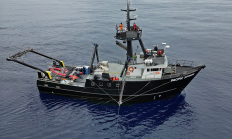
Oregon's 33 hatcheries produce about 40 million fish annually and you can visit them. They offer the chance to see fish – from eggs to brooders – and an opportunity to learn how they are raised. Oregon's hatcheries are important for anglers and the public because they directly provide fish for angling, help rebuild native fish populations, and offer educational programs. They are also vital to supporting the cultural heritage of Tribes. Hatcheries offer great wildlife viewing, interpretive displays and some provide boating and angling access. Did you know that ODFW rears 10 species of fish including steelhead/rainbow trout, brook…
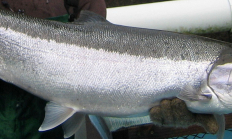
NEWPORT, Ore – Pacific halibut angling opens Aug. 17, Sundays through Friday through Sept. 30 or until quota is reached in the Columbia River subarea (Leadbetter Pt., WA to Cape Falcon, OR) all-depth fishery. The daily bag limit is one Pacific halibut. The Columbia River subarea received a 5,000-pound allocation…
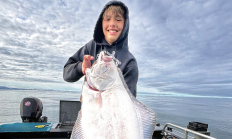
ENTERPRISE, Ore. – Anglers may retain only one wild Chinook as part of the three adult daily bag limit for fall Chinook salmon per day when the season opens on the Snake River tomorrow, Aug. 18. All other permanent regulations remain unchanged. ODFW is adjusting regulations for the 2026 fall…
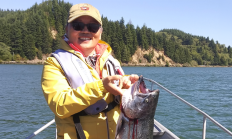
LA GRANDE, Ore. – Lookingglass Creek, a tributary to the Grande Ronde River at Palmer Junction, will open for spring Chinook fishing Wednesday, June 18 through Sunday, June 29. The open area is from the mouth upstream to the confluence of Jarboe Creek. After early season projections made it appear…