Search myodfw.com
Showing 1381 - 1400 of 1415 results
Find the latest fish counts across the state.
The Angler Education Program introduces sport fishing to beginners with an emphasis on youth and families. Programs are designed to provide a basic understanding of aquatic ecosystems and help people develop the skills, knowledge and responsibilities associated with angling. More information about ODFW Angler Education Program
Year round opportunities
Statewide
Cascade Hatchery was authorized under the Mitchell Act and began operating in 1959 as part of the Columbia River Fisheries Development Program – a program to enhance declining fish runs in the Columbia River Basin. The facility is used for egg incubation and rearing of coho.
The Sherars Falls Adult Salmon and Steelhead Trap is located at river mile 43 on Oregon's Deschutes River. The trap captures an unknown proportion of adult fall Chinook salmon and summer steelhead that are passing over Sherars Falls. Visit Lower Deschutes Wildlife Area
Clackamas Hatchery began operation in 1979 and is used for adult collection, egg incubation and rearing of spring Chinook and winter steelhead, rearing of coho and acclimation of summer steelhead.
Klaskanine Hatchery was first operated in 1911 by the state of Oregon. In 1959 the hatchery was enlarged and renovated under the Columbia River Fisheries Development Program (Mitchell Act)—a program to enhance declining fish runs in the Columbia River Basin. The hatchery is now closely tied to the Select Area Fisheries Enhancement (SAFE) program and works closely with Clatsop County Fisheries (CCF). The facility is currently used primarily for rearing coho for SAFE commercial fisheries, as well as for adult collection and spawning of fall Chinook and as a rearing facility for fall Chinook and winter steelhead.
ODFW's legislatively adopted 2025-27 budget did not include funding to continue the operation of Salmon River Hatchery. The hatchery is shifting fish production to other facilities but will remain open for public/fishing access with a volunteer host and occasional staff on site. Learn more.
The following list of landmarks and regulatory boundaries have been used in ocean salmon fisheries seasons in recent years and may affect Oregon anglers directly. Some of the listed landmarks are not currently in use. Generally, regulations note a specific landmark, and the management/regulatory line is an East-West line of latitude from that landmark.
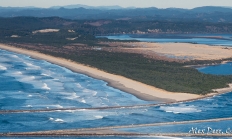
Construction of this facility began in 1924 and production started in 1925 by the state of Oregon. Various renovations have taken place with the most recent being the addition of 4 new fish rearing raceways and improvements to the pollution abatement system which was completed in 2016. Other renovations made throughout the hatchery have utilized the Restoration and Enhancement Program.. The purpose of this facility is to enhance spring Chinook, winter steelhead, summer steelhead, and coho populations for various coastal streams. The facility is used for adult collection, egg incubation and rearing of spring Chinook, fall Chinook, winter steelhead, summer…
The Columbia River is renowned for its salmon and steelhead runs. In a year of good returns, over 1 million Chinook, coho and sockeye salmon, and summer steelhead travel up the river to spawn in its tributaries. Less known are the river’s excellent smallmouth bass and walleye fisheries. While most anglers fish this large river from a boat, there is plenty of good bank access at various parks, boat launches and beaches.
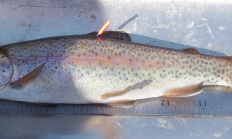
Fish counting through Willamette Falls fishway occurs at the main viewing window. Video cameras and time lapsed video recorders are used to record fish passage 24 hrs/day, 365 days/year. Our schedule for reviewing the tapes is Monday through Friday.