Search myodfw.com
Showing 141 - 160 of 220 results
Features: While in the ocean, Chinook salmon often have a purple hue to their backs with silvery sides and bellies, large oblong black spots on the back, and round black spots on both lobes of the tail (note that tail spotting may be obscured in ocean fish by “silver” in the tail). Upon returning to freshwater to spawn, Chinook darken in color and develop red on their bellies and fins. A key identifier is the black gum line on the lower jaw with dark colors both inside and outside of the gum line. Spawning generally occurs from August to early…
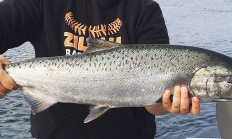
Features: When in the ocean coho salmon can look very similar to Chinook salmon . However, coho will have a white gum line on the lower jaw with darker color both inside and outside of the gum line, and will only have spots on the upper lobe of their tails. When coho return to freshwater they become red on their sides and dark greenish on their backs, heads, and fins. Coho adults may reach 25 pounds or more, but rarely exceed 15 pounds. Habitat: Small, relatively low-gradient tributary streams with pea to orange-sized gravel for spawning and juvenile rearing. Coho…

Features: Smallmouth bass are golden green to bronze with dark vertical bars and blotches on the side. The upper jaw does not extend beyond the eye. In some locations, it has a red eye. Somewhat smaller than the largemouth, smallmouth bass in Oregon may reach 23-inches and exceed 7 pounds. Habitat: Smallmouth bass are adapted to flowing waters and do well in warm streams with deep holes and rocky ledges. They also prefer lakes and reservoirs with rocky shorelines and limited vegetation. Adult smallmouth feed mostly on fish and crayfish. Technique: Much of what was written about largemouth bass also…

Features: Redear sunfish are often confused with bluegill, but differ by having a red or orange border around the black ear flap and by lacking the spot on the dorsal fin and the vertical bars on the side. Habitat: In Oregon, redear sunfish are found only in a few ponds in the Willamette Valley and the central part of the state. In their native range, redear sunfish prefer warm, large lakes and reservoirs and bayous with vegetated shallow areas and clear water. They feed primarily on the bottom and seldom take surface insects. The diet consists mostly of zooplankton, insect…

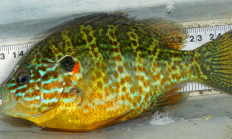
Features: Pumpkinseeds may be identified by the orange or red spot on the ear flap and the orange cheeks with wavy blue or turquoise stripes. Color is exceedingly brilliant and somewhat variable; olive to brassy-green above, the back finely dusted with gold or emerald. Habitat: Pumpkinseeds are found in the same habitats and often in association with bluegills. Adults often congregate beneath old deadheads and trees that have fallen into the water. Food habits are also similar to bluegill. They consume large numbers of snails by browsing on the stalks of aquatic vegetation. Techniques: Pumpkinseed are found in many of…
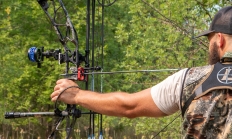
CENTRAL POINT, Ore. – The Rogue-Siskiyou National Forest is temporarily closing the Huckleberry Mountain area in the High Cascades Ranger District Aug. 22-31 for Tribal ceremonial purposes. Rogue Unit general archery hunters should be aware of the closure over the archery opening weekend, Aug. 30-31. For more information on the…
Features: Bluegills are distinguished from other panfish by the black ear flap and black spot at the rear base of the dorsal fin. Five to eight greenish, vertical bars are faintly visible on their sides. The body is olive-green in color, bluish above and silvery below. Breeding males develop a bright orange to red flush on the throat area. Adults in most waters measure 5- to 8-inches, but the state record bluegill exceeded 12-inches. Habitat: Bluegills prosper in clear, clean ponds, lakes and backwaters of slow streams with abundant vegetation. They feed on both plant and animal life, but primarily…


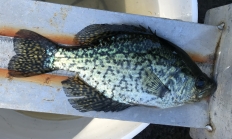
Features: Black crappie are silvery in color with numerous black or dark green blotches and no distinct vertical bars. This results in a darker overall color than seen in white crappie. The forehead is dished, but not as much as in the white crappie. The dorsal fin usually has seven or eight spines and its length is equal to or greater than the distance between the dorsal fin and eye. Habitat: Black crappie do best in clear waters of medium-sized lakes, reservoirs and large slow moving streams. They are less tolerant of flowing and muddy water than white crappie and…
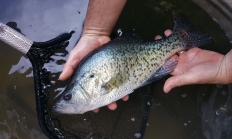
Features: White crappie are often confused with black crappie. White crappie have silvery bodies with blackish-green mottling forming narrow vertical bars on the sides. The forehead is more dished than in the black crappie. The dorsal fin has five or six spines and its length is less than the distance between the dorsal fin and eye. Habitat: White crappie do best in larger lakes and reservoirs and are more tolerant of turbidity and less dependent on aquatic vegetation than black crappie. They congregate around pilings, sunken logs, underwater brush, weed beds and rocks. White crappie begin life feeding primarily on…
The E.E. Wilson Wildlife Area came into existence in 1950 when the U.S. Government gave quitclaim title to the property to the Oregon Department of Fish and Wildlife. The wildlife area covers approximately 1,788 acres, is located on Highway 99W about 10 miles north of Corvallis and is situated on the Willamette Valley floor. SHOTGUN RANGE BACK OPEN AS OF LATE OCTOBER 2025: The renovation is complete and the shotgun range is back open. Improvements include: four times as many shooting lanes, fully paved ADA-compliant walkway with pullouts that will make it easier for disabled shooters, a new covered pole…
Prineville Reservoir Wildlife Area came under the shared management of the Oregon Department of Fish and Wildlife & United States Bureau of Reclamation in 1962. It is managed for the protection and enhancement of wildlife habitat, big game winter range, improving riparian wetlands, and to promote wildlife stewardship. Goals of the PRWA include creating recreational opportunities for viewing and enjoying wildlife, including mule deer, bald eagles, and a variety of waterfowl. Boating, hiking, and camping are a few popular activities permitted in the wildlife management area. Hunting and fishing opportunities are also available within Prineville Reservoir Wildlife Area, as regulated…

The Columbia Basin Wildlife Areas are a composition of four Oregon Department of Fish and Wildlife (department) managed wildlife areas located along the Columbia River, in the Columbia Basin. The four wildlife areas (Power City, Irrigon, Coyote Springs and Willow Creek) are within the Columbia Plateau ecoregion. Management agreements for these areas were initially established between 1971 and 1977 between the department and Federal agencies which own the lands. The Columbia Basin Wildlife Areas, which total approximately 1,885 acres, provide an important landbase for the conservation and recreation of fish and wildlife within a highly privatized and altered landscape and…
The Columbia Basin Wildlife Areas are a composition of four Oregon Dept. of Fish & Wildlife managed wildlife areas located along the Columbia River in the Columbia Basin. The four wildlife areas (Power City, Irrigon, Coyote Springs, and Willow Creek) are within the Columbia Plateau ecoregion. Management agreements for these areas were initially established between 1971 and 1977 between the department and Federal agencies which own the lands. The Columbia Basin Wildlife Areas, which total approximately 1,885 acres, provides an important landbase for the conservation and recreation of fish and wildlife within a highly privatized and altered landscape and play…
SALEM, Ore. - Oregon's Fish Passage Task Force will meet Thursday, October 16 from 8:00 a.m. to 12:30 p.m. at the Red Lion, 1313 N Bayshore Dr, Coos Bay. The meeting will be open to the public. Members of the public who are interested in the meeting are encouraged to…