Search myodfw.com
Showing 141 - 160 of 840 results


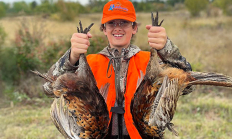
Events in Coquille, Central Point, Monmouth, Eugene, Irrigon, John Day, Klamath Falls, La Grande, Madras, Portland, Tygh Valley SALEM, Ore.—Youth hunters (age 17 and under) who will have completed hunter education by the time of the event can sign up now for ODFW's free pheasant hunts happening around the state…

Find the weekly statistics for waterfowl and upland game birds for E.E. Wilson Wildlife Area. More information about E.E. Wilson Wildlife Area

Features: Valley quail are often detected by their distinctive call which seems to say "Chicago". They are a covey-loving bird and wintering groups may number over 100. They are gray to brown with intricate scaling in the feathers on the belly. Their top knot droops forward toward the beak. Habitat: Valley quail are among Oregon's most widely distributed game birds. They may be found associated with agricultural and urban areas, as well as in riparian habitats located miles from human habitation. Within these areas, however, valley quail habitat needs are rather specific. Valley quail feed on a wide variety of…

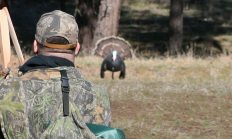
ROSEBURG, Ore. – ODFW is hosting turkey hunting workshops around the state in April for both youth and adults. If you're a new hunter, or new to turkey hunting, consider joining us for a day of learning more about turkey hunting. Youth workshops April 4 workshops at Denman Wildlife Area…
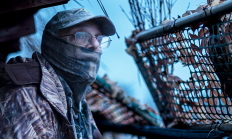
Features: Similar to the greater scaup in appearance and habits, but smaller and lacking the white on the primaries. In the field, however, the black-and-white drakes and brown hens are very similar to greater scaups. Habitat: In general, the lesser scaup is more likely to be found in interior or freshwater habitats while the greater scaup is more a coastal bird. Techniques: Scaup are rafting birds attracted to large spreads of scaup decoys. Popular hunting destinations include coastal estuaries and lakes, where most hunters hunt from a boat. However, in the marshes of eastern Oregon, there can be good hunting…

The information provided here is intended to help you get an idea of your odds of drawing a reservation in the Eastside and Oak Island hunt areas. First off, the number of permits available in each hunt unit does change throughout the season. See the NUMBER OF RESERVATIONS AVAILABLE FOR EASTSIDE AND OAK ISLAND UNITS link to view the number of permits that are available for each unit and hunt period.
Features: In breeding plumage, green-winged drakes have a cinnamon-colored head with a green eye-stripe, gray back, flanks, and a bright patch of iridescent green on the rear of the wing (speculum). Hens are brown with a green speculum. Habitat: Green-winged teal are primarily winter migrants in Oregon. They are puddle (dabbling) ducks that prefer shallow areas like ponds and marshes, where they feed on or near the surface of the water by tipping up. Techniques: Teal are early migrants that begin arriving in Oregon in August but will continue to arrive into November. There are good early season hunts in…

Features: A medium-size goose, adult snow geese are white with black-tipped wings that are visible in flight. Their pronounced pink bill has a dark "grinning" patch across it, and they have pinkish feet. Young of the year snow geese are grayish white with grey legs and bills. These birds are very vocal and can be heard over a mile away. Habitat: Snow geese are well-adapted to agricultural land. They can also be found in wetlands, roosting in open water. Sauvie Island, Summer Lake and Klamath wildlife areas have abundant snow goose populations during various times of year. Technique: Snow geese…

More information about Klamath Wildlife Area
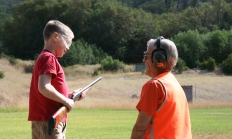
ROSEBURG, Ore. – Learn how to hunt waterfowl or sharpen your skills in one of three waterfowl hunting workshops in Southern Oregon offered by the Oregon Department of Fish and Wildlife. ODFW hunter education specialists are teaching the workshops: Oct. 3: Klamath Falls, 6 p.m. – 9 p.m., Klamath Wildlife…