
Search myodfw.com
Showing 181 - 200 of 399 results
Much variability in coloration exists in the common garter snake but the best identifying characteristic is a stripe down the middle of the snake's back. While the common garter snake frequents wet meadows and forest edges, it occurs in a variety of habitats far from water, including open valleys and moist coniferous forest. Smaller snakes eat earthworms, but adults feed on a variety of vertebrate prey, including frogs, toads, salamanders, birds, fish, reptiles, and small mammals. Invertebrates, including slugs and leeches, are also eaten. Photo by Dave Budeau, ODFW

Features: These fish are olive green to dusky-brown with some light mottling towards their top sides. Their fin membranes are yellow. Habitat: Yellowtail rockfish will usually be found in offshore waters and often suspended over deep reefs and rocky habitat to as deep as 900 feet. Technique: Best success will be by first locating suspended schools of yellowtail rockfish in offshore areas during periods open for fishing offshore, and then working rubber tail jigs or shrimp flies through the schools.



Features: The widow rockfish is brassy brown with a light colored belly. Their fin membranes are also brown. They can grow to be 21-inches long. Habitat: Widow rockfish school down to 1200 ft., usually found suspended over offshore reefs and rocky areas. Technique: Best success will be by first locating suspended schools of widow rockfish in offshore areas during periods open for fishing offshore, and then working rubber tail jigs or shrimp flies through the schools.

In 1925 the first fish hatchery on the South Santiam River began operations about 5 miles upstream from today’s present site, rearing annually approximately 100,000 spring Chinook in dirt ponds for release into the South Santiam River. The present site came about with the construction of Foster Dam. In 1968 the facility was dedicated for the rearing of spring Chinook and summer steelhead. This facility was built and annually funded in part by the US Army Corps of Engineers to compensate for the loss of spawning and rearing areas above the dams on the South Santiam River.
Features: The redstripe rockfish appears red and pink. The dorsal fin is shallowly notched and the lateral line is a distinct red stripe. It has dark lips, a protruding lower jaw, and greenish stripes radiating from the eyes. Habitat: Commonly found over high-relief, rugged bottoms from 500 feet to 900 feet below the surface. Technique: Best success will be by first locating suspended schools of redstripe rockfish in offshore areas during periods open for fishing offshore. Work rubber tail jigs or shrimp flies through the schools.
Hunting opportunities abound in the densely forested southwest corner of Oregon. From the beautiful, ragged coastline through the Siskiyou Mountains to Crater Lake National Park, there is something for every game bird hunter.
This is a one-day training course designed for hunters who want to shoot farther when conditions and skill allow. This course emphasizes ethical shot execution and practical field positions with mid-to-long range targets.
May & June
Multiple locations


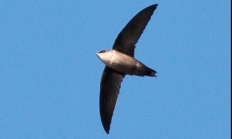
This small swift is best known for its quick flight and dazzling aerial agility, perching only when nesting or roosting. It is aerodynamically designed for fast speeds with long, pointed wings, short stout legs, and a compact body. The Vaux's swift is a transient and summer resident nesting in older forests and brick chimneys statewide except the southeast part of Oregon. Hear the call of the Vaux's swift Photo by Julio Mulero, Flickr
With its long, forked tail and long wings, it is the most graceful of all land birds and reminds one of the smaller terns not only in shape but in behavior. The Barn swallow has taken so completely to nesting on human-made structures that one forgets they were once restricted to caves and rock crevices. Almost every farm in the state has a pair or two nesting in an outbuilding, and very few bridges do not have a pair or two. It is the best known of the swallows. It is a fairly common to locally abundant summer resident and…

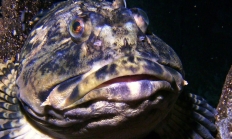
Features: Cabezon are a dark green to dark brown with mottling along their sides and with smooth, scaleless skin. The largest cabezon caught was over 20 pounds, but on average they weigh approximately 4 pounds. Habitat: Cabezon live around kelp beds and rocky headlands over hard bottoms. Technique: Cabezon are best caught using rubber tailed jigs tipped with bait. Make sure you are fishing within just a foot or two of the bottom as Cabezon like to hold tight to cover. CAUTION: While Cabezon meat can be safely consumed, its roe is poisonous to humans. Photo credit: Brandon Ford
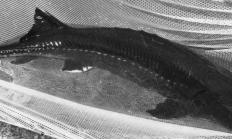
Skuas are the size of a Western gull, dark with a pale nape and large white patches on the bases of the primaries on both the upper and lower surfaces. This is a solitary bird. Its flight is low and direct with heavy flapping and little gliding. It steals food from other seabirds, and is aggressive, bordering on predatory. It may grab a shearwater's head, wing, or tail and shake and kick the bird until it regurgitates its food. Chances of detection are best around flocks of shearwaters feeding behind fishing boats. It is a rare to uncommon fall transient…
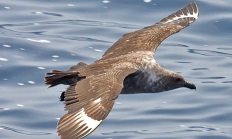
This striking songbird is best known for its habit of impaling prey on thorns and barbed wire, or wedging items in a v-shaped branch for easier handling and storage. The Loggerhead shrike breeds in open habitats east of the Cascades where they are rare but regular in the winter, especially at low-elevation sites. They are uncommon and declining in northeast Oregon. West of the Cascades, there are usually a few records each year during fall, winter, and spring in open habitats of the coast and the Willamette, Umpqua, and Rogue valleys. The Loggerhead shrike is an Oregon Conservation Strategy Species…

Brown creepers are the only North American birds that rely on both the trunk and bark of trees for both nesting and foraging. They are small birds, about five inches in length, and have a long, slender, down-curved bill used to probe for insects hidden in the furrows of tree bark. Their brown back, streaked with white, makes creepers on of the best-camouflaged girds of the forest. They most often forage upward from the base of a tree, using their long, stiff tail for support. The Brown creeper breeds and winters throughout forested areas of Oregon, from the coast to…

Features: The females are freckled all over with small reddish-brown to golden spots on gray to brownish background. Their fins are mostly yellowish-orange. The males are gray to brownish-olive, with irregular blue spots on the front of their bodies; each spot is surrounded by a ring of small reddish-brown spots. The inside of this species' mouths are yellowish. Habitat: Kelp greelings can be found to depths of 150 feet. They prefer rocky inshore areas and are common in kelp beds and on sand bottoms. Technique: It is best to target kelp greenlings by placing a line near the base of…
