

It's gonna be a hot one—for people and for fish this year. Oregon's snowpack is at a record-breaking low this year and most of the state is in moderate to extreme drought as of June 2026.
That will present challenges for cold-water fish, like trout and salmon. Warm and low water makes them more vulnerable to disease and may prevent migratory fish, like salmon and steelhead from reaching spawning grounds. Fish passage projects, habitat restoration work and other efforts that make migratory fish less susceptible to drought continue to be a high priority for the agency and partners. Projects are ongoing statewide.
On the other hand, Oregon's warmwater game fish can thrive in the summer heat. This means there is always something to fish for, no matter how hot and dry summer 2026 may get. ODFW has been working to improve warmwater fishing opportunities statewide through warmwater fish habitat projects in ponds, stocking of warmwater fish species in appropriate water bodies, and monitoring lakes/ponds around the state for the most up-to-date warmwater fish population trends.
High lakes are also a great option this summer, especially when it is hot in the valleys. Waters will be cooler in high mountain areas but they too will have less and warmer water due to the drought. If you are catch and release angling, it would be best to fish in the early morning hours when water temperatures are cooler.
If you are launching a boat or kayak, check for access before you go because water levels may get very low. Your best bet is to contact the land manager for the latest conditions but Oregon State Marine Board's page also provides some information.
Here are some things to keep in mind before fishing this summer:
Regulations could change so check before you go.
High water temperatures and low flows can be downright deadly to Oregon's trout and salmon. ODFW monitors conditions and makes changes to angling regulations as necessary.
So, this summer it's critical to not just check the regulations booklet. Be sure to check ODFW's in season regulation updates page for your zone before fishing or tap each zone below to find more details.
Already this year, there are some changes related to drought:
- Bag limits lifted at several reservoirs Thief Valley Reservoir, Pilcher Creek Reservoir, and Wolf Creek Reservoir
- In Klamath Basin, a switch to catch-and-release only and no bait for redband trout (aka rainbow trout in the regulations). Ongoing drought conditions and other factors have led to low numbers of spawning trout.
ODFW does not anticipate implementing "hoot owl" closures this year (which close fishing in early afternoon to avoid fishing pressure during the hottest times of the day.) Studies have generally shown these restrictions to be ineffective at reducing fish mortality, as angler's participation in fishing and ability to catch fish already declines with warmer temperatures.
Disease is more likely during drought.
Low stream flows and high air and water temperatures tend to invite disease for cold water species like salmon. Fish biologists will be on the lookout for columnaris, a disease that affects salmon and steelhead in warmwater conditions by attacking their gills and respiratory system, this summer and fall.
"The drought-like weather we've been experiencing in southwestern Oregon this winter and spring has greatly increased the potential for high disease-related mortality to occur among adult spring and fall chinook salmon this summer." said Rogue District Fish Biologist Frank Drake.
Over the next several months, Drake and other ODFW biologists will work closely with other state and federal agencies to adjust water releases to provide the best possible conditions for fish with water that is available from Lost Creek Reservoir. A high proportion of the water stored in Lost Creek Reservoir is dedicated to benefit fisheries in the Rogue River, but during severe drought years, it often is not enough to keep disease-related mortality in check.
Other fisheries have experienced fish kills during low water flows, including fall salmon on the North Coast and sockeye in the Columbia River during recent drought years.
Please report fish kills directly to the district where you see them. If you are not sure who to call, email odfw.info@odfw.oregon.gov
Catch-and-release tips
Warm water will stress fish this summer, making them more vulnerable to mortality when they are released. That makes it a great time to brush up on these tips for catch-and-release fishing best practices:
• Use rubberized nets to prevent snagging and reduce injury.
• Keep fish in the water while removing hooks.
• Avoid beaching fish and minimize the time they spend out of the water.
• Use barbless hooks to make release quicker and less harmful.
• Land fish promptly to prevent over‑exhaustion.
• Wet hands before handling fish to protect their slime layer.
• Use pliers or a hook‑removal tool to speed up release.
• Gently support fish in the water until they swim away on their own.
• Avoid fishing during periods of high-water temperatures or poor water quality when fish are already stressed.
More Algae Blooms are Likely
As temperatures heat up during spring and summer, be on the watch for harmful algal blooms when recreating in Oregon lakes, rivers and reservoirs.
Cyanobacteria (also known as blue-green algae) are microscopic organisms that grow naturally in all waters. Under certain conditions, cyanobacteria can grow into a large visible mass called a bloom. Cyanobacteria grow in fresh waters and can produce toxins that may cause harm to humans and animals.
See this page developed with the Oregon Health Authority to learn about recreating in areas with algal blooms. OHA also posts advisories about certain waterbodies with harmful algae blooms on their webpage.
Not all of Oregon's waterbodies are monitored for harmful algal blooms. But there are certain conditions you can identify to stay safe and healthy. If the water smells bad or looks foamy, scummy, thick like paint and pea-green, blue-green or brownish-red in color, it's best to stay out and keep your dogs out too.
Here are some things to keep in mind before fishing this summer:
Regulations could change so check before you go.
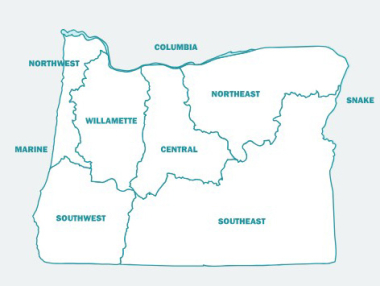
Zone reports from district fish biologists based around the state follow:
The Nehalem River is likely to get extremely warm and has been closed in the past due to high water temperatures. Watch for possible regulation changes as the summer heats up. Extremely high recreational use (e.g. swimming) is expected in various locations, including the Wilson River; this can interfere with fishing and even displace fish to other locations. Rivers could have closures, or other in-season modifications to regulations.
North Coast lakes should remain open. There are good warmwater fishing opportunities from Florence to Astoria. The recent fish survey on Coffenbury Lake showed a good population of largemouth bass with many fish weighing one to three pounds. Coffenbury Lake also has abundant population of bluegill, pumpkinseed sunfish, and yellow perch. The survey on Cape Meares Lake showed largemouth bass up to five pounds but overall had lower catch rates than Coffenbury Lake. The fish survey on Siltcoos Lake this spring showed a good population of bluegill (with fish growing to eight inches long) and largemouth bass (many fish weighing one to four pounds). Siltcoos Lake also has lots of yellow perch with some perch growing to over twelve inches long. Tahkenitch Lake has good population of bluegill with fish up to eight inches in the most recent lake survey. The lake has a good assortment of sizes of largemouth bass, yellow perch, and brown bullheads. And don't be surprised if you catch a warmouth. There's not many warmouth in Tahkenitch Lake but they grow to over seven inches. There are many other warmwater fish lakes in the northwest zone like Woahink, Mercer, Cullaby, Vernonia.
Weeds may be a problem in some lakes. Higher elevation lakes such as Lost Lake (Clatsop), Hebo, and South Lakes should provide some opportunity for trout. Estuaries will likely remain open for a variety of species.
In the Umpqua District, all major water bodies are expected to remain open, with some caveats. In the recent past, Galesville Reservoir was drawn down low enough that only small watercraft could be launched at the boat ramp (kayaks, pontoons, etc.). It is possible this will happen again this year. Diamond Lake has begun to get very warm in the summer making trout lethargic. North and South Umpqua rivers are being watched for water conditions and low fish returns. Remember fishing is closed at tributary confluences on the mainstem Umpqua from June 1-Sept. 30, a permanent regulation to provide cold water refuge for steelhead and salmon.
The Rogue Basin is experiencing high water temperatures and low flows earlier than normal. That, combined with low snowpack, has fishery managers concerned about a variety of fish populations. Hyatt Reservoir will be too low to launch boats. Applegate Reservoir may be difficult to launch a boat at the French Gulch low-water launch by mid-to-late summer. ODFW may propose emergency regulations on major rivers (Rogue & Applegate) due to the exceptionally low river levels and expected high temperatures. Most major/popular waterbodies should remain open, especially for warmwater species in lakes and reservoirs. Howard Prairie may be the best bet for boat anglers looking to target largemouth bass.
Fishery managers are anticipating an outbreak of columnaris disease in the Rogue River. Most mortality from this disease that occurs during the upstream migration of Chinook salmon is usually observed before the adults reach the area around Gold Hill, with the greatest losses in the Rogue Canyon downstream of Grave Creek, where anglers and other recreationists may see dead salmon. Angling in the Rogue Bay and below Agness should still be very good this year.
Record-low snowpack and dry winter and spring conditions contributed to Lost Creek Reservoir filling to only about 74 percent in May, which will limit ODFW's ability to provide good conditions for upstream migrating Chinook salmon through the rest of the summer, particularly if the weather in June and July is warmer than normal. "We've been fortunate that May has been cooler than normal, which has allowed for lower than normal reservoir releases to get most of the spring Chinook into the upper river," said District Fish Biologist Frank Drake. Columnaris outbreaks occurred with spring and fall Chinook as recently as the early 1990's and 2000's.
If an outbreak of columnaris does occur in the Rogue River, it is often not possible to slow the disease in spring Chinook. There is some evidence that columnaris can be slowed or stopped in fall Chinook with a release of additional water. ODFW biologists will be monitoring the situation as the adults enter the river and begin their upstream migration. If anglers or other river users start to see dead salmon, particularly in the Wild and Scenic section below Grave Creek, ODFW requests calling (541) 826-8774 to notify them.
The Southwest Zone has a big range of warmwater fishing opportunities from coastal lakes, reservoirs in the Rogue and Umpqua basins, to fishing rivers.
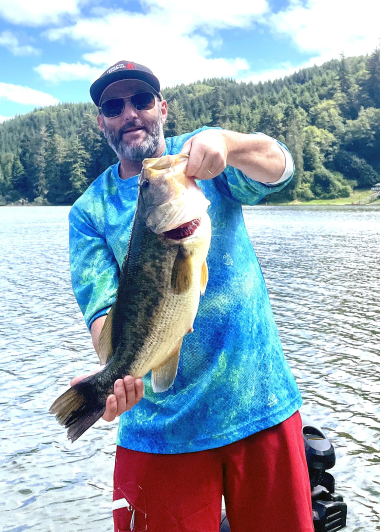
Tenmile Lake is one of Oregon's premiere largemouth bass fisheries with the potential of high catch rates and fish weighing up to six pounds. It also has lots of yellow perch with the potential of catching perch over 12 inches. There are also very large brown bullheads in Tenmile Lakes, with one fish weighing three and a half pounds during a recent fish survey. For anglers that like to explore, there are many small lakes in the Oregon Dunes National Recreation Area that have good numbers of largemouth bass with some fish weighing three pounds or more. Most dune lakes are relatively shallow with no boat launch, so anglers are limited to small pontoons boats or kayaks.
In the Umpqua basin, anglers should check out Loon Lake and Cooper Creek Reservoir for warmwater fishing opportunities. Loon Lake has lots of bluegills and largemouth bass. During the summer, anglers will want to get on the water early before the recreational boat traffic really picks up by late morning. Cooper Creek Reservoir has a good mixture of sizes of largemouth bass, bluegills, and black crappie up to twelve inches long. There are also brown and yellow bullheads with an occasional fish getting to around two pounds.
In the Rogue basin, fish biologists recently stocked largemouth bass into Whetstone Pond on the Denman Wildlife Area to help improve catch rates for anglers. Agate and Emigrant reservoirs have some good warmwater fishing opportunities, but anglers will want to watch the reservoir levels before trying to launch a boat.
For warmwater anglers wanting to fish a river, check out smallmouth bass fishing on the mainstem Umpqua River. Smallmouth bass can be found throughout the mainstem river from the forks of the North and South Umpqua all the way down into the upper tidewater near Scottsburg. Another river option is to fish for smallmouth bass in the Coquille Basin where fisheries managers are trying to remove as many smallmouth bass from the river system to benefit the extremely low population of Chinook salmon. Boat anglers can find plenty of water to fish in the tidewater section of the mainstem from above the Arago Boat Ramp downstream to the Riverton Boat Ramp. The South Fork Coquille has good locations for bank fishing for smallmouth bass or even floating the river in a kayak or small pontoon boat. Many of the riffles on the South Fork Coquille River will be shallow so any kayak or pontoon will need to be dragged over the shallow areas.
WILLAMETTE ZONE
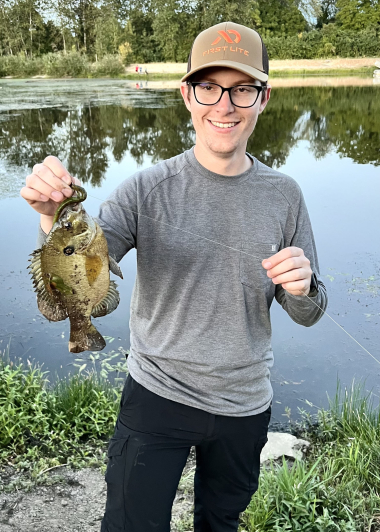
Most valley ponds will have, or already have, high temperatures. Trout stocking has ceased in most valley pond locations. But high lakes and reservoirs at elevation in the Cascades should remain open (Timothy, Trillium, Olallie, Harriet, North Fork Reservoir, Estacada Lake, and Clear Lake which will be stocked thru mid-August)).
Warmwater opportunities abound in the Willamette River and valley ponds. ODFW has been working to improve warmwater fishing opportunities in the valley in places like Adair and St Louis ponds. Fisheries biologists have placed fish habitat structures in Adair Pond and marked them with yellow buoys. They also recently stocked largemouth bass into Adair Pond and St Louis Pond for more opportunities for anglers. Bond Butte Pond and Freeway Lakes both have good populations of largemouth bass, bluegill, and crappie. Henry Hagg Lake has opportunities to catch largemouth bass, smallmouth bass, bluegill, crappie, and yellow perch.
The Willamette River above Willamette Falls to the Corvallis area has good opportunity to catch smallmouth bass and an increasing number of walleye are being caught in recent years.
All popular fishing waters are expected to remain open. But low water is expected to become an issue for access and boat ramps at many Deschutes District reservoirs, including Wickiup, Prineville, Ochoco, Haystack, and Crescent Lake. High water temperatures will likely affect trout stocking in some of the smaller ponds, including the Century and Sprague gravel ponds and the Prineville Youth Pond.
District staff will be monitoring flow and temperature on the Crooked River with a particular interest in the end of irrigation season in September to see if conditions warrant a fishing closure like they did in 2022 when fishing closed for a couple months due to low water, a regulation that was supported by anglers.
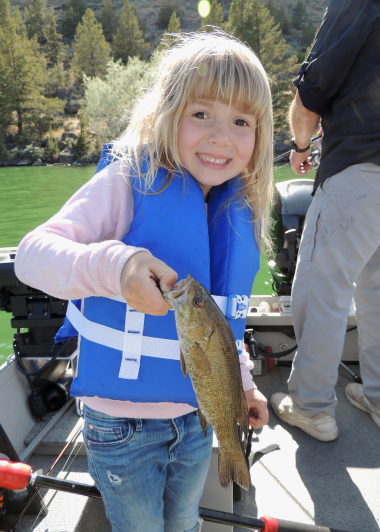
Crappie fishing has been good in Prineville Reservoir this spring and should continue all summer long if anglers can access the reservoir. Anglers have reported lots of smallmouth bass along with decent size bluegills being caught in Lake Billy Chinook. Anglers are also reporting catching lots of largemouth bass in Crane Prairie Reservoir. There are several small ponds (some are youth ponds) in the Madras, Prineville, Redmond, and Bend area that were recently stocked with largemouth bass for increased angling opportunity.
Last year, ODFW fishery managers observed elevated water temperatures in the fish ladders at John Day Dam that potentially impacted upriver migration of salmon and steelhead in August and September. In addition to this, they saw record-high returns of fall Chinook and very high catches of steelhead in the Deschutes. These likely weren't Deschutes fish, but rather non-local fish that ended up in the Deschutes because conditions in the mainstem Columbia weren't conducive to upriver migration. ODFW will be keeping a close eye on Deschutes steelhead catches this fall so we can make sure catches stay within limits.
All major fisheries are expected to remain open. Wallowa Lake usually provides good kokanee and trout fishing throughout the summer. Grand Ronde and Snake rivers should be good for bass. High mountain lakes will provide opportunity for trout.
The John Day River is already low enough to present challenges for boaters. As flows continue to drop, all types of watercraft will find difficulty navigating the river. Many ponds in the region were stocked with trout early, giving anglers a chance to get them before water temperatures became too high for trout to survive.
Near LaGrande, warmwater anglers can find opportunities to catch largemouth bass, crappie, and brown bullheads at Morgan Lake. A recent fish survey had lots of largemouth bass in the 8 to 12-inch range with some bigger fish, the largest weighing just over six pounds. Willow Creek Reservoir in Heppner was recently stocked with small to medium size largemouth bass. The reservoir also has lots of bullheads available to be caught. Unity Reservoir has lots of smallmouth bass, crappie, and an occasional big largemouth bass.
For a unique warmwater fishing opportunity, try catching a tiger muskie in Phillips Reservoir. Tiger muskie are stocked in the reservoir to help control the very abundant yellow perch population. Anglers are reporting catching tiger muskie close to three feet long this year. Remember, it's catch and release only for tiger muskie. Anglers at Phillips Reservoir might also catch a big smallmouth or largemouth bass.
This zone has already made some regulation changes due to drought. Bag limits for rainbow trout and bass were suspended for Thief Valley Reservoir, Pilcher Creek Reservoir, and Wolf Creek Reservoir in Union County. Water levels are expected to drop quickly this summer, and the rule change is meant to encourage anglers to make use of these fish before conditions deteriorate and fish die.
Trout fishing in the Klamath Basin waterbodies that feed into Upper Klamath Lake will be catch-and-release only (see news release) with no bait allowed due to low numbers of spawning Klamath Lake redband trout. The low numbers observed spawning this year are a delayed response to drought conditions from years before and other factors.
North Warner Valley Lakes are too low to hold crappie this year. Hart Lake might go dry by this fall. Other desert reservoirs may not have enough water to stock fish in this year. If there is water, there could be fish that held over from previous stockings.
In the Klamath Basin, yellow perch angling will be phenomenal and a nice substitute for anglers who want to harvest and eat fish. All of these fisheries are expected to remain open in the Klamath area. Anglers are encouraged to fish the Sky Lakes and Mtn Lake Wilderness lakes and Lake of the Woods and Fourmile Lake. Warmwater angling opportunities have been developed in numerous reservoirs including Willow Valley and Campbell. Reservoirs in the east side have much more water than anticipated in the Gerber Reservoir area. Angling for warmwater fish especially crappie and yellow perch should be excellent. Bass and yellow perch fishing will be excellent at Lake of the Woods. Yellow perch populations have exploded with excellent populations in Williamson River, Crystal Creek, Fourmile Creek and the mouth of Sevenmile Creek. ODFW encourages unlimited harvest of yellow perch in these areas. Reminder there is no bait allowed June 15-Oct. 31 in the Klamath Basin (upper Klamath Lake and the spring-feed creeks surrounding it, as well as the Wood and Williamson Rivers, their tributaries, and Agency Lake) to protect redband trout.
For the Lakeview area, we anticipate fishing will remain open and accessible this summer at Thompson Reservoir, Ana Reservoir, Lower Chewaucan River, Dog Lake, Drews Lake, and Crump Lake. Ana Reservoir provides the opportunity to try and catch a hybrid striped/white bass, also known as wipers. Juvenile wipers were recently stocked last fall.
Summer and fall salmon/steelhead seasons have already been set for the Columbia River Zone and include a sockeye season scheduled this year from June 23-July 5. However, the Columbia Zone often has in-season regulation changes during summer and fall fisheries so keep a close eye on the zone's page or subscribe to the Columbia River fishery action notices.
With the number of endangered and threatened salmon and steelhead that make their way up the Columbia River, anglers need to use best practices whenever they are fishing, and especially when they are releasing fish. Fishing closures will again be in effect in Eagle Creek, Herman Creek, the Deschutes River and the lower John Day River, with these areas serving as thermal sanctuaries to provide cold water refuge for migrating salmon and steelhead.
During 2015 (another bad drought year), a big issue for the mainstem Columbia was the elevated water temperatures in June and July. During that year, sockeye were impacted by warm water upriver - especially in the fish ladders - and 95% died between Bonneville and McNary dams. A die-off of white sturgeon in the reservoirs upstream of Bonneville Dam also occurred, leading the states to close all sturgeon fishing (including catch and release) in those areas from mid-July until September when water temperatures had returned to normal.
Fishing for smallmouth bass and walleye throughout the Columbia River should continue to be good this summer. The size and numbers of bass and walleye anglers can catch in the Columbia can rival fishing for these species in many other waterbodies throughout the U.S.
Anglers are reporting good catches of crappie, smallmouth bass, and catfish in Brownlee Reservoir. This should continue throughout the summer months, but anglers might have to fish during the early mornings and late evenings during the really hot, sunny summer days for the best success. Reminder spring Chinook fishing is closed on the Snake River now.

Check out the Latest Recreation Report
Current conditions and opportunities to fish, hunt and see wildlife. Updated weekly by fish and wildlife biologists throughout the state.