
Search myodfw.com
Showing 501 - 520 of 1668 results
Features: Dungeness crab can sometimes be confused with rock or other crab species. However, it is easily identified by its white-tipped claws and reddish-brown to purple color. Habitat: Adult Dungeness crab forage on a number of fish and invertebrate species. They can be found throughout the sandy and muddy areas in the shallowest parts of lower estuaries all the way to depths of almost 1,500 feet. Techniques: There are many kinds of crab catchers – from crab pots and rings, to traps you can cast with a fishing rod. You can easily crab from a dock in many coastal bays…

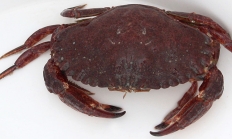
Features: These crab can be identified by their black-tipped claws, wide fan-shaped carapace (body cover) and deep, brick-red color. Habitat: As the name implies, red rock crab prefer the harder substrate habitats such as rocks, pilings, and other structure. Red rock crab prefer higher salinities than Dungeness crab and therefore are usually found in larger estuaries, close to the ocean. They are most common in Coos, Yaquina, and Tillamook bays where there are plentiful rocky substrates. Red rock crabs are native to Oregon. Techniques: Usually caught in combination with Dungeness crab, using the same techniques.
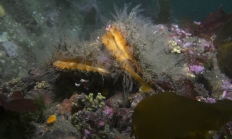
The rock scallop ( Crassadoma gigantea) lives in the swift current shallows of Oregon's nearshore rocky reefs. Due to the coloration at its hinge, it is also known as the purple hinged scallop. These highly specialized scallops cement themselves to rocks, primarily at depths from 10 to 150 feet. They feed on microscopic plankton they filter from the water and reproduce via broadcast spawning. In order for spawning to be successful, they need to be close to one another. For this reason, it is best to harvest solitary rock scallops and minimize harvest pressure on dense aggregations which are more…
Gray (Default)
White
Blue
Trout fishing opportunities abound in this zone, known for its high desert climate, sage-covered canyons, glacial peaks and mountain lakes. Anglers will find year-round trout fishing in the Deschutes, Metolius, Fall and Crooked rivers, while several central Oregon lakes and reservoirs are renowned for their trout and kokanee fishing – and their beauty. The Hood and lower Deschutes – both tributaries of the Columbia River – offer high desert fishing for Chinook salmon and summer steelhead.
The granite peaks of Oregon’s Blue and Wallowa Mountains form the backdrop for many of this zone’s glacier-carved lakes and crystalline streams. Bull trout thrive in this zone’s cold, clear rivers, which also sustain whitefish and rainbow trout, and welcome returning runs of hatchery-reared steelhead. Chinook salmon travel over 300 miles up the Columbia to spawn in rivers such as the Imnaha and Wallowa. Warmwater fisheries are few, but the John Day River offers world-class fishing for smallmouth bass.
The Snake River and its impoundments offer first class fishing for warmwater species such as channel catfish, crappie and smallmouth bass. That part of the river running through the spectacular Hells Canyon Wilderness may have some of the best summer steelhead fishing in the state.
Abundant rainfall feeds the massive Willamette River watershed, tamed by a system of reservoirs that are stocked annually with hundreds of thousands of rainbow trout. Some of these reservoirs also grow trophy-size largemouth and smallmouth bass, as well as bluegill, brown bullhead and crappies. Smaller lakes and ponds nearer the valley floor provide springtime trout fishing close to home. Salmon and steelhead navigate the Willamette River and its tributaries, many of which are also home to rainbow and cutthroat trout.
The lush northwest corner of Oregon offers world class bird hunting -- from waterfowl hunting on the lower Columbia River to ruffed grouse flushing in the foothills of the Cascades. Opportunities abound close to Oregon's major metropolitan areas.
The transition from forested foothills of Mt. Hood to the beginnings of the Columbia Basin offers bird hunters an array of wing shooting opportunities.
This vast area covers the Columbia Basin through the Blue, Wallowa and Elkhorn mountains to the Snake River.
Willamette Trout Hatchery and the adjacent Oakridge Salmon Hatchery were combined in 1983 and operate today as Willamette Hatchery. The trout hatchery was constructed in 1922 and the salmon hatchery in 1911. The U.S. Army Corps of Engineers (USACE) rebuilt the salmon hatchery in 1952 to mitigate for fishery losses caused by Hills Creek, Lookout Point and the Dexter hydroelectric/flood control projects. The trout side was rebuilt between 1950 and ‘56. Today, Willamette Hatchery is used for adult holding/spawning, egg incubation and rearing of spring chinook and rainbow trout. In addition, both summer and winter steelhead are reared at this…
In 1925 the first fish hatchery on the South Santiam River began operations about 5 miles upstream from today’s present site, rearing annually approximately 100,000 spring Chinook in dirt ponds for release into the South Santiam River. The present site came about with the construction of Foster Dam. In 1968 the facility was dedicated for the rearing of spring Chinook and summer steelhead. This facility was built and annually funded in part by the US Army Corps of Engineers to compensate for the loss of spawning and rearing areas above the dams on the South Santiam River.
SALEM, Ore.— The Commission set 2026 groundfish regulations during their meeting in Salem today. The daily catch limit for lingcod will increase from 2 to 3 fish next year, since lingcod populations are healthy and bycatch of yelloweye rockfish (a protected species) is still low. The daily limit for general…
ODFW manages 20 wildlife areas across the state, each with a unique blend of fishing, hunting and wildlife viewing opportunities. Remember, you'll need a Wildlife Area Parking Permit for your visit. See the map and listing below to find the wildlife area nearest you.
The E.E. Wilson Wildlife Area came into existence in 1950 when the U.S. Government gave quitclaim title to the property to the Oregon Department of Fish and Wildlife. The wildlife area covers approximately 1,788 acres, is located on Highway 99W about 10 miles north of Corvallis and is situated on the Willamette Valley floor. SHOTGUN RANGE BACK OPEN AS OF LATE OCTOBER 2025: The renovation is complete and the shotgun range is back open. Improvements include: four times as many shooting lanes, fully paved ADA-compliant walkway with pullouts that will make it easier for disabled shooters, a new covered pole…
Coquille Valley Wildlife Area was initially established in 2013 with two equally important primary objectives; (1) To protect, enhance, and restore fish and wildlife habitats located on the WA, and (2) to provide a wide variety of wildlife-oriented recreational and educational opportunities to the public.