

Search myodfw.com
Showing 221 - 240 of 408 results
Landing page
Protecting and enhancing Oregon’s fish and wildlife, and the habitats they use, for the use and enjoyment of present and future generations is at the heart of what we do.
September 05, 2017
Article
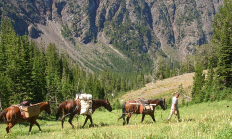
Successful bear hunters must appear in-person at an ODFW office to check in their bear's skull.

Zones or Areas
This vast area covers the Columbia Basin through the Blue, Wallowa and Elkhorn mountains to Hells Canyon. Some of Oregon's most prized big game hunts are managed in this area.
Landing page
Oxbow Hatchery was originally constructed in 1913 to provide additional rearing facilities for Bonneville Hatchery. It was relocated to this present site in 1937 following the construction of Bonneville Dam. Oxbow operated as a state-funded hatchery until 1952 when it was remodeled and expanded as part of the Columbia River Fisheries Development Program (Mitchell Act) – a program to enhance declining fish runs in the Columbia River Basin. The hatchery is presently used for interim egg incubation and early rearing of coho and spring Chinook salmon. No adult fish are collected or spawned at Oxbow and there are no fish…
November 03, 2017
Landing page
Sandy Hatchery began operation in 1951 as a state-funded facility. In 1959, the hatchery became part of the Columbia River Fisheries Development Program (Mitchell Act) – a program to enhance declining fish runs in the Columbia River Basin. The facility is currently used for the adult collection of spring Chinook, winter and summer steelhead, and coho salmon. Coho and winter steelhead eggs are taken, hatched, ponded and reared to release on station.
November 13, 2017
Press Release
SALEM, Ore. – Oregon's Fish Screening and Fish Passage Task Forces will meet Wednesday, May 6 at 8:00 a.m. The meeting is open to the public and will be held in person at The Dalles Screen Shop at 3561 Klindt Dr, The Dalles and virtually through Teams. The meeting agenda…
April 24, 2026
Press Release
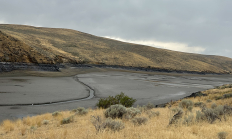
LA GRANDE, Ore. – Effective Aug. 1 through Sep. 30, minimum and maximum size limits as well as the daily and possession bag limits for rainbow trout and bass are suspended for Thief Valley Reservoir (Southeast Zone) located in Union County. Harvest will be allowed by hand, dip net, or…
August 1, 2025
Article
The southwest area follows Interstate 5 from Drain south to the Oregon-California border and includes the communities of Grants Pass, Medford and Ashland. In this area, anglers can fish the famed lower Umpqua River, which offers one of the finest smallmouth bass fisheries in the country. Outstanding warmwater fishing for bass and panfish can also be found in the area's many lakes and reservoirs including Cooper Creek, Galesville and Emigrant Reservoirs, and Selmac Lake. Smaller ponds near Sutherlin, Grants Pass and Medford including those at ODFW's Denman Wildlife Area are also good bets, particularly for families or young anglers.

Article
The north coast area includes the Lower Columbia River downstream of St. Helens to the Pacific Ocean, and the Oregon Coast from Astoria south to Yachats. The Columbia, and particularly its backwaters and sloughs, provide excellent fisheries for bass, crappie, and catfish.
September 15, 2017
Press Release
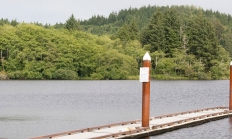
SALEM, Ore.—Oregon's Fish and Wildlife Commission meets online Friday, Jan. 16 to amend the formula for setting Landowner Preference tags for mule deer hunts and modify the Coquille River Fall Chinook conservation hatchery program to allow the use of hatchery origin broodstock. See the full meeting agenda at https://myodfw.com/articles/commission-agenda-january-16-2026 The…
January 9, 2026
Species and Subspecies
Oregon has one species of kingfisher, the raucous Belted kingfisher and 12 woodpecker species. Six woodpeckers are Oregon Conservation Strategy Species of management concern and in need of conservation. Famous for their hammering and hole drilling, woodpeckers might decide your home looks like a good place to set up shop. Learn how to discourage this on our Living with Wildlife, Birds page.

Zones or Areas
This vast area covers the Columbia Basin through the Blue, Wallowa and Elkhorn mountains to the Snake River.
Article
Whether it’s spending more time outdoors or harvesting food to fill the freezer, there are many reasons to become a hunter. Here’s how to take the first steps into the field.
July 16, 2026

Article
Each year, thousands of fish are harvested illegally in Oregon. Anglers who wait all year for their favorite salmon or steelhead run shouldn’t face reduced opportunity because of poaching. To report poaching call *OSP or 1-800-452-7888
July 31, 2020

Article
Hunter's Resources Hunter's Technique Hunter's Bounty Hunter's Plan Oregon hunter's bucket list: Over 34 million acres of public land open to hunters. Diverse habitats from coastal rain forests to eastern deserts, with a couple of mountain ranges in between offer several opportunities to hunt deer and elk.
October 1, 2025
Species and Subspecies
Chukars are ground-loving birds that quickly run uphill or burst from cover with rapid wing-beats and a characteristic whitoo call if alarmed. Introduced by managers wishing to increase hunting opportunities in arid western North America, the chukar is a very successful exotic species that occupies habitats where few other gamebirds exist. It is the most harvested upland bird in Oregon. It is a common permanent resident of eastern Oregon. Populations are distributed in steppe habitats along the breaks of the Columbia, John Day, Snake, Owyhee, Deschutes, Malheur, Burnt and Grand Ronde rivers and lesser watercourses or reservoirs. Hear the call…

Landing page
Willamette Trout Hatchery and the adjacent Oakridge Salmon Hatchery were combined in 1983 and operate today as Willamette Hatchery. The trout hatchery was constructed in 1922 and the salmon hatchery in 1911. The U.S. Army Corps of Engineers (USACE) rebuilt the salmon hatchery in 1952 to mitigate for fishery losses caused by Hills Creek, Lookout Point and the Dexter hydroelectric/flood control projects. The trout side was rebuilt between 1950 and ‘56. Today, Willamette Hatchery is used for adult holding/spawning, egg incubation and rearing of spring Chinook and rainbow trout. In addition, both summer and winter steelhead are reared at this…
November 06, 2017
Press Release
SALEM, Ore. - Oregon's Fish Passage Task Force will meet Thursday, October 16 from 8:00 a.m. to 12:30 p.m. at the Red Lion, 1313 N Bayshore Dr, Coos Bay. The meeting will be open to the public. Members of the public who are interested in the meeting are encouraged to…
October 9, 2025
Article
The central area follows the Deschutes River Basin along the eastern slope of the Cascades, and includes the middle reaches of the Columbia River from Bonneville upstream to the mouth of the John Day River. The warm and dry summer months help to create productive warmwater fisheries in the area's larger reservoirs including Crane Prairie Reservoir, a consistent producer of sizeable largemouth bass, and Prineville Reservoir which is renowned for its crappie. In the Columbia River, outstanding fishing for bass and walleye can be found in Bonneville Pool and The Dalles Pool.
