
Search myodfw.com
Showing 241 - 260 of 542 results
Find maps, boundary descriptions and hunts available in the new Devils Garden Hunt Area. Download printable PDF map
Find maps, boundary descriptions and hunts available in the new Fox Hunt Area FX-02. Download printable PDF map
Find maps, boundary descriptions and hunts available in the new Keno Hunt Area. Download printable PDF map
Find maps, boundary descriptions and hunts available in the new Trout Creek Hunt Area. Download printable PDF map
This vast area covers the Columbia Basin through the Blue, Wallowa and Elkhorn mountains to the Snake River.
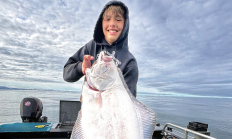
NEWPORT, Ore. – The Oregon Department of Fish and Wildlife is hosting a public meeting on July 29 from 6 p.m. – 7:30 p.m. to get input on the 2026 recreational Pacific halibut season. The meeting is being held in the conference room of the ODFW office, 2040 SE Marine…
Features: Soles have flattened, oval bodies with both eyes on one side of their head. They are dark on top and light underneath. Habitat: They are commonly found on mud or sand bottoms from 5- to 750-fathoms deep. Techniques: Soles and other flatfish are best targeted by fishing with smaller hooks (less than 2/0) tipped with bait such as clam necks, sand shrimp, or chunks of herring or anchovy on a sandy or gravel bottom.

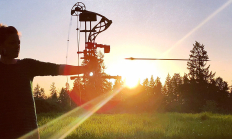
SALEM, Ore. – Bowhunters can warm up for the archery season at a free 3D shoot in La Pine on Saturday, Aug. 2 at Three Rivers Archers Park located at the intersection of Coach Rd. and Memorial Lane. This unique course offers hunting scenarios and learning opportunities to help you…
Find maps, boundary descriptions and hunts available in the new Elkhorn Hunt Area. Download printable PDF map
Find maps, boundary descriptions and hunts available in the new Sage Hen Hunt Area. Download printable PDF map
Large and primarily white, the American white pelican has the longest wingspan of any bird in Oregon. It also has an enormous orange bill, and flies with neck withdrawn. During the breeding season the top of the bird's head becomes dusted with black and a horn grows on the upper mandible; this projection serves as a target for aggressive encounters to avoid injury to the essential bill pouch, but is shed after the eggs are laid. This pelican makes unusually long flights for feeding and migration, and at great distances, soaring flocks have been reported as UFOs. In Oregon, it…

The bobcat is the smallest wild felid in Oregon, with females being considerably smaller than males. The bobcat is about twice the size of a domestic cat, but its legs are longer, its tail is shorter, and its body is more muscular and compact. The feet are relatively small and the bobcat is not well adapted to negotiate deep snow. In general, the variously spotted pelage is yellowish with grayish overtones in winter and with reddish overtones in summer, reflecting the two annual molts. The ears are black with a large white spot and are equipped with short black tufts…

Much variability in coloration exists in the common garter snake but the best identifying characteristic is a stripe down the middle of the snake's back. While the common garter snake frequents wet meadows and forest edges, it occurs in a variety of habitats far from water, including open valleys and moist coniferous forest. Smaller snakes eat earthworms, but adults feed on a variety of vertebrate prey, including frogs, toads, salamanders, birds, fish, reptiles, and small mammals. Invertebrates, including slugs and leeches, are also eaten. Photo by Dave Budeau, ODFW

Features: These fish are olive green to dusky-brown with some light mottling towards their top sides. Their fin membranes are yellow. Habitat: Yellowtail rockfish will usually be found in offshore waters and often suspended over deep reefs and rocky habitat to as deep as 900 feet. Technique: Best success will be by first locating suspended schools of yellowtail rockfish in offshore areas during periods open for fishing offshore, and then working rubber tail jigs or shrimp flies through the schools.

Veterans invited to grand reopening event set for Nov. 15 MONMOUTH, Ore.—ODFW Hunter Education Coordinator Jered Goodwin used to see a group of disabled Veterans regularly visiting the shotgun shooting range at E.E. Wilson Wildlife Area, a former military base turned wildlife area and popular outdoor destination in the Willamette…
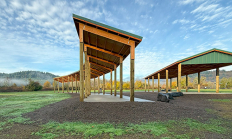
NW WILDLIFE VIEWING April 123, 2026 Tillamook County Birds Large numbers of waterfowl are arriving daily, moving back to spring nesting grounds. They will raft up out in the middle of most local estuaries on calm days but will move around with the incoming tide and on windy days. Many species of diving ducks can be seen on area lakes and bays. Likewise, many migrating geese are beginning to arrive and are using area fields, along with many egrets, herons and wintering raptors. Pastures and fields are heavily used by a variety of waterfowl when flooded and by wading birds…
Features: The widow rockfish is brassy brown with a light colored belly. Their fin membranes are also brown. They can grow to be 21-inches long. Habitat: Widow rockfish school down to 1200 ft., usually found suspended over offshore reefs and rocky areas. Technique: Best success will be by first locating suspended schools of widow rockfish in offshore areas during periods open for fishing offshore, and then working rubber tail jigs or shrimp flies through the schools.


Features: The redstripe rockfish appears red and pink. The dorsal fin is shallowly notched and the lateral line is a distinct red stripe. It has dark lips, a protruding lower jaw, and greenish stripes radiating from the eyes. Habitat: Commonly found over high-relief, rugged bottoms from 500 feet to 900 feet below the surface. Technique: Best success will be by first locating suspended schools of redstripe rockfish in offshore areas during periods open for fishing offshore. Work rubber tail jigs or shrimp flies through the schools.
Find maps, boundary descriptions and hunts available in the new Aldrich Hunt Area. Download printable PDF map