Search myodfw.com
Showing 261 - 280 of 657 results

The bright yellow, red, and black plumage of the male Western Tanager, so conspicuous in open situations is very obscure in forested areas where it tends to blend into the shaded foliage. The species perhaps is best known in migration when it visits city parks, orchards, and other open urban and suburban areas. It is attracted to birdbaths but seldom to bird feeders. It breeds in open coniferous forests and mixed coniferous and deciduous woodlands, primarily in mountains. They usually nest in conifers - rarely deciduous trees - at varying heights, usually well out on a branch, often at the…


Seeing killer whales off the Oregon coast is a rare treat, but whale watchers can usually count on a pod of orca’s patrolling the coast in mid-April – just in time to intercept baby gray whales. Orcas are most often seen in the ocean off Depoe Bay and Newport, but can be spotted coastwide. The first thing you are likely to see when sighting killer whales is their dorsal fin. Male orcas have a dorsal fin that can be six feet in height, juveniles and females have shorter fins. These large fins can be seen from quite a distance. There…


The present facility was constructed in 1925, across the North Umpqua River from an earlier trout hatchery built in 1920. The hatchery was closed in 1975 due to low stream flows and high water temperatures, and was reopening in 1979 after extensive reconstruction. In 2012 a state of the art fish passage ladder was completed. It included a fish viewing window for Rock Creek basin fish inventory and a fish trap facility. The hatchery produces fall and spring Chinook, coho, summer and winter steelhead, and rainbow trout. The facility is used for adult collection, spawning, incubation, and rearing of Chinook…
Cole Rivers Hatchery was constructed by the US Army Corps of Engineers (USACE) in 1973 to mitigate for spawning and rearing areas blocked by the construction of Lost Creek, Applegate, and Elk Creek Dams. The hatchery was named in honor of Cole M. Rivers, a biologist on the Rogue River for 20 years. The facility is used for adult collection, spawning, egg incubation and rearing of spring Chinook, coho, summer steelhead, and winter steelhead, and egg incubation and rearing of fall Chinook and rainbow trout. Infrastructure Repair and Renovation Updates
Construction of this facility began in 1924 and production started in 1925 by the state of Oregon. Various renovations have taken place with the most recent being the addition of 4 new fish rearing raceways and improvements to the pollution abatement system which was completed in 2016. Other renovations made throughout the hatchery have utilized the Restoration and Enhancement Program.. The purpose of this facility is to enhance spring Chinook, winter steelhead, summer steelhead, and coho populations for various coastal streams. The facility is used for adult collection, egg incubation and rearing of spring Chinook, fall Chinook, winter steelhead, summer…
The Umatilla Hatchery began operation in 1991. The hatchery is used for egg incubation and rearing of spring Chinook, fall Chinook and summer steelhead.
The Klamath Fish Hatchery was originally constructed in 1929. Many improvements have been made since original construction. The hatchery produces legal and trophy sized rainbow trout, fingerling rainbow trout, brown trout, and cutthroat trout for release throughout the Klamath Basin, Deschutes Basin, Umpqua Basin and the southeast part of the state. The hatchery assist with remote egg takes for wild rainbow and brown trout at Crane Prairie and Wickiup Reservoirs.
Bandon Hatchery was constructed in 1925. Various renovations have taken place since original construction and more are planned for the future. The facility is used for adult collection, egg incubation and rearing of both natural and hatchery fall Chinook, winter steelhead, and trophy-sized rainbow trout.
Prineville Reservoir Wildlife Area came under the shared management of the Oregon Department of Fish and Wildlife & United States Bureau of Reclamation in 1962. It is managed for the protection and enhancement of wildlife habitat, big game winter range, improving riparian wetlands, and to promote wildlife stewardship. Goals of the PRWA include creating recreational opportunities for viewing and enjoying wildlife, including mule deer, bald eagles, and a variety of waterfowl. Boating, hiking, and camping are a few popular activities permitted in the wildlife management area. Hunting and fishing opportunities are also available within Prineville Reservoir Wildlife Area, as regulated…

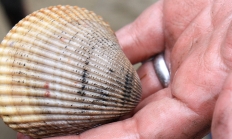
Features: Identified by its prominent radiating ridges. Habitat: Cockles are "hard shelled" clams. Their protective, stout shells and short siphons mean that they do not have to bury as deeply as other common bay clams. Good cockle beds will often have cockles right on top of the sand on a good tide. They prefer sandy areas with high salinity, but can be found at many types of tideflats. Technique: The best clamming is during low/minus tides. Because these clams are so near the surface, you rake, rather than dig, for them. A four prong gardening rake is perfect for raking…