
Search myodfw.com
Showing 281 - 300 of 795 results

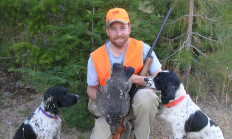
CENTRAL POINT, Ore. – The Rogue-Siskiyou National Forest is temporarily closing the Huckleberry Mountain area in the High Cascades Ranger District Aug. 22-31 for Tribal ceremonial purposes. Rogue Unit general archery hunters should be aware of the closure over the archery opening weekend, Aug. 30-31. For more information on the…
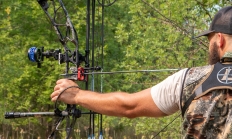
SALEM, Ore. – Successful Oregon forest grouse and mountain quail hunters are asked to donate a wing and tail from harvested birds to support biological research. Hunters can deposit wings and tails in collection barrels located at major road junctions or highways in hunting areas, select ODFW offices, and popular…
SALEM, Ore.—Do you have a love of hunting and passion for wildlife conservation? Are you knowledgeable about forestry and/or agriculture? If so, there are vacancies for a Landowner Representative and a Hunter Representative on the Access & Habitat (A&H) Board. Applications are being accepted by the Oregon Department of Fish…
SALEM, Ore.—Oregon's Fish and Wildlife Commission today made changes to the formula used to allocate mule deer Landowner Preference (LOP) tags, which was needed due to the new harvest and population management system for mule deer approved in 2024. In a 6-0 vote (one abstention), the Commission approved shifting to…
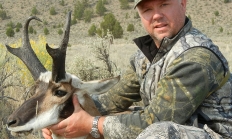
Oregon requires all hunters under the age of 18 to complete a hunter safety education course before hunting in the state. Upon completing the course (and a Field Day for youth), participants will receive a Hunter Safety certification number and card. Adults are also encouraged to take the online course, as it may be required for out of state hunts. Note: Youth under the age of 9 may struggle with the course material and may not have the physical strength needed to safely handle a firearm during a Field Day, particularly during muzzle control, loading, and unloading drills.
Offered Year Round
Statewide
A quiet, modest, unobtrusive little bird that must be sought to be seen in its shady retreats, this little-studied species can easily be overlooked. It is typically associated with oaks and mixed woodlands, where it hops along the foliage hunting for insects. In winter it forages with flocks of chickadees, kinglets, and nuthatches. This is Oregon's only resident vireo. Although it is sometimes referred to as non-migratory, some seasonal movement has been observed. Similar in appearance and behavior to the more common and widespread Ruby-crowned kinglet. Hear the song of the Hutton's vireo Photo by Greg Gilson

This majestically crested bird is often heard before being seen due to its conspicuous harsh rattling call. Kingfishers are most frequently associated with lake and pond shorelines and islands, as well as coastal dunes with ponds and widely scattered shrubs and trees. They hunt from a vantage point above water such as an overhead branch, telephone wires along shore lines or pilings of piers. This is a common permanent resident throughout most of the state except in the north Lake and east Deschutes counties where open water is generally absent Hear the call of the belted kingfisher Photo from ODFW

Chukars are ground-loving birds that quickly run uphill or burst from cover with rapid wing-beats and a characteristic whitoo call if alarmed. Introduced by managers wishing to increase hunting opportunities in arid western North America, the chukar is a very successful exotic species that occupies habitats where few other gamebirds exist. It is the most harvested upland bird in Oregon. It is a common permanent resident of eastern Oregon. Populations are distributed in steppe habitats along the breaks of the Columbia, John Day, Snake, Owyhee, Deschutes, Malheur, Burnt and Grand Ronde rivers and lesser watercourses or reservoirs. Hear the call…

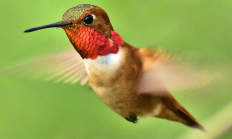
With short pointed wings and long narrow tails, these small falcons are well built for fast pursuit and mid-air attacks. Sexes differ in color and size, with adult males about 25 percent smaller by weight than females. Males range from blackish gray to pale blue-gray on the back with a reddish wash along sides of the breast and a banded tail; females have brownish backs. In winter, it can be found throughout the state in open or semi-open habitats, but it is most regular near major estuaries, lakes, reservoirs, and occasionally in cities where food supplies are reliable. For nesting…

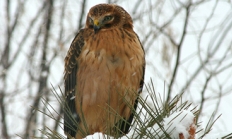
The Northern harrier is a slender, medium-sized hawk characterized by a noticeably long tail, bold white rump patch, and owl-like face. Commonly encountered in large expanses of open country, its main hunting technique is through use of a distinctive buoyant, gliding flight low over the ground that relies heavily on visual as well as auditory cues to detect prey. The larger females have rich brown upperparts while adult males are mostly light to medium gray, sometimes appearing almost ghostly silvery-white. Males are noted for their high-spirited and acrobatic courtship displays, in particular a series of dives and barrel rolls in…
Central Point, Ore. – The Oregon Department of Forestry (ODF) declared fire season in southwestern Oregon on May 15 this year due to drought conditions, and Industrial Fire Precaution Level 2 (IFPL 2) went into effect on June 17, 2026. The ODF Southwest Oregon District is increasing the public use…