Search myodfw.com
Showing 281 - 300 of 1302 results
This small, rich-brown wren is only slightly larger than a quarter, and has a tail quite short for a wren. A quiet observer in the forest will see these birds hop in and out and all over logs, snags, shrubs, twigs, and limbs on the forest floor. It has been said that the song of this bird is larger than the bird itself. The Winter wren breed from Coos County southward and in eastern Oregon in the Blue and Steens mountains. It retreats from high altitudes in winter where snow pack is heavy. Migration probably occurs throughout the state, but…

Bobolinks summer in Oregon's eastern grasslands and meadows, singing what has been described as a bubbling delirium of ecstatic music that flows from the throat of the bird like sparkling champagne. The yellow-brown female, juvenile or non-breeding male may at first appear to be a sparrow, but the breeding male has an astonishing and diagnostic backwards tuxedo pattern of buff on the nape and white rump and scapulars on an otherwise black body. The Bobolink is a regular, locally common breeder at the Malheur National Wildlife Refuge and a few scattered pairs occur in northeast Oregon. West of the Cascades…


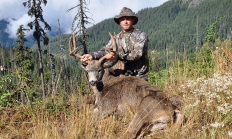
COLUMBIA BIG GAME HUNTING September 10, 2026 Currently open Archery deer and elk, bear, cougar ( check current harvest numbers), coyote, youth only controlled series hunts, general season antlerless elk damage, premium, auction and raffle hunts. Season openings beginning in September Western gray squirrel *Check Big Game regulations for hunt details and purchase your license and required species tag before hunting. Announcements and resources Gear up for this year's Big Game Hunting Forecast and get ahead of the game! Big game statistics - You'll find links to population, harvest and maps that can help you decide where to hunt this…
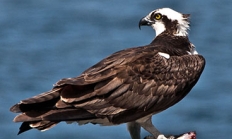
This large bird of prey has dark brown feathers above, white feathers below with a white head and prominent dark eye stripe as well as a visible dark spot at the wrist of the wing when flying. Juveniles have buffy-tipped dark feathers above. In flight, the wings have a noticeable angle or "crook." This highly migratory fish-eating species is frequently found nesting along larger rivers, lakes, and reservoirs. A large bulky nest at the very top of a live, broken top, or dead tree and more recently on utility poles, channel markers, pilings, and cell phone towers near fishable waters…
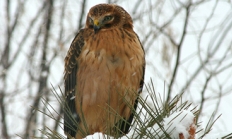
The Northern harrier is a slender, medium-sized hawk characterized by a noticeably long tail, bold white rump patch, and owl-like face. Commonly encountered in large expanses of open country, its main hunting technique is through use of a distinctive buoyant, gliding flight low over the ground that relies heavily on visual as well as auditory cues to detect prey. The larger females have rich brown upperparts while adult males are mostly light to medium gray, sometimes appearing almost ghostly silvery-white. Males are noted for their high-spirited and acrobatic courtship displays, in particular a series of dives and barrel rolls in…
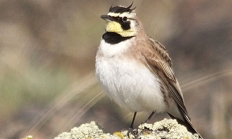
Wide open spaces generally surround these sparrow-sized, ground dwelling birds. The upperparts are mostly brownish and the underparts are generally buffy with varying amounts of yellow on the throat. There is black on the breast and side of the head, but the most unique features are small black "horns." Females and immature birds are duller. Interesting behavior includes aerial displays and "flight songs" during courtship, and the propensity to forage and loaf along dirt and gravel roads. In western Oregon, it breeds in small, scattered populations throughout the Willamette Valley, with concentrations in the central valley on and near Basket…
The majestic trumpeter swan is the largest of our native waterfowl and one of the heaviest flying birds in the world with males sometimes exceeding 30 pounds. Historically hunted to the brink of extinction, it was recognized as an endangered species long before there was an Endangered Species Act, and its recovery is a conservation success story. The adult's snow-white plumage with contrasting black bill and feet and 8-foot wingspan define this magnificent bird. Their neck is as long as their body and is used to reach food at the marsh bottom. In spring, the trumpeter swan is a locally…


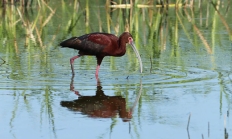
Sporting the form of a curlew, this medium-sized marsh wader is almost always found in flocks, flying in formation and quacking like ducks. Their long, down-curved bill complements their long neck and legs. Although their feathers appear black, a closer look will reveal an iridescence of bronze, purple, maroon, and green. They are named for their "white face" which appears in alternate plumage as a narrow border of white feathers along the edge of their reddish-purple facial skin, delineating a mask around the red eye. The White-faced ibis has extended its breeding grounds in Oregon to wetlands in Harney, Lake…
Our Mission The Oregon Department of Fish and Wildlife (ODFW) Hunter Recruitment Program is dedicated to strengthening and growing Oregon's hunting and shooting sports community. We provide hands-on skills training, promote a culture of safety, ethics, and conservation, and foster a positive public perception of hunting and shooting sports. Our goal is to build confidence, knowledge, and skills for both new and seasoned hunters, supporting a lasting connection to Oregon's rich outdoor traditions. Workshops are offered statewide throughout the year. View and register for an upcoming event: Classes and W or kshops.

Hunter's Guide Hunter's Resources Hunter's Technique Hunter's Bounty
Various seasons
Online Learning
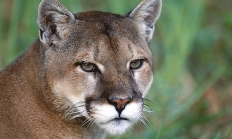
The skull of the cougar, also know as mountain lion, is massive; the canine teeth are large and slightly recurved. The heel pads of both fore and hind feet have three lobes on the posterior margin which are useful in separating the tracks of a cougar from those of other felids, such as the lynx. The dense and soft dorsal fur typically is tawny, but slate gray and reddish brown individuals are known. The venter is whitish. The back of the ears and tip of the very long tail are brownish black. The upper lip is white. Young cougars are…
SALEM, Ore. — Oregon's Fish and Wildlife Commission meets June 25-26 in Redmond. View the agenda online. On Thursday, Commissioners will visit projects showcasing the landscape scale work underway with partners to protect and restore sagebrush habitat for mule deer in central Oregon. To join the tour, meet at Comfort…