Search myodfw.com
Showing 301 - 320 of 571 results
Features: Overall, medium-gray with a white underside. Gray, bushy tail has a white "halo." Habitat: It is commonly associated with mixed forest communities in central Wasco, Jefferson, Deschutes, and Klamath counties west, except for unforested portions of the Willamette Valley, to central Washington, Benton, Lane, Douglas, Coos, and Curry counties. It is active at all seasons and exhibits diurnal activity almost exclusively. Techniques: Most hunters use a small caliber rifle, and aim for the head to avoid ruining the meat.
Features: Slightly larger than its cousin, the rock pigeon, band-tailed pigeons have a grey body. As its name suggests, a wide pale band stretches along the tip of tail feathers. Up close a distinctive white, crescent-shaped mark across its neck is noticable. Habitats: Found on the west side of the state, the band-tailed pigeon frequents semi-open coniferous forests. It forages on wild seeds and fruits in tree tops. In search of food, it travels in flocks from tree top to tree top. Techniques: Find a food source, such as elderberry or cascara, and location with open shooting lanes. Then wait…
Features: The coot can't be mistaken in a wetland. With a black body, white curved bill and red eyes, these birds often move in rafts on the water. Low flyers, they still require furious wing beats before taking flight. Habitats: These birds can be found in wetlands, estuaries and bays where other waterfowl are found. Techniques: Coots are often taken as they enter decoy spreads. Not widely targeted, hunters may pinch a raft into a choke point to take birds on the wing.
Features: Slender birds, mourning doves have long tails and small heads. Their soft cooing and whistling wings make them unmistakable. Habitats: Mourning doves perch on telephone wires or in trees. They forage on the ground for seeds. Techniques: Scouting is always helpful. Look for a tree or telephone line that is near a food crop. Once a location is found, find a spot where a backdrop will breakup your silhouette and take a seat. Wait for a passing shot. Extra shells may be necessary.
Features: Wood ducks can not be mistaken. The drake's iridescent chestnut, greens and white patterning are distinctive. The hen has a unique profile and white pattern around the eye. Habitat: Wood ducks are found in wooded swamps, on rivers and ponds. They feed on mostly seeds, but wood ducks will supplement their diet with aquatic plants, insects and crustaceans too. Acorns, hazelnuts, waste grains, and fallen seeds from trees and shrubs make up a good deal of their diet. As the name implies, they nest in tree cavities near water. Techniques: Search out a wood duck's food source and wait…
Features: Oregon is home to an estimated 25,000-30,000 black bears, which is North America’s most common bear species. They are the only type of bear found in Oregon. Despite their name, black bears are often brown in color. Habitat: Black bears are found statewide, with concentrations in the Coast and Cascade ranges and the Blue Mountains. Techniques: Oregon offers a controlled spring season (apply by Feb. 10) and a general fall season. Glassing open areas where bears are feeding on grass and shrubs works early spring season. Later in the season, some hunters turn to predator calls. Most fall bears…
The transition from forested foothills of Mt. Hood to the beginnings of the Columbia Basin offers big game hunters an array of opportunities. The challenge can be finding public land or getting permission to hunt on private land.
This vast area covers the Columbia Basin through the Blue, Wallowa and Elkhorn mountains to Hells Canyon. Some of Oregon's most prized big game hunts are managed in this area.
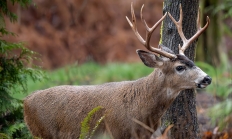
Southeast Oregon, with its ponderosa pine forests, sage steppe expanses and aspen pocked mountains, is a very popular area to hunt mule deer, elk and pronghorn antelope.
This area extends from the eastern flanks of the Cascade Range through the Ochoco Mountains to the beginning of the Great Basin, making it a great place to explore.
This area extends the eastern flanks of the Cascade Range through the Ochoco Mountains to the beginning of the Great Basin, making it a great place to explore.
This massive area is a cornucopia of geographic features and prime upland and waterfowl hunting opportunities. It is a gem of Oregon.
Sauvie Island Wildlife Area was established in 1947 with primary objectives of protecting and improving waterfowl habitat and providing a public hunting area. The initial purchase of five acres in 1940 and subsequent purchases through 2012 has brought the wildlife area to its present size of 11,643 acres, of which 8,153 acres are under fee title to the department and 3,490 acres are managed through a cooperative agreement with the Oregon Department of State Lands. Currently, the wildlife area supports a biologically diverse association of wildlife which includes at least 275 species of birds, 37 species of mammals, 12 species…
Summer Lake Wildlife Area was established in 1944, with primary objectives of protecting and improving waterfowl habitat and providing a public hunting area. It is now a popular destination for hunting, wildlife viewing and environmental education due to its geographic setting, the abundance of wildlife present and species diversity.
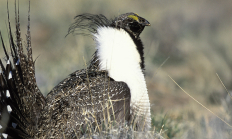
SALEM, Ore. – ODFW staff will host a webinar on July 17 at 2 p.m., to introduce the public to the updated ODFW sage-grouse management plan. The Oregon Greater Sage-grouse Conservation Assessment and Strategy was last updated in 2011. The public is invited to learn about proposed changes to the…
Find the weekly statistics for waterfowl and upland game birds at Fern Ridge Wildlife Area.
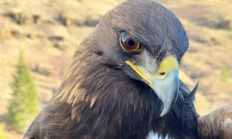
SE WILDLIFE VIEWING March 12, 2026 Harney County Harney County has an array of species that can be viewed during the winter months. Upland game birds that are represented in the area include: chukar, California quail, ring-necked pheasant, sage grouse, and Hungarian partridge. Look to Malheur National Wildlife Refuge to have an opportunity at catching a glimpse of most of these species. Raptors are present in the district and opportunities abound throughout the county. Look on fence posts, telephone poles, and amongst cliff and talus slopes to see a variety of species that include red-tailed hawks, prairie falcons, ferruginous hawks…