Search myodfw.com
Showing 321 - 340 of 903 results
Chukars are ground-loving birds that quickly run uphill or burst from cover with rapid wing-beats and a characteristic whitoo call if alarmed. Introduced by managers wishing to increase hunting opportunities in arid western North America, the chukar is a very successful exotic species that occupies habitats where few other gamebirds exist. It is the most harvested upland bird in Oregon. It is a common permanent resident of eastern Oregon. Populations are distributed in steppe habitats along the breaks of the Columbia, John Day, Snake, Owyhee, Deschutes, Malheur, Burnt and Grand Ronde rivers and lesser watercourses or reservoirs. Hear the call…


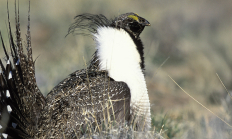
SALEM, Ore. – ODFW staff will host a webinar on July 17 at 2 p.m., to introduce the public to the updated ODFW sage-grouse management plan. The Oregon Greater Sage-grouse Conservation Assessment and Strategy was last updated in 2011. The public is invited to learn about proposed changes to the…
NW WILDLIFE VIEWING May 21, 2026 Tillamook County Birds Large numbers of waterfowl are arriving daily, moving back to spring nesting grounds. They will raft up out in the middle of most local estuaries on calm days but will move around with the incoming tide and on windy days. Many species of diving ducks can be seen on area lakes and bays. Likewise, many migrating geese are beginning to arrive and are using area fields, along with many egrets, herons and wintering raptors. Pastures and fields are heavily used by a variety of waterfowl when flooded and by wading birds…
SALEM, Ore. – The Oregon Department of Fish and Wildlife is accepting applications for the Chair position on the state Access & Habitat (A&H) Program Board. The deadline to apply is April 3, 2026. Application forms and additional information are available at: http://www.dfw.state.or.us/lands/AH/get_involved.asp The current Chair has completed the maximum…
Willamette Trout Hatchery and the adjacent Oakridge Salmon Hatchery were combined in 1983 and operate today as Willamette Hatchery. The trout hatchery was constructed in 1922 and the salmon hatchery in 1911. The U.S. Army Corps of Engineers (USACE) rebuilt the salmon hatchery in 1952 to mitigate for fishery losses caused by Hills Creek, Lookout Point and the Dexter hydroelectric/flood control projects. The trout side was rebuilt between 1950 and ‘56. Today, Willamette Hatchery is used for adult holding/spawning, egg incubation and rearing of spring chinook and rainbow trout. In addition, both summer and winter steelhead are reared at this…
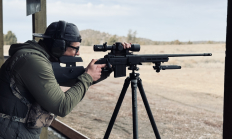
This is a one-day training course designed for hunters who want to shoot farther when conditions and skill allow. This course emphasizes ethical shot execution and practical field positions with mid-to-long range targets.
June
Multiple locations
Oak Springs Hatchery was constructed in several phases beginning in 1922 with the last major construction in 1996. The facility is currently used for egg production, incubation and rearing of rainbow trout, incubation and rearing of summer and winter steelhead, and maintains one resident rainbow trout and one resident cutthroat broodstock.
SALEM, Ore.— Hunters are the first line of defense against Chronic Wasting Disease (CWD). By getting their animals tested, hunters can help wildlife managers detect the disease early and slow its spread in the state's deer and elk herds. OHA and ODFW are again teaming up to encourage hunters who…
Round Butte Hatchery was constructed in 1972 to mitigate for the fishery losses caused by Pelton/Round Butte (PRB) Hydroelectric Complex. Round Butte and its satellite, Pelton Ladder, are used for adult collection, egg incubation and rearing of spring Chinook, summer steelhead, and sockeye salmon.

This 141-acre property along both sides of the Yachats River was first purchased in the early 1980s to provide forage for elk and help alleviate elk damage to surrounding agricultural land. It also provides public access to the Siuslaw National Forest along the Yachats River Highway, where there are few public access points.
This release was updated April 25 to correct two errors (the first name of the OSP Lieutenant who testified on Sauvie Island parking issues and that the Don Lindly property was sold to Lincoln County not Lincoln City.) LINCOLN CITY, Ore.—The Commission adopted a limited entry parking program for summer…