
Search myodfw.com
Showing 321 - 340 of 542 results
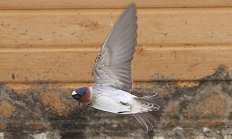
This chunky swallow is readily recognized by its square tail and orangish rump patch. It nests colonially and has taken to human-made structures so well that it has greatly expanded its range into many areas otherwise not suitable for it. It does not do well in urban settings, however, and quickly disappears when areas become densely settled. The unique gourd-shaped mud nest is often usurped by other species for nesting and is often used for protective roosting sites by rosy-finches and other wintering species. It is a locally common to abundant breeding bird near water throughout most of Oregon. Its…
Worldwide, frogs and toads are in trouble because of habitat loss, pollution, pesticides, climate change, diseases, the pet trade and competition from invasive species. Many of Oregon's 12 native species of frogs and toads are listed as Oregon Conservation Strategy Species of concern. Frogs and toads belong to the same animal group but are very different. Toads have dry, rough and bumpy skin covering a wide body while frogs are slender with smooth, moist skin. Frog eyes are higher on the head than toads and are rounder and bulging. And there's a reason we play "leap frog" - frogs take…


This medium-sized shorebird is the most common dowitcher in eastern Oregon and inland locations, where it sometimes gathers in large flocks feeding in shallow water. It is also the only dowitcher in the state that regularly winters. Although breeding plumage adults are reddish below and heavily patterned above, most birds seen in Oregon are duller postbreeding adults or browner immatures. During winter, when shorebirds are hard to find, a small flock of chattering dowitchers, even in plain gray basic plumage, often brightens a day in western Oregon. In migration, it can be found at almost any shallow water site in…

Rich, warm, unpatterned brown above and dull white below with a dusky throat and breast, the Rough-winged swallow is inconspicuous and often overlooked when flying with other, more brightly colored swallows. It is often confused with the similarly plumaged Bank and immature Tree swallows. It is most often observed flying low over rivers and lakes, rarely high overhead. It is a locally common summer resident statewide, most abundant at low to moderate elevations, usually near water. It usually nests singly, but sometimes in small loose colonies, rarely more than three pairs. Distribution is limited in many areas by lack of…

This moderately small wren maintains the frenetic energy that is so obviously typical of this family of birds. It is a summer inhabitant in many parts of Oregon, generally in open woodlands, thickets, and occasionally in residential gardens. The House wren occurs over the widest latitudinal range of any New World passerine. The House wren nests in a wide variety of native and human-influenced habitats. Nest sites are primarily located within preformed cavities in snags. It is a very uncommon to common transient and summer resident in semi-open woodland habitats throughout the state. In southwest Oregon, it is most common…


Features: Pumpkinseeds may be identified by the orange or red spot on the ear flap and the orange cheeks with wavy blue or turquoise stripes. Color is exceedingly brilliant and somewhat variable; olive to brassy-green above, the back finely dusted with gold or emerald. Habitat: Pumpkinseeds are found in the same habitats and often in association with bluegills. Adults often congregate beneath old deadheads and trees that have fallen into the water. Food habits are also similar to bluegill. They consume large numbers of snails by browsing on the stalks of aquatic vegetation. Techniques: Pumpkinseed are found in many of…

Features: Redear sunfish are often confused with bluegill, but differ by having a red or orange border around the black ear flap and by lacking the spot on the dorsal fin and the vertical bars on the side. Habitat: In Oregon, redear sunfish are found only in a few ponds in the Willamette Valley and the central part of the state. In their native range, redear sunfish prefer warm, large lakes and reservoirs and bayous with vegetated shallow areas and clear water. They feed primarily on the bottom and seldom take surface insects. The diet consists mostly of zooplankton, insect…

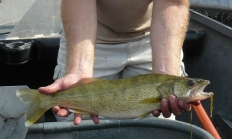
Features: Color varies, but walleye are generally dark olive-brown on top grading to almost white below. Walleye have two well-separated dorsal fins; the first fin has a large black spot at its rear base. The opaque eyes, giving the fish its common name, and canine teeth are other prominent features. Habitat: Walleye are found in the Columbia, Willamette and Snake rivers. In the Willamette River, the walleye fishery is generally limited to the section downstream from Willamette Falls at Oregon City, although a few have been documented as far upstream as Dexter Dam. Walleye prefer large, clean and cold or…
Updated December 31, 2025 Subscribe for updates Starting Jan. 1, 2026, an Ocean Endorsement is needed for most recreational anglers fishing in the ocean. Check the Ocean Endorsement page for more information. Ocean Endorsement

Study ahead: Oregon Furbearer Trapping and Hunting Regulations
Various seasons
Online Learning

This is the world's smallest "peep" and can usually be picked out by its brownish coloration, dull yellowish legs, and hunched, creeping foraging style. Least can be found in small flocks in Oregon almost year-round. The Least sandpiper feeds on open mud with Western sandpipers but often feeds where some grass, salicornia or other cover is present, avoiding walking in the water as Western often do. It is uncommon to locally abundant statewide in migration, with most birds along the coast and at larger lakes and marshes inland. It is locally common on the coast in winter; smaller numbers winter…

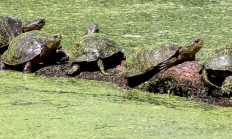
Oregon's native turtles are in trouble. Invasive, non-native turtles such as the red-eared slider and snapping turtle compete with Oregon's turtles for food, habitat and nesting sites. Our native turtles are also preyed upon by bullfrogs and are affected by habitat loss and degradation. Check out this video to learn more about Oregon's native turtles and invasive turtles.
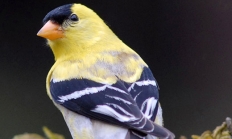
The exuberant bounding flight, musical calls, and flashy yellow and black plumage of the American goldfinch in breeding-season make them one of the most recognized and welcome of Oregon birds. Found in flocks nearly year-round, these goldfinches are a familiar site in riparian woodlands, orchards, weedy fields, and agricultural land. They are among the last of Oregon's songbirds to nest and are highly nomadic in the nonbreeding season. They may form mixed flocks with Lesser goldfinches and Pine siskins at bird feeders and weed patches throughout Oregon, as well as with Common redpolls some years in northeast Oregon. Their diet…
The eastern cottontail is the largest member of the genus in Oregon. Overall, the dorsal pelage is brownish, becoming darker (almost black) on the rump and lighter buffy brown on the flanks; the nape patch is orangy brown without black hairs, and the head is the same color as the dorsum. The hairs on the dorsum have steel gray bases followed by bands of brownish black, buff, and black. The venter hairs are white with gray bases, giving a splotched appearance when the hairs are spread, and the tail hairs are white to the base. This rabbit was introduced into…
