Search myodfw.com
Showing 341 - 360 of 509 results
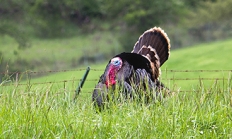
The wild turkey is the largest game bird in North American with mature males weighing upwards of 20 pounds and standing 40 inches tall. These large terrestrial birds are generally dark brown to black in appearance but iridescent color in feathers ranging from gold and copper to green and black gives a metallic appearance, particularly in full sunlight. Males and about 10 percent of females sport a unique beard of keratinous filament that protrudes from the junction of the breast and neck. Beards grow continuously but rarely exceed 10 inches in length. Females are smaller and duller in appearance. Densities…
This is the largest native quail in North America and one of the least understood. Males and females have identical plumage characterized by distinctive white flank barring and prominent vertical head plumes. Their eastern Oregon range appears reduced from historical accounts. Mountain quail are considered occasional in Union and Wallowa counties. They have also been observed along many of the tributaries of the John Day River in Wheeler and Grant counties and some in Wasco, Jefferson, Deschutes and Crook counties. In western Oregon, they are found in most forested mountainous areas generally above 1,640 feet, but may move to valley…

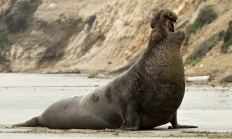
The Northern elephant seal is the largest pinniped carnivore that occurs along the North Pacific coast. The flippers are relatively small, the rear ones directed posteriorly. Its most distinctive feature is the elongated tubular proboscis with a deep transverse cleft among adult males. This proboscis can be inflated and directed into the open mouth to produce vocalizations. Also among males, the neck and chest lose most of their hair and the skin becomes rough and thickened at puberty. The adult pelage consists of course grayish or brownish hairs without any underfur. During the molt, not only is the pelage shed…
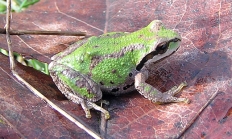
Adult treefrogs have a dark mask that extends from the tip of the nose across the eyes to the shoulders. Coloration varies between individuals, ranging from green or reddish to brown or gray. Most have dark blotches along their sides with light colored bumpy undersides. They have special skin glands that produce a waxy coating to keep their skin moist. Male treefrogs have a dark gray, inflatable throat pouch during the breeding season. As the smallest frog species in Oregon, adult Northern Pacific treefrogs only grow to two inches in length. During the non-breeding season, this treefrog is found in…
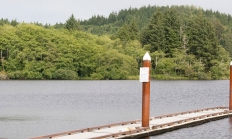
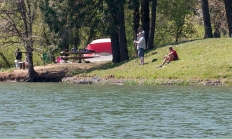
The present facility was constructed in 1925, across the North Umpqua River from an earlier trout hatchery built in 1920. The hatchery was closed in 1975 due to low stream flows and high water temperatures, and was reopening in 1979 after extensive reconstruction. In 2012 a state of the art fish passage ladder was completed. It included a fish viewing window for Rock Creek basin fish inventory and a fish trap facility. The hatchery produces fall and spring Chinook, coho, summer and winter steelhead, and rainbow trout. The facility is used for adult collection, spawning, incubation, and rearing of Chinook…
Cole Rivers Hatchery was constructed by the US Army Corps of Engineers (USACE) in 1973 to mitigate for spawning and rearing areas blocked by the construction of Lost Creek, Applegate, and Elk Creek Dams. The hatchery was named in honor of Cole M. Rivers, a biologist on the Rogue River for 20 years. The facility is used for adult collection, spawning, egg incubation and rearing of spring Chinook, coho, summer steelhead, and winter steelhead, and egg incubation and rearing of fall Chinook and rainbow trout. Infrastructure Repair and Renovation Updates
The Umatilla Hatchery began operation in 1991. The hatchery is used for egg incubation and rearing of spring Chinook, fall Chinook and summer steelhead.
Bandon Hatchery was constructed in 1925. Various renovations have taken place since original construction and more are planned for the future. The facility is used for adult collection, egg incubation and rearing of both natural and hatchery fall Chinook, winter steelhead, and trophy-sized rainbow trout.
Alsea Hatchery was constructed in 1936 and is operated with state funds. Many improvements have been made to the hatchery since original construction. The hatchery produces both winter steelhead and rainbow trout. The facility is used for adult collection, spawning, egg incubation and rearing of winter steelhead, and egg incubation and rearing of rainbow trout.
This 141-acre property along both sides of the Yachats River was first purchased in the early 1980s to provide forage for elk and help alleviate elk damage to surrounding agricultural land. It also provides public access to the Siuslaw National Forest along the Yachats River Highway, where there are few public access points.
Leaburg Hatchery was built in 1953 to mitigate for lost fishing opportunity because of the many dams on Willamette Basin rivers. These dams include Cougar, Blue River, Carmen-Smith, Lookout, Dexter, and others. The hatchery rears rainbow trout, summer steelhead and Chinook salmon, and has a staff of four employees. Come visit our show pond and see huge white sturgeon and rainbow trout. There’s a viewing platform built by the McLaren School for Boys in 1993 to allow visitors to get a close up look at spring Chinook salmon spawning in the creek below.
Teach, restore, study, host, build, communicate When you sign up to be an ODFW volunteer, you are helping to protect Oregon's fish and wildlife, manage ODFW properties and spark a passion in others to hunt, fish and appreciate the outdoors building and enhancing fish, wildlife and their habitats for current and future generations. Donating even one day a year is all it takes to be helpful. We can be as flexible as possible to find the right opportunity to fit your schedule. Join thousands of volunteers by sharing your time and talents with ODFW.
OTIS, Ore.—ODFW's recent legislatively adopted budget did not include funding to continue the operation of Salmon River Hatchery, one of more than 30 hatcheries that ODFW maintains in the State. The cost of operating and maintaining the hatchery exceeded available revenue, but funding is just one of the issues facing…
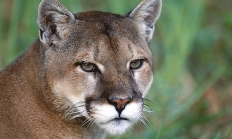
The skull of the cougar, also know as mountain lion, is massive; the canine teeth are large and slightly recurved. The heel pads of both fore and hind feet have three lobes on the posterior margin which are useful in separating the tracks of a cougar from those of other felids, such as the lynx. The dense and soft dorsal fur typically is tawny, but slate gray and reddish brown individuals are known. The venter is whitish. The back of the ears and tip of the very long tail are brownish black. The upper lip is white. Young cougars are…
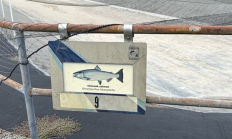
Returning adult salmon and steelhead enter the fish ladder on the south side of the dam and are held in a 12’ x 40’ trap until they can be processed by ODFW’s South Santiam Hatchery staff. Hatchery employees operate the fish trap one to three times per week depending on the time of year and numbers of adults returning to the system. An average of 4,000 spring Chinook, 4,700 summer steelhead, and 670 winter steelhead are collected annually. All unmarked spring Chinook and winter steelhead are returned to their native habitats in the South Fork of the Santiam above Foster…