
Search myodfw.com
Showing 41 - 60 of 306 results
Crabbing and Clamming September 10, 2026 Announcements Always check for closures at the ODA Shellfish Safety page before harvesting shellfish, which includes clams, crabs and mussels. Advisory ODFW has issued a bay clam harvest advisory for Alsea Bay estuary. Read the news release for more information. Reminder: Annual conservation closure for razor clams north of Tillamook Head (Clatsop Beaches) began July 15 and runs through September 30. The season will reopen October 1 unless there is a closure for toxin levels. Report commercial derelict crab pots If you are out on the ocean or in the Columbia River from now…

Spring, fall and winter are the seasons when most big game hunters will be in the woods or on the grasslands. Visit e-regulations
UPDATE: ODFW has reduced closures within White River Wildlife Area, but some areas remained closed. All land within a level 3 GO NOW evacuation perimeter will remain closed. As evacuation levels are downgraded, access will increase. Please refer to the evacuation perimeter map before accessing the wildlife area. Developing evacuation…
ODFW Marine Resources Program's Alex Copeland monitors scientific fish finders on board the research vessel. ODFW photo. NEWPORT, Ore. – Oregon Department of Fish and Wildlife's Marine Fisheries Research team is conducting a nearly 10-week at-sea survey to better understand the population status of black, blue, and deacon rockfish—three species…
SALEM, Ore. — The Oregon Department of Fish and Wildlife is hosting a public meeting to review the agency's draft Endangered Species Management Plan for Southern Resident Orcas (SRO). The online-only meeting is July 9 from 6:30 p.m. – 8 p.m. ODFW staff will give a brief presentation of SRO…
MARINE FISHING September 10, 2026 Announcements Ocean salmon closed from Leadbetter Point, WA to Cape Falcon, OR: Effective 11:59 PM Tuesday, September 8, 2026, the ocean recreational fishery in the area between Cape Falcon and Leadbetter Point (Columbia River Subarea) is closed to fishing for salmon. Possession of salmon on board a vessel is prohibited in the Columbia River Subarea. Ocean coho salmon from Cape Falcon to Humbug Mountain: Effective Saturday, September 12, 2026, at 11:59PM, the recreational fishery from Cape Falcon to Humbug Mountain is closed to the retention of coho salmon. The season remains open for all salmon…
Fire Closure: As of July 29, 2026, the northern portion of the wildlife area is closed. More information here: https://myodfw.com/news/odfw-closes-northern-portion-white-river-wildli… White River Wildlife Area was established in 1953. Located along the east slope of the Cascade Mountains in the north central part of Oregon, the wildlife area encompasses 29,480 acres. An additional 1,280 acres of land owned by the Bureau of Land Management (BLM) is managed by the ODFW bringing the total acres managed by the department to 30,760. The primary purpose of White River Wildlife Area is to provide winter range habitat for black-tailed deer and Rocky Mountain elk…
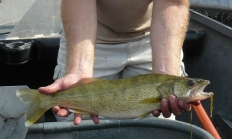
Features: Color varies, but walleye are generally dark olive-brown on top grading to almost white below. Walleye have two well-separated dorsal fins; the first fin has a large black spot at its rear base. The opaque eyes, giving the fish its common name, and canine teeth are other prominent features. Habitat: Walleye are found in the Columbia, Willamette and Snake rivers. In the Willamette River, the walleye fishery is generally limited to the section downstream from Willamette Falls at Oregon City, although a few have been documented as far upstream as Dexter Dam. Walleye prefer large, clean and cold or…

Updated December 31, 2025 Subscribe for Sport Bottomfish Regulation Updates
Find maps, boundary descriptions and the percent public land for the Steens Mountain Unit.
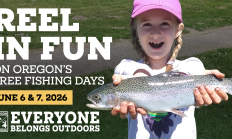
SALEM, Ore..— Everyone can fish, clam and crab for free in Oregon on Saturday and Sunday, June 6-7, 2026. No fishing/shellfish licenses or tags/validations are required on these days (meaning you do not need a Combined Angling Tag, Columbia River Basin Endorsement, Ocean Endorsement or two-rod validation where two rods…
CLACKAMAS, Ore.— Anglers will be able to use their two-rod validation in the Willamette River for hatchery spring Chinook and all other fish except sturgeon from June 3-July 31. Two rods were not originally authorized on the Willamette River this year because the forecasted return of hatchery-origin adult spring Chinook…
A black bear tried its best to get into a Neskowin homeowner's bear resistant trash can. The homeowner then built a small shed to enclose the trash can. The persistent bear left its prints and claw marks on the shed but did not succeed in breaking into it. This resident…
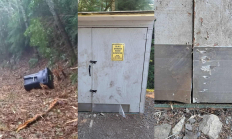
CANYON CITY, Ore.- A poacher investigated for more than 50 crimes committed in Grant County between 2023 and 2024 was sentenced to 95 days behind bars and more than $22,000 in restitution and fines, according to wildlife officials. In what wildlife enforcement officers refer to as a serial poaching case…
SALEM, Ore. – Mussel harvesting is now closed from Cape Blanco to the California border the Oregon Department of Agriculture and the Oregon Department of Fish and Wildlife announced today. Recent mussel samples indicate levels of domoic acid (a marine biotoxin) are above the safety threshold. People should always call…
Seeing killer whales off the Oregon coast is a rare treat, but whale watchers can usually count on a pod of orca’s patrolling the coast in mid-April – just in time to intercept baby gray whales. Orcas are most often seen in the ocean off Depoe Bay and Newport, but can be spotted coastwide. The first thing you are likely to see when sighting killer whales is their dorsal fin. Male orcas have a dorsal fin that can be six feet in height, juveniles and females have shorter fins. These large fins can be seen from quite a distance. There…
