Search myodfw.com
Showing 441 - 460 of 705 results
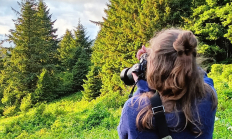
The American bullfrog is a non-native invasive frog that survives and reproduces very successfully in Oregon. Bullfrogs aggressively compete for food and living space with our native frogs. They eat many types of native wildlife including other frogs, young pond turtles, and ducklings. Bullfrogs can lay almost 10 times more eggs than native frogs and can quickly out number them. Photo by Kathy Munsel

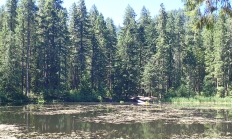
KLAMATH FALLS, Ore. – ODFW is urging waterfowl hunters and other visitors to use extreme caution after laboratory results revealed exceptionally high levels of microcystin in a water sample collected from the Barnes Unit of the Upper Klamath National Wildlife Refuge. The sample was taken from an area currently open…
Find maps, boundary descriptions and hunts available in the new Poverty Basin Hunt Area. Download printable PDF map
Features: These fish are olive green to dusky-brown with some light mottling towards their top sides. Their fin membranes are yellow. Habitat: Yellowtail rockfish will usually be found in offshore waters and often suspended over deep reefs and rocky habitat to as deep as 900 feet. Technique: Best success will be by first locating suspended schools of yellowtail rockfish in offshore areas during periods open for fishing offshore, and then working rubber tail jigs or shrimp flies through the schools.

This is a bird of riparian thickets, farmlands, and towns. Since 1980, it has been observed almost annually in Harney County, usually in numbers less than five. A pair successfully fledged young near the Malheur National Wildlife Refuge headquarters in 1994. Most Harney County records occur from early April to late October. Away from Harney county individuals have also been seen in the various eastern and southeastern counties of Oregon. Hear the song of the Great-tailed grackle Photo by Kathy Munsel, ODFW

Features: The widow rockfish is brassy brown with a light colored belly. Their fin membranes are also brown. They can grow to be 21-inches long. Habitat: Widow rockfish school down to 1200 ft., usually found suspended over offshore reefs and rocky areas. Technique: Best success will be by first locating suspended schools of widow rockfish in offshore areas during periods open for fishing offshore, and then working rubber tail jigs or shrimp flies through the schools.


Features: The redstripe rockfish appears red and pink. The dorsal fin is shallowly notched and the lateral line is a distinct red stripe. It has dark lips, a protruding lower jaw, and greenish stripes radiating from the eyes. Habitat: Commonly found over high-relief, rugged bottoms from 500 feet to 900 feet below the surface. Technique: Best success will be by first locating suspended schools of redstripe rockfish in offshore areas during periods open for fishing offshore. Work rubber tail jigs or shrimp flies through the schools.
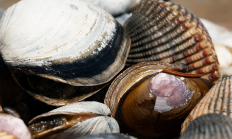
NEWPORT, Ore. – The Oregon Department of Fish and Wildlife recommends people avoid harvesting and consuming softshell and bay clams from Alsea Bay estuary after the Oregon Health Authority issued a recreational use advisory for Eckman Lake in Lincoln County. The OHA issued a July 31 advisory due to the…
This tiny jewel is the smallest breeding bird in North America and the smallest long-distance avian migrant in the world. The average weight of males is approximately 0.09 oz, about half of that of an Anna's hummingbird, and a little more than the weight of a penny. It breeds predominantly in mountain habitats, and despite its diminutive size, successfully withstands the chilly summer nights at high elevations. It is a common summer resident of the Blue and Wallowa Mountains and other high ranges east of the Cascade summit. Spring and fall migrants are rare at lower elevations east of the…


Chukars are ground-loving birds that quickly run uphill or burst from cover with rapid wing-beats and a characteristic whitoo call if alarmed. Introduced by managers wishing to increase hunting opportunities in arid western North America, the chukar is a very successful exotic species that occupies habitats where few other gamebirds exist. It is the most harvested upland bird in Oregon. It is a common permanent resident of eastern Oregon. Populations are distributed in steppe habitats along the breaks of the Columbia, John Day, Snake, Owyhee, Deschutes, Malheur, Burnt and Grand Ronde rivers and lesser watercourses or reservoirs. Hear the call…

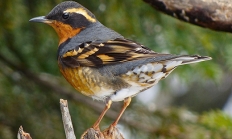
When glimpsed in the deep shadows of its preferred densely forested habitat, this secretive thrush resembles a plump robin. But a clearer view will reveal the distinctive fieldmarks of a dark breast band, orange eyebrows, and orange wingbars. As striking as its plumage is its unmistakable song: a succession of single drawn-out, ventiloquial notes, given at different pitches that pierce the fog and dense foliage of its favored haunts in lush coastal and montane old-growth forests. In Oregon, it breeds throughout the Coast Ranges and in the Cascades. It is a fairly common breeder in low-elevation hemlock and spruce forests…