
Search myodfw.com
Showing 541 - 560 of 903 results
A group of twittering, tiny gray birds streaming through bushes and trees and across openings surely are Bushtits. Females' eyes are pale, males' dark. They are highly gregarious except when nesting. The intricately made sock-like nest is unusually large for the size of the bird. Bushtits show a distinct indifference to humans and regularly nest within residential neighborhoods and establish foraging routs throughout many cities. They regularly take suet at bird feeding stations and visit backyard birdbaths. The Bushtit is a fairly common resident throughout Oregon except in Umatilla, Union, and Wallowa counties and at higher elevations of mountain ranges…

Few birds are as astonishing as the American dipper. This nondescript, dark brown to gray bird is seldom seen more than a few feet from the water's edge. Its elaborate song, which can come forth even on cold winter days, is readily heard above the noise of rushing streams. This bird's ability to dive into a rushing stream to forage on aquatic invertebrates and reappear in the same location has elicited wonder and excitement from ornithologists, naturalists, and birders as well as envy and adoration from fly-fishers. It is an uncommon year-round resident in montane streams and rivers throughout Oregon…



The Common nighthawk is a migrant to Oregon with one of the longest migration distances of any North American bird. It is also one of the last to arrive in Oregon. Long, slender wings are marked by a white patch on the "hand" visible in flight from great distances. When perched on the ground, the cryptic brown, gray, and black mottling makes the bird almost invisible. This bird breeds and migrates at all elevations through the state. Its nesting habitat is characterized by open landscapes with little ground cover and is most abundant in sagebrush and rocky scablands and rimrock…

Features: Kokanee are silvery in color until they are ready to spawn, at which time they become reddish. They do not grow as large as sockeye- their ocean traversing siblings. They can vary significantly in size depending on how densely populated the waterbody is. Since they are filter feeders, their populations can quickly expand and contract with the availability of food. Habitat: Kokanee can be found at all depths of cold, clear lakes and reservoirs in several parts of the state. They will change which depth they are at depending on water temperature. Technique: They are a challenging fish to…

One of the most familiar sights along the roads of Oregon is a Red-tailed hawk soaring high on the sky over a field, or perched on a utility pole, waiting patiently for prey. Red-tailed hawks are large-bodied raptors with relatively broad wings. The back is mottled brown, and the tail of mature birds is orangish red with a thin, dark subterminal band. Perched birds can be identified from behind even when the tail is concealed by the white mottling on the scapulars forming a faint 'V'. Most individuals can be assigned to one of two color morphs, light or dark…

This small, rich-brown wren is only slightly larger than a quarter, and has a tail quite short for a wren. A quiet observer in the forest will see these birds hop in and out and all over logs, snags, shrubs, twigs, and limbs on the forest floor. It has been said that the song of this bird is larger than the bird itself. The Winter wren breed from Coos County southward and in eastern Oregon in the Blue and Steens mountains. It retreats from high altitudes in winter where snow pack is heavy. Migration probably occurs throughout the state, but…

In grass or sagebrush-dominated habitats throughout the state, the song and striking appearance of the Western meadowlark create one of the most familiar and endearing avian images in Oregon. It's one of Oregon's most recognizable birds with its bold yellow breast and belly with a distinct black V across the chest and its habit of perching on fences along roadsides. Fittingly, it was chosen as Oregon's state bird by a vote of Oregon schoolchildren ratified by the Legislature in 1927. It is one of the most widely distributed open-country species in the arid desert country of eastern Oregon. It can…

Set your sights on learning opportunities! ODFW connects people to Oregon's great outdoors by offering a multitude of workshops and events throughout the year. Education programs cover required Hunter Safety certification courses, ability level and age specific workshops, and events for the entire family. Let us help you prepare for your next step outdoors. Receive Workshops & Events Updates by E-mail

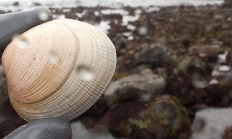
Features: The purple varnish clam is named for the purple hue found inside the clam and the shiny varnish over the brown color outside the shell. It is oval in shape and is relatively flat with a prominent ligament near the hinge. Habitat: These clams can be found in cobble to muddy substrate. Technique: Purple varnish clams are found in very high densities. Limits are 72 a day. Learn more here before getting started clamming. See Oregon Sport Fishing Regulations for information on the daily catch limits for bay clams. How to dig purple varnish clams (video)

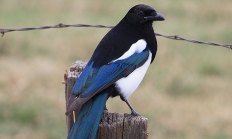
These birds are intelligent, curious, social and have good memories. Members of this group are commonly called the crow family, and are the among the most intelligent birds studied so far.
Features: Circular in shape and 1.5-2.5 inches across. Identified by concentric lines and radiating ridges. Longer lived and less abundant than cockles. Habitat: High salinity areas of sand, mud, gravel, or rock. Harvest them in Tillamook, Netarts, Yaquina, and Coos bays. Techniques: These clams can be found in rocky nearshore areas within 6 inches of the surface. Using a rake for these clams is the best harvest method. Learn more here before getting started clamming. See Oregon Sport Fishing Regulations for information on the daily catch limits for bay clams. How to dig for little neck clams (video)
Swans, ducks and geese belong to the Anatidae family and occur on all continents. Special oils let their feathers shed water, so they are adapted for swimming and floating, and some are even talented divers. For tips on discouraging geese from overwhelming your yard, check our Living with Wildlife, Birds page.

World famous for its loud, persistent singing and mimic abilities, the Mockingbird is highly conspicuous. The white flashes in the wings and tail of this grayish bird identify it in flight. It is primarily a southern species that has, by taking advantage of the environmental changes brought about by the ever-increasing human population, expanded its range northward in recent years. In many parts of the country it is a familiar bird of residential neighborhoods. Hear the call of the Northern mockingbird Photo by ©Keith Kohl, ODFW

The Pacific wren makes its home in dense coniferous forests with understory thickets where it often forages for insects. This bird was considered the same species as the winter wren but is now separated as its own distinct species. The Pacific wren is rufous brown above, richly colored below, and barred with a darker brown and dusky. Young birds are distinctly less barred. It’s most easily found by its sharp kep-kep call and ringing, tinkling song. Males defend territory by singing in spring and in hopes of attracting a mate.
