Search myodfw.com
Showing 541 - 560 of 840 results
Species and Subspecies
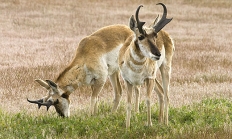
The pronghorn, often called "antelope," is deer-sized with relatively long and thin legs and feet with just two digits on each foot, a relatively small tail, and unique horns consisting of deciduous keratin sheaths set on bony cores arising from the fontal bones. Among males, the laterally flattened sheaths are long, branched and recurved, but in those females that possess horns they are short and simple. The horns and hooves are black. The front feet are larger and carry most of the weight when the pronghorn runs. The pelage is course. The dorsum is a light buff and is separated…
Article
Surf fishing is one of Oregon’s most underutilized fisheries. There are hundreds of places to fish along Oregon’s sandy beaches, and there are plenty of fish within an easy cast from shore.
March 20, 2026

Landing page
Oregon's 33 hatcheries produce about 40 million fish annually and you can visit them. They offer the chance to see fish – from eggs to brooders – and an opportunity to learn how they are raised. Oregon's hatcheries are important for anglers and the public because they directly provide fish for angling, help rebuild native fish populations, and offer educational programs. They are also vital to supporting the cultural heritage of Tribes. Hatcheries offer great wildlife viewing, interpretive displays and some provide boating and angling access. Did you know that ODFW rears 10 species of fish including steelhead/rainbow trout, brook…
September 05, 2017
Article
Porcupines may be one of Oregon's most recognizable wildlife, but surprisingly little is known about them—especially in Central Oregon.
September 5, 2025

Species and Subspecies
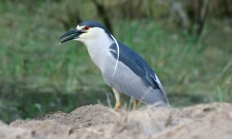
Although quite common in the U.S., the Black-crowned night-heron's nocturnal and crepuscular feeding habits can make it difficult to locate. Its habitat consists of marshes, lakes, rivers, and other wetlands, where it feeds mostly on fish. It is a thick-billed, medium-sized, stocky heron with relatively short neck and legs. Adults have a black back and cap which contrast with the pale gray or whitish underparts. Immatures have brown backs with large pale spots and heavily streaked underparts. A distinctive choking squawk call is often heard at dusk. It is a fairly common summer resident east of the Cascades where it…
Species and Subspecies
Features: Sacramento perch are blackish above with about seven vertical dark bars that are irregular in form and position. They are not a true perch, but a sunfish. It is the only member of the sunfish family native to the west coast and, in Oregon, is found only in the Klamath Basin. Sacramento perch are distinguished from the other sunfish in Oregon by having 12 or 13 dorsal fin spines whereas all the others have 10 or fewer. Maximum size in Oregon is about 12-inches in length and a weight of about 3/4 pound, although in California they have been…

Species and Subspecies
Features: Redear sunfish are often confused with bluegill, but differ by having a red or orange border around the black ear flap and by lacking the spot on the dorsal fin and the vertical bars on the side. Habitat: In Oregon, redear sunfish are found only in a few ponds in the Willamette Valley and the central part of the state. In their native range, redear sunfish prefer warm, large lakes and reservoirs and bayous with vegetated shallow areas and clear water. They feed primarily on the bottom and seldom take surface insects. The diet consists mostly of zooplankton, insect…

Species and Subspecies
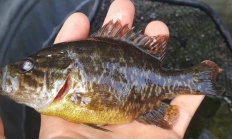
Features: Warmouth have more of a bass-shaped body and a larger mouth than the other sunfishes, other than the green sunfish. Warmouth are yellowish brown in color with three or four brownish bars radiating back from the eye over the gill cover. They can be distinguished from the green sunfish by the absence of turquoise mottling on the gill cover and the lack of a dark spot at the rear base of the dorsal fin. Habitat: In Oregon, warmouth are present in a few coastal lakes and widely distributed in the Columbia basin, but are not commonly caught by anglers…
Species and Subspecies
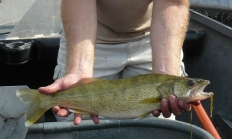
Features: Color varies, but walleye are generally dark olive-brown on top grading to almost white below. Walleye have two well-separated dorsal fins; the first fin has a large black spot at its rear base. The opaque eyes, giving the fish its common name, and canine teeth are other prominent features. Habitat: Walleye are found in the Columbia, Willamette and Snake rivers. In the Willamette River, the walleye fishery is generally limited to the section downstream from Willamette Falls at Oregon City, although a few have been documented as far upstream as Dexter Dam. Walleye prefer large, clean and cold or…
Species and Subspecies
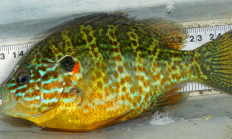
Features: Pumpkinseeds may be identified by the orange or red spot on the ear flap and the orange cheeks with wavy blue or turquoise stripes. Color is exceedingly brilliant and somewhat variable; olive to brassy-green above, the back finely dusted with gold or emerald. Habitat: Pumpkinseeds are found in the same habitats and often in association with bluegills. Adults often congregate beneath old deadheads and trees that have fallen into the water. Food habits are also similar to bluegill. They consume large numbers of snails by browsing on the stalks of aquatic vegetation. Techniques: Pumpkinseed are found in many of…
Zones or Areas
Trout fishing opportunities abound in this zone, known for its high desert climate, sage-covered canyons, glacial peaks and mountain lakes. Anglers will find year-round trout fishing in the Deschutes, Metolius, Fall and Crooked rivers, while several central Oregon lakes and reservoirs are renowned for their trout and kokanee fishing – and their beauty. The Hood and lower Deschutes – both tributaries of the Columbia River – offer high desert fishing for Chinook salmon and summer steelhead.
Article
Oregon's State Wildlife Action Plan (SWAP), officially approved by the U.S. Fish and Wildlife Service on March 20, ensures continued federal funding eligibility and provides a science‑based roadmap to maintain healthy fish and wildlife populations, prevent further declines of at‑risk species, and reverse existing declines where possible. Along with the 2026 plan's approval, ODFW updated the user‑friendly SWAP website (formerly the Oregon Conservation Strategy and Oregon Nearshore Strategy) designed to help Oregonians easily navigate information about species, habitats and key conservation issues. Visit the 2026 SWAP website at: https://swap.oregon.gov
April 10, 2026

Article
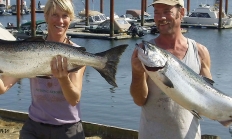
Summer is a great time to be on the Pacific chasing ocean salmon. Whether you captain your own ship or book a commercial charter, there is an ocean salmon of fishing opportunity for you.
Zones or Areas
Abundant rainfall feeds the massive Willamette River watershed, tamed by a system of reservoirs that are stocked annually with hundreds of thousands of rainbow trout. Some of these reservoirs also grow trophy-size largemouth and smallmouth bass, as well as bluegill, brown bullhead and crappies. Smaller lakes and ponds nearer the valley floor provide springtime trout fishing close to home. Salmon and steelhead navigate the Willamette River and its tributaries, many of which are also home to rainbow and cutthroat trout.
Zones or Areas
Wide open spaces, wild windy places, and extreme temperatures characterize Oregon’s largest, most remote fishing zone. Redband trout are native to its rivers and streams, including the Williamson, Malheur and Chewaucan. Brown and hatchery rainbow trout can grow to trophy-size in many of its lakes and reservoirs, many of which also feature crappie, yellow perch and bass.
Workshop and Events
ORDER Replacement Hunter Safety Card
Date
Available
Location
Online

Recreation Report
Central Fishing September 17, 2026 Best bets for weekend fishing: Anglers report good fishing for recently stocked trout in North and South Twin Lakes. Anglers can still fish for trout throughout the lower Deschutes. Using a large stonefly nymph or a double nymph setup with an indicator typically does well during the summer months. Water clarity and overall conditions at Kingsley Reservoir are great for fishing, should still be good opportunity for trout this summer. The Upper Deschutes River above Benham Falls will close to angling on Oct. 1. Only a few weeks remain to fish the headwater reach for…
September 05, 2017
Species and Subspecies
Features: Largemouth bass are greenish on the back and sides with a white belly and usually a dark horizontal stripe along the side. They are distinguished from their close cousin, the smallmouth, by a large mouth with the upper jaw extending behind the eye. Largemouth bass in Oregon can exceed 25 inches in length and a weight of 12 pounds. Habitats: Their preferred habitats are shallow ponds and lakes, or the backwater sloughs of rivers where aquatic plants or submerged logs and brush provide abundant cover. Largemouth bass begin life feeding on zooplankton (tiny crustaceans), but soon switch to insects…

Recreation Report
NE Fishing September 17, 2026 Best bets for weekend fishing: Morgan Lake has reopened with bass and trout. Fishing for trout will be best near shore especially on the South end of the lake near the inlet of the Wallowa River. Kokanee have started spawning in the Wallowa River above the lake. They can readily be seen throughout Wallowa Lake State Park and make for some great fall wildlife viewing. Try Willow Creek Reservoir for trout, bass, and crappie. Penland Lake is producing limits of rainbow trout. Try warmwater fishing for bass in the lower Grand Ronde. Trout stocking Stocking…
September 05, 2017
Species and Subspecies
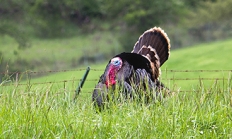
The wild turkey is the largest game bird in North American with mature males weighing upwards of 20 pounds and standing 40 inches tall. These large terrestrial birds are generally dark brown to black in appearance but iridescent color in feathers ranging from gold and copper to green and black gives a metallic appearance, particularly in full sunlight. Males and about 10 percent of females sport a unique beard of keratinous filament that protrudes from the junction of the breast and neck. Beards grow continuously but rarely exceed 10 inches in length. Females are smaller and duller in appearance. Densities…