Search myodfw.com
Showing 721 - 740 of 1128 results
SALEM, Ore. – The Fish and Wildlife Commission meets Friday, July 11 at 10 a.m., at The Dalles Civic Auditorium (323 East 4th St., The Dalles). See the agenda here. The meeting will also be livestreamed from the Commission page. At Friday's meeting, the Commission will be asked to consider…

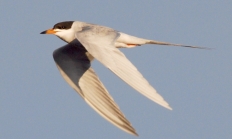
Terns are generally associated with marine environments and salt marshes, but the Forster's tern inhabits freshwater areas. During the breeding season this graceful bird is eastern Oregon's resident small white tern. Typical of terns, the Forster's employs a dramatic hunting method of plunge-diving into shallow waters to capture small fish, the bird sometimes submerging completely. This is an uncommon but highly visible colonial breeder east of the Cascades. Hear the call of the Forster's tern Photo by Dave Budeau, ODFW
Oregon's owls are mostly nocturnal, hunting for insects, fish, frogs, birds, mice and other small mammals in the night. Their hoots, screeches and calls can be heard after dark or early in the morning. Owls don't build nests, but instead use tree cavities, nests created by other species, naturally occurring structures or human-made nest platforms. The Western burrowing owl nests underground in abandoned dens dug by squirrels, prairie dogs and badgers. Learn more about Oregon's owls.

Establishment of the Bridge Creek Wildlife Area initially started in 1961 when a parcel of land was purchased from the Frank Hilbert estate. After the initial purchase, several private holdings were acquired to consolidate the land under department ownership. The last parcel was purchased from the Colvin Cattle Company in 1975. The primary purpose of the wildlife area is to maintain and protect a key historic winter range for Rocky Mountain elk ( Cervus elaphus nelsoni).
The Columbia Basin Wildlife Areas are a composition of four Oregon Dept. of Fish & Wildlife managed wildlife areas located along the Columbia River in the Columbia Basin. The four wildlife areas (Power City, Irrigon, Coyote Springs, and Willow Creek) are within the Columbia Plateau ecoregion. Management agreements for these areas were initially established between 1971 and 1977 between the department and Federal agencies which own the lands. The Columbia Basin Wildlife Areas, which total approximately 1,885 acres, provides an important landbase for the conservation and recreation of fish and wildlife within a highly privatized and altered landscape and play…

The Columbia Basin Wildlife Areas are a composition of four Oregon Department of Fish and Wildlife (department) managed wildlife areas located along the Columbia River, in the Columbia Basin. The four wildlife areas (Power City, Irrigon, Coyote Springs and Willow Creek) are within the Columbia Plateau ecoregion. Management agreements for these areas were initially established between 1971 and 1977 between the department and Federal agencies which own the lands. The Columbia Basin Wildlife Areas, which total approximately 1,885 acres, provide an important landbase for the conservation and recreation of fish and wildlife within a highly privatized and altered landscape and…
ASTORIA, Ore. – Clatsop beaches reopen for razor clam harvesting Oct. 1 following the annual conservation closure that began July 15. Before harvesting razor clams or any shellfish, always call the Shellfish Safety Hotline at 1-800-448-2474 or visit the ODA Recreational Shellfish Biotoxin Webpage. During the closure, Oregon Department of…
Following droughts in the 1930s that affected most of North America, major conservation efforts, both private and governmental, were enacted to reverse trends of degrading and disappearing wetlands. During this time period there was a major creation and expansion of Federal refuges and State wildlife areas. As the concept of waterfowl flyway management was endorsed and developed, wildlife areas were acquired and managed as part of a larger plan focused on migratory waterfowl needs. Klamath Wildlife Area was one of several wetland-focused wildlife areas established in Oregon. KWA was established in 1958, with primary objectives of protecting and improving waterfowl…

CENTRAL WILDLIFE VIEWING August 27, 2026 Recreating in drought and wildfire season - actions you can take to protect wildlife . For the most current fire closures and restrictions-- KNOW BEFORE YOU GO . Crook County Crook county has been severely affected by wildfire this summer, most public lands remain under closure, and visibility is often obstructed by smoke. Despite this, there are some good bird viewing opportunities. Waterfowl should be visible along the crooked river and on most lakes/reservoirs. Herons, osprey, and kingfishers are frequently seen along the crooked river while searching for prey. Raptors, including bald eagles, redtail…
SALEM, Ore.—Oregon's Fish and Wildlife Commission meets online Friday, Jan. 16 to amend the formula for setting Landowner Preference tags for mule deer hunts and modify the Coquille River Fall Chinook conservation hatchery program to allow the use of hatchery origin broodstock. See the full meeting agenda at https://myodfw.com/articles/commission-agenda-january-16-2026 The…
Teach, restore, study, host, build, communicate When you sign up to be an ODFW volunteer, you are helping to protect Oregon's fish and wildlife, manage ODFW properties and spark a passion in others to hunt, fish and appreciate the outdoors building and enhancing fish, wildlife and their habitats for current and future generations. Donating even one day a year is all it takes to be helpful. We can be as flexible as possible to find the right opportunity to fit your schedule. Join thousands of volunteers by sharing your time and talents with ODFW.
SALEM, Ore. – The Oregon Fish and Wildlife Commission meets March 19-20 in Medford for a field tour on Thursday and a regular meeting on Friday. The Friday meeting agenda and livestream are available from the Commission page. To virtually testify on an agenda item, register here at least 48…
Fire Closure: As of July 29, 2026, the northern portion of the wildlife area is closed. More information here: https://myodfw.com/news/odfw-closes-northern-portion-white-river-wildli… White River Wildlife Area was established in 1953. Located along the east slope of the Cascade Mountains in the north central part of Oregon, the wildlife area encompasses 29,480 acres. An additional 1,280 acres of land owned by the Bureau of Land Management (BLM) is managed by the ODFW bringing the total acres managed by the department to 30,760. The primary purpose of White River Wildlife Area is to provide winter range habitat for black-tailed deer and Rocky Mountain elk…