Search myodfw.com
Showing 781 - 800 of 1416 results
Recreation Report
SE Fishing June 25, 2026 Best bets for weekend fishing Catch and Release for Redband Rainbow Trout with no bait is now required through Ocotber 31 on all Upper Klamath Lake including Pelican Bay, Crystal Creek, Recreation Creek, Harriman Creek, Odessa Creek, Short Creek, Pelican Bay, Fourmile Creek, Thomason Creek, Fourmile Canal, and mouth of Williamson River. Willow Valley Reservoir is good for largemouth bass Black drake mayflies will be hatching in various rivers in the Klamath Basin. Lake of the Woods, Miller Lake and Fourmile Lake will be fair for hatchery rainbow trout The Wood River below Weed Road…
September 05, 2017
Zones or Areas
Oregon’s beaches, bays and ocean waters have more kinds of fishing than anywhere in the state. From chasing surfperch in the… well, surf, to hooking cabezon from a rocky jetty, to going deep after rockfish and halibut, to the line-screaming runs of an albacore tuna, this zone offers a species and fishing technique for every angler. Subscribe for updates Starting Jan. 1, 2026, an Ocean Endorsement is needed for most recreational anglers fishing in the ocean. Check the Ocean Endorsement page for more information. Ocean Endorsement
Article
The Rogue-South Coast Steelhead Validation is required for all winter steelhead anglers fishing in the Rogue Basin or on the south coast from Dec. 1 to April 30. In addition, a harvest tag is required to keep wild winter steelhead in this area. Visit e-regulations
October 25, 2023

Recreation Report
MARINE WILDLIFE VIEWING June 25, 2026 The Oregon coast is a great place to come and view a variety of wildlife. Enjoy the great diversity of life: from giant whales and barking sea lions to majestic bald eagles and diving pelicans, to showy Harlequin ducks and flocking shorebirds, to the tiny anemones and crabs inhabiting tidepools. There is always something new to discover. Visit our wildlife viewing map for locations to visit and view wildlife along the Oregon coast. Maximize your viewing of coastal creatures by bringing binoculars for close-up views. Beach Safety: Check conditions here Whales, orcas and porpoises…
September 05, 2017
Educational Moment
Shooting accurately starts with the proper form, and that begins with a good stance. From your feet up through your hips and torso, a solid foundation in your lower body will improve your shooting. Start with an open stance The “open” stance is a good one for beginners. It’s easy to master and to practice consistently. An open stance positions yours hips and shoulders in-line with the direction you ’re shooting. This perpendicular setup to the target is simple to do. First, place one foot on each side of the shooting line. Most ranges will have these lines. If not…
May 19, 2020
Article
Salmon, steelhead and smallmouth bass offer world-class fishing here year-round. Rainbow trout are stocked in the upper Rogue and in lakes nestled in settings as varied as fir forest and wind-swept dune. Big reservoirs provide fishing for trout and for thriving populations of largemouth bass, catfish, perch and crappie. Coastal bays serve as gateways to rich offshore reef fisheries, and miles of public beach welcome anglers to fish for surfperch against a backdrop of rugged capes.
Landing page
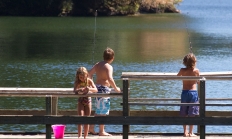
Updated April 29, 2026 Subscribe for updates Starting Jan. 1, 2026, an Ocean Endorsement is needed for most recreational anglers fishing in the ocean. Check the Ocean Endorsement page for more information. Ocean Endorsement
October 23, 2017
Press Release
SALEM, Ore. – Anglers will have additional chances to fish for wild coho this November as ODFW announces extended fishing opportunities in the Siletz, Yaquina, and Alsea river basins. At the request of the Oregon Fish and Wildlife Commission, ODFW staff evaluated the potential for additional fishing days beyond the…
October 7, 2025
Landing page
While there is a general, statewide season for cougars, there are quotas set by zone. Once a quota in a certain zone is met, that zone will close for cougar hunting. Below are the most recent numbers on cougar harvest by zone.
October 20, 2017
Zones or Areas
The granite peaks of Oregon’s Blue and Wallowa Mountains form the backdrop for many of this zone’s glacier-carved lakes and crystalline streams. Bull trout thrive in this zone’s cold, clear rivers, which also sustain whitefish and rainbow trout, and welcome returning runs of hatchery-reared steelhead. Chinook salmon travel over 300 miles up the Columbia to spawn in rivers such as the Imnaha and Wallowa. Warmwater fisheries are few, but the John Day River offers world-class fishing for smallmouth bass.
Zones or Areas
Abundant rainfall feeds the massive Willamette River watershed, tamed by a system of reservoirs that are stocked annually with hundreds of thousands of rainbow trout. Some of these reservoirs also grow trophy-size largemouth and smallmouth bass, as well as bluegill, brown bullhead and crappies. Smaller lakes and ponds nearer the valley floor provide springtime trout fishing close to home. Salmon and steelhead navigate the Willamette River and its tributaries, many of which are also home to rainbow and cutthroat trout.
Zones or Areas
Wide open spaces, wild windy places, and extreme temperatures characterize Oregon’s largest, most remote fishing zone. Redband trout are native to its rivers and streams, including the Williamson, Malheur and Chewaucan. Brown and hatchery rainbow trout can grow to trophy-size in many of its lakes and reservoirs, many of which also feature crappie, yellow perch and bass.
Press Release
Chiloquin, Ore. – After more than five years of recovery, redesign, archaeological review, and complex engineering, ODFW proudly announces the reopening of the Klamath Hatchery to the public on June 1. The facility's restoration marks the end of a long and complicated rebuild following the destruction of the original 100‑year‑old…
June 2, 2026
Zones or Areas
There is year-round salmon, steelhead, trout and smallmouth bass in the Southwest Zone. Rainbow trout are stocked in the upper Rogue River and in lakes nestled among fir forests and wind-swept dunes. Big reservoirs provide fishing for trout and for thriving populations of largemouth bass, catfish, perch and crappie. Coastal bays serve as gateways to rich offshore reef fisheries, and miles of public beach allow anglers to fish for surfperch against a backdrop of rugged capes.
Article
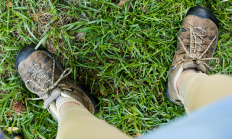
Hiking or camping plans getting in the way of fishing this weekend? Going to be busy kayaking or going to the beach? No need to choose between fishing and other fun – just take a rod with you.

Article
Let's go fishing! Not enough time? Think again. If you live in the greater Portland area, there are a number of places you can get to in less than an hour. Directions and times are approximate, mileage and generalized directions are from Pioneer Courthouse Square.

Zones or Areas
A dozen great rivers pour out of the Coast Range Mountains into tidal bays that welcome runs of salmon and steelhead. Bays are the year-round home to marine perch, rock fish, crabs and clams, while other species come and go with the seasons and tides. A handful of ponds dot the forested slopes, and there are dozens of dune lakes— many stocked with rainbow trout, and some harboring largemouth bass, perch, crappie and brown bullhead.
Press Release
CLACKAMAS, Ore. – The two-rod validation will not be available for the Willamette River in 2026 as the forecast for hatchery-origin adult fish does not meet the minimum return threshold. The 2026 Columbia River spring-summer forecast anticipates 43,700 adult Willamette-origin spring Chinook will return to the mouth of the Columbia…
December 16, 2025
Landing page
Lookingglass Hatchery was constructed in 1982 as part of the Lower Snake River Compensation Program (LSRCP) – a program to mitigate for spring Chinook and summer steelhead losses caused by four federal dams constructed on the lower Snake River. Lookingglass is used to rear spring Chinook for the Grande Ronde and Imnaha rivers as part of LSRCP. Lookingglass Hatchery serves as an adult collection, egg incubation, and rearing and release site for the spring Chinook destined for the Grande Ronde River systems. The Imnaha Satellite Facility is used for the collection of spring Chinook adults returning to the Imnaha River…
November 30, 2017
Educational Moment
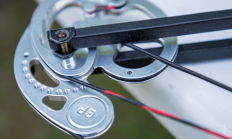
Before shooting a bow, you’ll want to make sure it's safe to fire. Bow/arrow safety check list Check that the string and cable are in good condition and aren ’t rubbing or fraying at any point. Use bowstring wax regularly to keep your string in good condition and safe to shoot. Check that the cams, limbs and riser are all in good shape. Look for cracks, dents, breaks, delaminations, peeling fiberglass, and any mechanical parts that may be defective. If any part of the bow is suspect, don’t shoot it. Fix it or take it to an archery shop to…
May 19, 2020