
Search myodfw.com
Showing 161 - 180 of 346 results
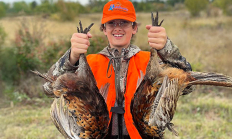
Events in Coquille, Central Point, Monmouth, Eugene, Irrigon, John Day, Klamath Falls, La Grande, Madras, Portland, Tygh Valley SALEM, Ore.—Youth hunters (age 17 and under) who will have completed hunter education by the time of the event can sign up now for ODFW's free pheasant hunts happening around the state…
Find maps, boundary descriptions and the percent public land for the Fort Rock Unit.
Wild turkeys are not native to Oregon but were first successfully introduced in 1961. Since then more than 10,000 turkeys have been transplanted to locations all over Oregon and continue to thrive in most game units through the state. Turkey hunting is a popular activity in Oregon and has grown more than ten-fold since a statewide spring season opened in 1987. Oregon’s six-week spring turkey season is among the most liberal in the United States. Hunters have an opportunity to take up to three gobblers during the spring season and up to two birds during the fall, one of which…

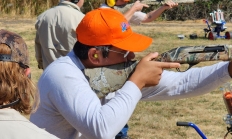
The transition from forested foothills of Mt. Hood to the beginnings of the Columbia Basin offers bird hunters an array of wing shooting opportunities.

Find maps, boundary descriptions and the percent public land for the Indigo Unit.


NE Fishing May 14, 2026 Best bets for weekend fishing: Kokanee fishing has been good on Wallowa Lake. Perch fishing has been good at Phillips Reservoir with some large fish caught. Some nice trout are being caught on Willow Creek Reservoir. Trout stocking Scheduled to be stocked April17-May 8: Weston Highway Pond, Brandon's Pond, Trout Farm Pond, Morgan Lake, Kinney Lake Wallowa Wildlife Pond (Weavers Pond), Roulet Pond, McNary Channel Ponds, Marr Pond, Ladd/Peach Pond, Morrow Co OHV Park Pond #1,2,3,4; Hat Rock Pond, Bull Prairie Res, Penland Lake, Anson Wright Pond, Cutsforth Pond, Rowe Creek Res. Scheduled to be…

Features: Along Oregon's coast there are two species of mussel. Bay mussels ( Mytilus edulis) are bluish-black and grow to about 3 inches in length. California surf mussels ( Mytilus californianus) are brown or black and grow to about 7 inches long. Habitat: Mussels often inhabit boulders in the upper tidal zone so it is best to go looking for them during low-tide. Technique: Wearing a glove, use a twisting motion to pull mussels off the rocks, then immediately pull the "beard" off the bottom, the hairs that previously anchored the shellfish to the rocks. Be sure to check the…

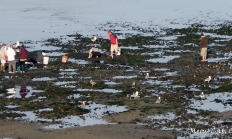

Features: The purple varnish clam is named for the purple hue found inside the clam and the shiny varnish over the brown color outside the shell. It is oval in shape and is relatively flat with a prominent ligament near the hinge. Habitat: These clams can be found in cobble to muddy substrate. Technique: Purple varnish clams are found in very high densities. Limits are 72 a day. Learn more here before getting started clamming. See Oregon Sport Fishing Regulations for information on the daily catch limits for bay clams. How to dig purple varnish clams (video)

Features: While their coloration can be variable, bull trout are generally gray infused with green. The body is covered with small white or pale yellow spots. Some spots along the side may be deep orange to red. The leading edges of the fins along their bellies are white. Bull trout, despite the common name, is not actually a trout but a member of the closely related char group. Habitat: Bull trout require cold, clean water to survive and are typically found in the headwaters of Oregon rivers. Spawning occurs in the fall when water temperatures drop below 50F. Techniques: Anglers…


Updated December 31, 2025 Subscribe for updates Starting Jan. 1, 2026, an Ocean Endorsement is needed for most recreational anglers fishing in the ocean. Check the Ocean Endorsement page for more information. Ocean Endorsement
The FRWA was created by a licensing agreement signed in 1957 and modified in 1982 and 2008, between the US Army Corps of Engineers and the Oregon Game Commission. This agreement authorized the state to develop, conserve, and manage all wildlife resources on 5,261 acres of land and water within the Fern Ridge Project. ODFW also acquired the 309 acre Coyote Creek South and 224 acre Coyote Creek Northeast units in 2013 and 2015, respectively. The wildlife area now totals 5,794 acres.