
Search myodfw.com
Showing 1601 - 1620 of 1722 results


Subscribe for updates Find catch estimates Ocean sport salmon regulations map
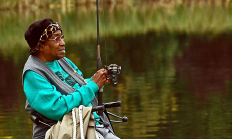
CLACKAMAS, Ore- After a "lights out" early season for the Buoy 10 fishery at the mouth of the Columbia River, fishery managers from Oregon and Washington are adjusting regulations to manage Chinook harvest in this fishery and to ensure fisheries further upriver can continue as originally planned. Effective Aug. 25…
Updated April 29, 2026 Sign up for Halibut Regulation Updates
UPDATE: ODFW has reduced closures within White River Wildlife Area, but some areas remained closed. All land within a level 3 GO NOW evacuation perimeter will remain closed. As evacuation levels are downgraded, access will increase. Please refer to the evacuation perimeter map before accessing the wildlife area. Developing evacuation…
JOHN DAY, Ore- Steelhead fishing will close on the John Day River Sept. 1 to protect wild upriver summer steelhead migration and consistent with ODFW's John Day River Steelhead Framework. The closure will remain in place at least through Dec. 31. 2026 and likely continue into the new year. The…
Update 8/27/26: Northeast Oregon A&H access areas to reopen Aug. 29. LA GRANDE, Ore. – All northeast Oregon Access and Habitat (A&H) access areas will reopen effective Aug. 29. Improved conditions in northeast Oregon including cooler temperatures, higher humidity levels, reduced fire activity, and a favorable extended forecast support reopening…
SALEM, Ore. – Successful Oregon forest grouse and mountain quail hunters are asked to donate a wing and tail from harvested birds to support biological research. Hunters can deposit wings and tails in collection barrels located at major road junctions or highways in hunting areas, select ODFW offices, and popular…
SALEM, Ore. – Mussel harvesting is now closed from Cape Blanco to the California border the Oregon Department of Agriculture and the Oregon Department of Fish and Wildlife announced today. Recent mussel samples indicate levels of domoic acid (a marine biotoxin) are above the safety threshold. People should always call…
Find maps, boundary descriptions and the percent public land for the Scappoose Unit.
ODFW manages 20 wildlife areas across the state, each with a unique blend of fishing, hunting and wildlife viewing opportunities. Remember, you'll need a Wildlife Area Parking Permit for your visit. See the map and listing below to find the wildlife area nearest you.
The Columbia Basin Wildlife Areas are a composition of four Oregon Dept. of Fish & Wildlife managed wildlife areas located along the Columbia River in the Columbia Basin. The four wildlife areas (Power City, Irrigon, Coyote Springs, and Willow Creek) are within the Columbia Plateau ecoregion. Management agreements for these areas were initially established between 1971 and 1977 between the department and Federal agencies which own the lands. The Columbia Basin Wildlife Areas, which total approximately 1,885 acres, provides an important landbase for the conservation and recreation of fish and wildlife within a highly privatized and altered landscape and play…
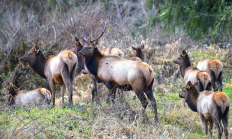
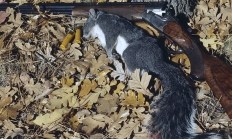
The information provided here is intended to help you get an idea of your odds of drawing a reservation in the Eastside and Oak Island hunt areas. First off, the number of permits available in each hunt unit does change throughout the season. See the NUMBER OF RESERVATIONS AVAILABLE FOR EASTSIDE AND OAK ISLAND UNITS link to view the number of permits that are available for each unit and hunt period.
ASHLAND, Ore. – Mountain berries, a sought-after food source for bears are scarce or non-existent, so some are plying Ashland neighborhoods looking for food. The sightings of bears in town in late August is due to hunger from lack of forage – it is not the normal bear "eat-a-thon" that…
Regulating harvest, health, and enhancement of wildlife populations Living with wildlife Oregon's permitted wildlife control operators (WCO) are an individual, business owner, or the business owner's designee charging a fee to control furbearers, unprotected mammals (excluding moles) and western gray squirrels causing damage, creating a public nuisance or posing a public health or safety concern in incorporated city limits and associated urban development areas. They are permitted by ODFW and governed by a set of rules.