
Search myodfw.com
Showing 1 - 20 of 897 results
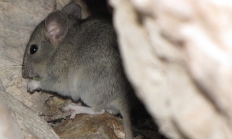
The desert woodrat is the smallest member of the genus that occurs in Oregon. The tail is round, short and bicolored and the ears are long and lightly furred. The pelage is long and soft, a mixture of buff and black dorsally and whitish or light buff ventrally; except for he chest, all body hairs have lead-colored bases. The feet and underside of the tail are white. It occurs in Malheur, Harney, and southern Lake Counties. Throughout its range, it tends to be a habitat generalist, but in Oregon it usually occurs in sagebrush habitats, especially those associated with rimrocks…

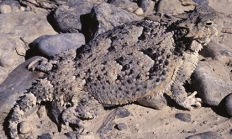
The desert horned lizard is found in flat or gently rolling deserts covered with sagebrush or salt-desert shrub. It prefers areas with scattered bushes and loose, sandy soil, but sometimes occurs in rocky areas or on hardpan. Primary foods are ants and beetles. It also feeds on insect larvae, spiders, crickets, flies, and small grasshoppers. Photo by Kerry Matz, Flickr
ROSEBURG, Ore. – The Oregon Department of Fish and Wildlife is looking for a volunteer site host at its Canyonville winter steelhead acclimation site on lower Canyon Creek. This opportunity to work with hatchery steelhead and help improve Oregon's fisheries is from Jan. 1 – Apr. 30, 2026. The acclimation…
ODFW Marine Resources Program's Alex Copeland monitors scientific fish finders on board the research vessel. ODFW photo. NEWPORT, Ore. – Oregon Department of Fish and Wildlife's Marine Fisheries Research team is conducting a nearly 10-week at-sea survey to better understand the population status of black, blue, and deacon rockfish—three species…

This uncommon inhabitant of Oregon's high desert can be a challenge to find unless the observer becomes familiar with its territorial song and preferred habitat. Habitat requirements are specialized and population distribution and densities are highly variable from year to year in Oregon. The Black-throated sparrow occurs along boulder-strewn, sparsely vegetated slopes of arid deserts. They prefer warm dry sunny slopes of desert basins. Hear the song of the Black-throated sparrow Photo by Ashley Tubbs, Flickr

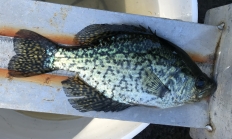
Features: Black crappie are silvery in color with numerous black or dark green blotches and no distinct vertical bars. This results in a darker overall color than seen in white crappie. The forehead is dished, but not as much as in the white crappie. The dorsal fin usually has seven or eight spines and its length is equal to or greater than the distance between the dorsal fin and eye. Habitat: Black crappie do best in clear waters of medium-sized lakes, reservoirs and large slow moving streams. They are less tolerant of flowing and muddy water than white crappie and…
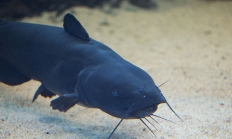
Features: Bullheads present in Oregon (brown, yellow and black) are distinguished from channel catfish by their square or rounded tails and lack of spotting. They seldom exceed two pounds and 18-inches long. Black bullheads have a square tail with a light vertical bar at its base and chin barbels that are all dark. Habitat: Bullheads are found on the bottom in the shallows of mud-bottomed ponds, lakes, reservoirs and backwaters of rivers. The black bullhead is primarily in reservoirs and streams tributary to the Snake River. Bullheads feed on almost any type of plant or animal material; insect larvae and…
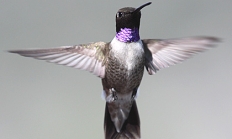
Noteworthy as a generalist, the Black-chinned hummingbird appears in a wide variety of habitats, including lush river bottoms, urban settings and desert canyons. Below the male's velvety black gorget is an iridescent purple band that can also look black in poor light. At rest, the wingtips are relatively broad and curved, unlike any other North American hummingbird. A rare to locally common resident east of the Cascades, it is least common in Klamath and Lake counties. Summer habitat in eastern Oregon includes canyons, juniper woodlands, and desert riparian zones. In the foothills of the Blue and Wallowa Mountains, it's found…
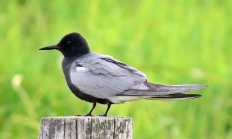
This is Oregon's smallest breeding tern, with black head and body and gray wings during the breeding season. Black terns are delicate, graceful fliers, reminiscent of a nighthawk or swallow. The Black tern breeds in marsh wetland complexes of southeast, south central and central Oregon. In western Oregon, a very small breeding population is found at a few sites in the Willamette Valley. Hear the call of the Black tern Photo by Bob, Flickr
This medium-sized flycatcher has expanded its breeding range from northern California to southwestern Oregon and continues to expand its range in Oregon. First experiences with the species may bring to mind a Slate-colored Junco behaving like a flycatcher. The Black phoebe is dull, sooty black overall, somewhat paler on the back, with a white belly contrasting with the black breast and sides. Bill, legs, and feet are black. The phoebe dips its tail repeatedly. Black phoebes are associated with water. Slow-flowing, idle, or slack water of large rivers, streams, and creeks, ephemeral and permanent ponds, lake shorelines, irrigation ditches, and…

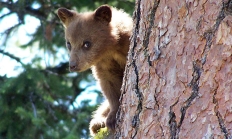
Black bears are the largest extant carnivores in Oregon. They are, however, smaller than grizzly bears, and they lack the grizzly's distinctive shoulder hump. A black bear is heavily built with stout legs and large feet. The eyes and ears are relatively small and the tail is extremely short. The claws are recurved but relatively short with those on the forefeet equal to or only slightly longer than those on the hind feet. The characteristic humped shoulders and dished face of the grizzly bear are absent. During spring-autumn seasons, black bears tend to be more active during daylight and crepuscular…
KLAMATH FALLS, Ore. – Recreation access sites within the restored Klamath River reach between Keno, Ore., and Hornbrook, Calif., will remain open as winter conditions allow. The five recreation day-use access sites now open until further notice are as follows: Pioneer Park West (Ore.) Moonshine Falls (Ore.) K'utárawáx·u (prounounced ku-ta-ra-wa-hhu)…
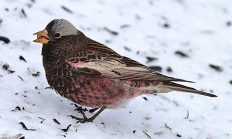
This dark, medium-sized finch with gray and pink highlights is the darkest of the rosy-finches and one of Oregon's rarest breeding birds. It is found in summer in montane areas above timberline, where loose swarms of these birds seem to blow like leaves among isolated cirques, cliffs, and hanging snowfields. In Oregon it breeds on Steens Mountain and may breed occasionally in the Wallowa Mountains. Winter distribution is poorly known, but birds have been found on the lower east side of Steens Mountain and in the Alvord Desert in winter and rarely in central Wallowa County. Hear the song of…
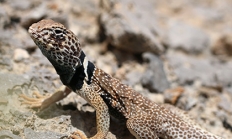
This lizard is found in a variety of desert shrub vegetation types, but is most dependent on the presence of rock outcrops, boulders, or talus slopes. The Mojave black-collared lizard is an aggressive carnivore that eats a variety of other reptiles and large insects, such as crickets and grasshoppers, as well as some plant material. Photo by Belinda Mo, Flickr
Adult male scoters of all species are black, but black scoters are the blackest; their shiny black plumage bears no white. The swollen bright orange-yellow knob on the otherwise black bill is smaller than that of other scoters. Males are distinguished in flight by the flashing silver-gray of underwing flight feathers against black wing linings and the all-black body. Females' uniform soot upperparts and dark head cap are clearly delineated from paler cheeks; their bills are usually dark. Immatures resemble females, but most males acquire some black feathering the first fall. This scoter can be uncommon to locally common along…

Features: Columbian black-tailed deer are smaller and darker than mule deer. As the name suggests, black-tailed deer have a wide, triangular tail with a dark brown or black top and a white underside. Habitat: Blacktails are a subspecies of mule deer found in western Oregon from the Coast Range east to the Cascade Mountains. They are edge-adapted species using the region’s dense forest cover to hide during the day and are then more open in early successional forest to feed at dawn and dusk. Places with a mix of forest age classes offer the best habitat for black-tailed deer. Techniques…

The Black oystercatcher is easily recognized with its black plumage, long, strait, laterally compressed, orange-red bill with a yellow tip, orange-red eye ring, yellow iris, and pale pink legs. These birds are restricted to rocky coastal shorelines where they feed in the intertidal zone. They are an uncommon to fairly common resident on rocky shores and sand/gravel beaches along the entire coast. Along the sandy central coast, they are present only as an occasional dispersing or wandering individual, typically on jetties. Black oystercatchers are Oregon Conservation Strategy Species in the Nearshore ecoregion. Hear the call of the Black oystercatcher Photo…
