Search myodfw.com
Showing 201 - 220 of 333 results
The McKenzie River originates in the Cascade Range and empties into the Willamette River near Eugene, which then flows northward into the Columbia River. McKenzie Hatchery was first constructed in 1938 and rebuilt in 1975. Today, 30 rearing ponds, a visitor's center, spawning room, egg incubation facility, office, feed storage, shop area, fish ladder and picnic area are the main components of the facility layout. McKenzie Hatchery is temporarily closed to comply with Oregon Department of Environmental Quality permit conditions. Visitors should be aware that no fish are present in the facilities' production raceways and show ponds. Fish have been…
Wallowa began operation in 1920 as a resident trout hatchery. In 1985, the hatchery was renovated as part of the Lower Snake River Compensation Program (LSRCP) – a program to mitigate for spring Chinook and summer steelhead losses caused by the four federal dams constructed on the lower Snake River. Wallowa Hatchery is used for adult collection, spawning, acclimation and release of summer steelhead.
Round Butte Hatchery was constructed in 1972 to mitigate for the fishery losses caused by Pelton/Round Butte (PRB) Hydroelectric Complex. Round Butte and its satellite, Pelton Ladder, are used for adult collection, egg incubation and rearing of spring Chinook, summer steelhead, and sockeye salmon.
SALEM, Ore. — Oregon's Fish and Wildlife Commission meets June 25-26 in Redmond. View the agenda online. On Thursday, Commissioners will visit projects showcasing the landscape scale work underway with partners to protect and restore sagebrush habitat for mule deer in central Oregon. To join the tour, meet at Comfort…
This release was updated April 25 to correct two errors (the first name of the OSP Lieutenant who testified on Sauvie Island parking issues and that the Don Lindly property was sold to Lincoln County not Lincoln City.) LINCOLN CITY, Ore.—The Commission adopted a limited entry parking program for summer…
Wild turkeys are not native to Oregon but were first successfully introduced in 1961. Since then more than 10,000 turkeys have been transplanted to locations all over Oregon and continue to thrive in most game units through the state. Turkey hunting is a popular activity in Oregon and has grown more than ten-fold since a statewide spring season opened in 1987. Oregon’s six-week spring turkey season is among the most liberal in the United States. Hunters have an opportunity to take up to three gobblers during the spring season and up to two birds during the fall, one of which…


Willamette Trout Hatchery and the adjacent Oakridge Salmon Hatchery were combined in 1983 and operate today as Willamette Hatchery. The trout hatchery was constructed in 1922 and the salmon hatchery in 1911. The U.S. Army Corps of Engineers (USACE) rebuilt the salmon hatchery in 1952 to mitigate for fishery losses caused by Hills Creek, Lookout Point and the Dexter hydroelectric/flood control projects. The trout side was rebuilt between 1950 and ‘56. Today, Willamette Hatchery is used for adult holding/spawning, egg incubation and rearing of spring chinook and rainbow trout. In addition, both summer and winter steelhead are reared at this…
The Klamath Fish Hatchery was originally constructed in 1929. Many improvements have been made since original construction. The hatchery produces legal and trophy sized rainbow trout, fingerling rainbow trout, brown trout, and cutthroat trout for release throughout the Klamath Basin, Deschutes Basin, Umpqua Basin and the southeast part of the state. The hatchery assist with remote egg takes for wild rainbow and brown trout at Crane Prairie and Wickiup Reservoirs.
In 1925 the first fish hatchery on the South Santiam River began operations about 5 miles upstream from today’s present site, rearing annually approximately 100,000 spring Chinook in dirt ponds for release into the South Santiam River. The present site came about with the construction of Foster Dam. In 1968 the facility was dedicated for the rearing of spring Chinook and summer steelhead. This facility was built and annually funded in part by the US Army Corps of Engineers to compensate for the loss of spawning and rearing areas above the dams on the South Santiam River.

The Columbia Basin Wildlife Areas are a composition of four Oregon Dept of Fish & Wildlife managed wildlife areas located along the Columbia River, in the Columbia Basin. The four wildlife areas (Power City, Irrigon, Coyote Springs and Willow Creek) are within the Columbia Plateau ecoregion. Management agreements for these areas were initially established between 1971 and 1977 between the department and Federal agencies which owns the lands. The Columbia Basin Wildlife Areas, which total approximately 1,885 acres, provide an important landbase for the conservation and recreation of fish and wildlife within a highly privatized and altered landscape and play…
Lookingglass Hatchery was constructed in 1982 as part of the Lower Snake River Compensation Program (LSRCP) – a program to mitigate for spring Chinook and summer steelhead losses caused by four federal dams constructed on the lower Snake River. Lookingglass is used to rear spring Chinook for the Grande Ronde and Imnaha rivers as part of LSRCP. Lookingglass Hatchery serves as an adult collection, egg incubation, and rearing and release site for the spring Chinook destined for the Grande Ronde River systems. The Imnaha Satellite Facility is used for the collection of spring Chinook adults returning to the Imnaha River…
Big Creek Hatchery began operation in 1941. It was refurbished in 1957 under the Mitchell Act as part of the Columbia River Fisheries Development Program – a program to enhance declining fish runs in the Columbia River Basin. The facility is used for adult collection, egg incubation and rearing of winter steelhead, fall Chinook, and coho.
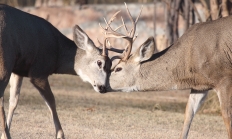
Located near the Elkhorn Mountain Range, Elkhorn Wildlife Area is best known for Rocky Mountain elk and mule deer herds that use the area during the winter. To keep deer and elk from feeding on agriculture lands when they come down from snow-covered higher elevations, ODFW operates 10 feeding sites on the area to feed 1,400 elk and 800 deer during the winter months.