Search myodfw.com
Showing 261 - 280 of 493 results
CLACKAMAS, Ore.— Anglers can double the odds of catching salmon in the Upper Willamette River this fall as coho again return to areas above Willamette Falls. Effective Aug. 1 through Dec. 31, anglers with the two-rod validation may use two rods in all areas of the Willamette River upstream of…
This winter visitor is a study in gray and tan, with a small dark spot on an otherwise gray breast, dull rufous stripes on the side of the head and crown, and brown wings with distinct white stripes. Tree sparrows visit Oregon only in winter, mainly in lowlands within the Blue Mountains and Owyhee upland regions with a few farther west in some years. They frequent willow clumps in grassy areas and occur occasionally at feeders. Hear the song of the American tree sparrow Photo by Eric Began, Flickr

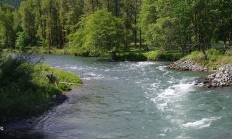
SE WILDLIFE VIEWING July 30, 2026 Harney County With warmer temperatures now occurring throughout the district, remember to bring extra water and any preventative tools with you while in the field. Note that parking on tall dry grasses is a serious fire danger concern and try avoiding doing so. The county experienced a mild winter this season making for low snowpack accumulation even at higher elevations, access for observation opportunities should be good this summer. Although, those looking to explore rural areas of the county should keep recovery items in their vehicle. Early summer rains occurring periodically may cause muddy…
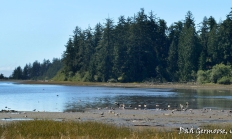
SALEM, Ore. – The Oregon Fish and Wildlife Commission meets March 19-20 in Medford for a field tour on Thursday and a regular meeting on Friday. The Friday meeting agenda and livestream are available from the Commission page. To virtually testify on an agenda item, register here at least 48…
SALEM, Ore. — The Oregon Department of Fish and Wildlife is hosting a public meeting to review the agency's draft Endangered Species Management Plan for Southern Resident Orcas (SRO). The online-only meeting is July 9 from 6:30 p.m. – 8 p.m. ODFW staff will give a brief presentation of SRO…
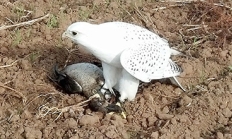
This is a large and power falcon. The majority of Gyrfalcons seen in Oregon are immatures or adults of the "gray" type, but there are several reports of "white" birds. The Gyrfalcon is a regular winter visitant to Oregon. The majority of sightings come from coastal and Willamette Valley lowlands near waterfowl concentrations. Individuals have been seen chasing and feeding on geese, ducks and gulls. Gyrfalcons forage by flying low over the ground and flushing prey, then often giving spectacular tail chases. If a bird refuses to flush the hunt is usually unsuccessful. East of the Cascades it occurs around…
This foreign visitor is regularly found in Oregon among wintering flocks of American widgeon. Drakes are easily distinguished from American wigeon drakes by reddish brown head, gray flank, and lack of green eye stripe. Hens are similar to American Wigeon hens and difficult to distinguish. The call of the male is a shrill whistling, whe'e you; the female's voice a low purr or croak. It is a rare to uncommon visitant east of the Cascades. Hear the call of the eurasian wigeon Photo by ©Greg Gilson

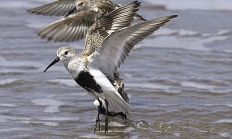
The Dunlin undergoes one of the most dramatic changes in appearance of all shorebirds when it molts from winter to breeding plumage. In winter, these medium sized sandpipers are brownish gray above with white underparts, but in breeding plumage they have a striking rufous-brown back and cap and black belly. Females are larger than males but otherwise similar in appearance. The Dunlin is an abundant transient and winter visitant in estuaries and occasionally on beaches along the coast of Oregon, but significant numbers winter in the Willamette Valley, especially the southern part. Hear the call of the Dunlin Photo by…
In winter plumage, the crisp black head, white neck patch, and gray back are striking, and when combined with a pale bill this species is readily distinguished from small alcids in Oregon. Wing-propelled divers, they are nonbreeding visitors to Oregon's offshore waters. They are the only seabirds whose young are reared entirely at sea. The Ancient murrelet is an uncommon to common fall migrant and winter visitant in shelf waters near shore; rare to uncommon in spring; absent to rare in summer. Hear the call of the Ancient murrelet Photo by Patty Mcgann, Flickr

The Swamp sparrow uses wet areas that have thick vegetation for cover. Several glimpses of this reclusive bird may be required before it can safely be separated from Lincoln's sparrow or the more common Song sparrow, though its distinctive call will give it away to observers familiar with it. Chestnut coloration on the wing coverts helps separate this species from other wintering sparrows. The Swamp swallow is a rare to uncommon spring and fall transient and winter visitant in western Oregon, especially along the coast. Hear the song of the Swamp sparrow Photo from USFWS

The original Riverside Tract is adjacent to the Malheur River near the former railroad community of Riverside. It was purchased from the Blaylock family in 1976 and has been administered by ODFW as Riverside Wildlife Area since that time. The purpose of this initial acquisition was to provide public fishing and hunting access to a previously privately held portion of the Malheur River canyon. In addition, this purchase provided the opportunity for the department to emphasize fish and wildlife habitat management in the river canyon. Additional acres were added to this tract in 1977. In 1972, the department purchased a…
The Columbia Basin Wildlife Areas are a composition of four Oregon Dept of Fish & Wildlife managed wildlife areas located along the Columbia River, in the Columbia Basin. The four wildlife areas (Power City, Irrigon, Coyote Springs and Willow Creek) are within the Columbia Plateau ecoregion. Management agreements for these areas were initially established between 1971 and 1977 between the department and Federal agencies which owns the lands. The Columbia Basin Wildlife Areas, which total approximately 1,885 acres, provide an important landbase for the conservation and recreation of fish and wildlife within a highly privatized and altered landscape and play…
Coquille Valley Wildlife Area was initially established in 2013 with two equally important primary objectives; (1) To protect, enhance, and restore fish and wildlife habitats located on the WA, and (2) to provide a wide variety of wildlife-oriented recreational and educational opportunities to the public.
LA GRANDE, Ore. – Lookingglass Creek, a tributary to the Grande Ronde River at Palmer Junction, will open to fishing for hatchery spring Chinook on Friday, May 15. The open area is from the mouth upstream to the confluence of Jarboe Creek. Depending on which happens first, the fishing season will remain open through June 14 or until…
NEWPORT, Ore – Mussel harvesting is now open coastwide from the Washington border to the California border the Oregon Department of Agriculture and Oregon Department of Fish and Wildlife announced today. Marine biotoxin levels tested below the alert level. People should always call the Shellfish Safety Hotline at 1-800-448-2474 before…
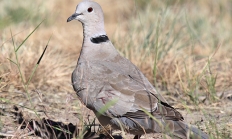
The Eurasian collared-dove is quite similar to the Ringed turtle-dove but is somewhat larger with grayer underparts and darker primaries. It is a bird of agricultural areas and readily visits bird feeding stations in urban and rural neighborhoods. During the 1600s this Indian species began to expand its range until today it occurs in all of Europe and most of Asia. After introductions in the Bahamas in 1974 and Guadeloupe in 1976 it soon expanded throughout the Caribbean and reached Florida by 1980. It is now expanding into other parts of North America, reaching Oregon in 1988. It is expected…