
Search myodfw.com
Showing 261 - 280 of 705 results

July 25, 2026
Three Rivers Archers Park - Intersection of Coach Road and Memorial Ln La Pine, OR 97739

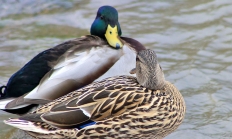
Features: During the fall, winter and spring months, males can be quickly identified by their distinctive iridescent green heads. Females are mottled-brown, with a dark brown stripe through each eye, an orange bill with black splotching and have orange legs. Immature ducks resemble adult females until the males develop more colorful plumage in early fall. After breeding season, males develop duller eclipse plumage beginning in June and resemble hens until mid-September. Wings of both sexes have a violet-blue speculum bordered in front and behind by a pronounced white stripe. Habitat: Mallards are the most common breeding and wintering duck in…
Features: The pintail is an elegant long-necked duck. The long-tailed, full-plumaged drake is striking with a chestnut head, gray back and flanks, bright white breast and front of neck, and iridescent green-bronze speculum. The brown hen is nondescript, but shares the long neck and graceful shape of the drake. Both have a blue-gray bill. Habitat: Pintails prefer the open habitats of sheet water fields and large marshes or ponds. They are a puddle or dabbling duck and usually feed by dabbling or dipping rather than submerging. It is a rare breeder but an abundant fall migrant statewide and one of…

Find maps, boundary descriptions and the percent public land for the Juniper Unit.
Find maps, boundary information and the percent public land in the Paulina Unit.
Find maps, unit descriptions and the percent public lands in the Starkey Unit.
Find maps, boundary descriptions and the percent public land for the Wagontire Unit.

Find maps, boundary descriptions and the percent public land for the Minam Unit.
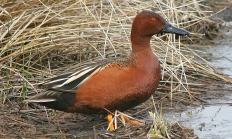
Features: Male cinnamon teal have a cinnamon-red head, neck, breast and belly. Like blue-winged teal, t hey have a bright patch of iridescent green on the rear of the wing and a bright blue patch on the front of the wing . They also have a distinctive red eye, a black bill and yellow legs and feet. Female and young male cinnamon teal are often confused with female blue-winged teal. Habitat: Prefer shallow, alkaline lakes where they dabble on aquatic plans. Techniques: Most cinnamon teal in Oregon are taken in eastern Oregon in the early season. They are not common…
Find maps, boundary descriptions and the percent public land for the Steens Mountain Unit.



Features: Canada geese come in many sizes and colorations. All have the same general long, black neck and white chinstrap. Their breast color can range from light gray to a dark brown. Habitats: Canada geese have become abundant in many city parks and agricultural fields where forage grasses are available. They can be found floating in bays, estuaries, rivers, reservoirs and lakes as well. Techniques: Canada geese can be hunted like other waterfowl. From jump shooting to calling birds into a decoy spread, Canada goose hunting can be productive. Note: If you want to hunt geese in Northwest Oregon, a…

Find maps, boundary descriptions and the percent public land for the Beulah Unit.