Search myodfw.com
Showing 341 - 360 of 545 results
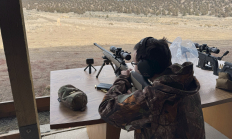
This hands-on course is designed for adults eager to enter (or advance in) big game hunting with a modern, scoped bolt-action rifle—the most popular and precise choice for ethical big game pursuits.
May
Multiple locations
Central Point, Ore. – Hunters and recreationists who plan to use the Jackson Cooperative Travel Management Area (TMA) should download the newest version of the georeferenced .pdf map. updated on Oct. 14. There have been major changes this year, so users should double check where they plan to access. These…
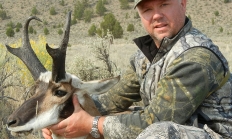
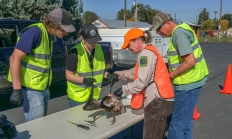
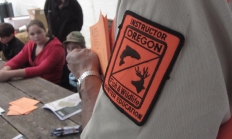
Oregon requires all hunters under the age of 18 to complete a hunter safety education course before hunting in the state. Upon completing the course (and a Field Day for youth), participants will receive a Hunter Safety certification number and card. Adults are also encouraged to take the online course, as it may be required for out of state hunts. Note: Youth under the age of 9 may struggle with the course material and may not have the physical strength needed to safely handle a firearm during a Field Day, particularly during muzzle control, loading, and unloading drills.
Offered Year Round
Statewide
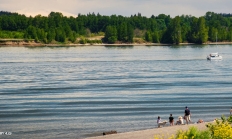
SALEM, Ore. – Oregon may soon have a new wildlife area in Union County called the Qapqápa Wildlife Area (pronounced cop-COP-a). The property would be owned by the Oregon Department of Fish and Wildlife (ODFW) and co-managed with the Confederated Tribes of the Umatilla Indian Reservation (CTUIR), continuing a decades-long…
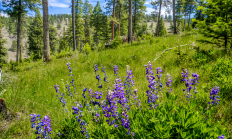
The FRWA was created by a licensing agreement signed in 1957 and modified in 1982 and 2008, between the US Army Corps of Engineers and the Oregon Game Commission. This agreement authorized the state to develop, conserve, and manage all wildlife resources on 5,261 acres of land and water within the Fern Ridge Project. ODFW also acquired the 309 acre Coyote Creek South and 224 acre Coyote Creek Northeast units in 2013 and 2015, respectively. The wildlife area now totals 5,794 acres.

NW WILDLIFE VIEWING May 7, 2026 Tillamook County Birds Large numbers of waterfowl are arriving daily, moving back to spring nesting grounds. They will raft up out in the middle of most local estuaries on calm days but will move around with the incoming tide and on windy days. Many species of diving ducks can be seen on area lakes and bays. Likewise, many migrating geese are beginning to arrive and are using area fields, along with many egrets, herons and wintering raptors. Pastures and fields are heavily used by a variety of waterfowl when flooded and by wading birds…
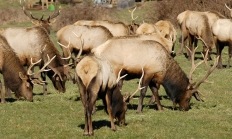
Located near the Elkhorn Mountain Range, Elkhorn Wildlife Area is best known for Rocky Mountain elk and mule deer herds that use the area during the winter. To keep deer and elk from feeding on agriculture lands when they come down from snow-covered higher elevations, ODFW operates 10 feeding sites on the area to feed 1,400 elk and 800 deer during the winter months.

This colorful bird of coniferous forests and mixed woods is a common breeding species of eastern North America. It winters in the West Indies and Middle America and occasionally in California and the southern United States. It is a regular migrant in very small numbers in spring and irregular in summer and fall in the southwestern United States to California and Oregon and is occasionally found elsewhere in the West. The majority of Oregon records are from late April to late June, mostly from the east of the Cascades. Hear the song of the Northern parula Photo by Jeff Bryant…

This distinctive warbler breeds in deciduous and mixed forests from southeast Yukon, east British Columbia, across Canada and through the eastern United States. It migrates east of the Rocky Mountains to winter from northern South America north to the southern United States. It is a regular transient west of the Rocky Mountains with many more spring records than fall. Oregon spring records range from early April to mid-June. Fall records occur from mid-August to late-November. Hear the song of the Black-and-white warbler Photo by Howard Patterson, Flickr