

Search myodfw.com
Showing 381 - 400 of 509 results
Article
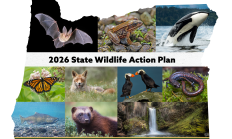
Oregon's State Wildlife Action Plan (SWAP), officially approved by the U.S. Fish and Wildlife Service on March 20, ensures continued federal funding eligibility and provides a science‑based roadmap to maintain healthy fish and wildlife populations, prevent further declines of at‑risk species, and reverse existing declines where possible. Along with the 2026 plan's approval, ODFW updated the user‑friendly SWAP website (formerly the Oregon Conservation Strategy and Oregon Nearshore Strategy) designed to help Oregonians easily navigate information about species, habitats and key conservation issues. Visit the 2026 SWAP website at: https://swap.oregon.gov
April 10, 2026
Recreation Report
COLUMBIA BIG GAME HUNTING April 23, 2026 Currently open Controlled Spring Bear, Cougar ( check current harvest numbers), Coyote Announcements and resources Here's the local scoop for your hunt area in the 2026 Spring Bear Forecast. Submit your applications for 2026 controlled hunts by May 15. Big game harvest statistics - You'll find links to population, harvest and point summary reports that can help you decide what hunts to apply for this season. Please report elk with hoof disease - If you see elk showing signs of elk hoof disease, including lame or limping elk or elk with damaged, injured…
September 05, 2017
Article
View the agenda Meeting: Friday, May 15, 2026 - 8:30 Salem- Virtual Viewing Room- Classroom 4034 Fairview Industrial Dr SE Salem, OR 97302
May 15, 2026

Landing page
Look here to find out how waterfowl counts this week compare to years past.
October 09, 2017
Press Release
FOR IMMEDIATE RELEASE Oregon Department of Fish and Wildlife (ODFW) Confederated Tribes of the Umatilla Indian Reservation (CTUIR) Statement on Qapqápa Wildlife Area Acquisition Oregon Department of Fish and Wildlife (ODFW) and the Confederated Tribes of the Umatilla Indian Reservation (CTUIR) regret to announce that the Qapqápa (pronounced cop-COP-a) Wildlife…
March 2, 2026
Species and Subspecies
The elk is the largest cervid in Oregon. These heavy-bodied, deer-like mammals have narrow faces tapering to a naked nose pad; relatively small, pointed ears; a heavily maned neck; a back slightly humped at the shoulders, a contrasting rump patch; and a small tail. Pelage color is grayish brown to reddish brown, somewhat lighter among males in winter. The mane is dark brown and the rump patch and tail are cream colored. The underparts (except for a whitish patch between the hind legs) and legs are dark brown to almost blackish. Adult females, their current offspring, and their female offspring…

Article
Steelhead have been called the ultimate game fish. These elusive and challenging fish can test an angler’s patience and persistence, but the reward is hooking into a fish that is famous worldwide for its line-peeling runs and spectacular, acrobatic fight.

Zones or Areas
Wide open spaces, wild windy places, and extreme temperatures characterize Oregon’s largest, most remote fishing zone. Redband trout are native to its rivers and streams, including the Williamson, Malheur and Chewaucan. Brown and hatchery rainbow trout can grow to trophy-size in many of its lakes and reservoirs, many of which also feature crappie, yellow perch and bass.
Landing page
This is your one-stop platform for learning how to hunt and fish in Oregon. Look at the learning opportunities to participate in one or more of the many statewide workshops offered to adults. Enjoy the great outdoors even more by building your confidence and expanding your knowledge! Youth required hunter certification: hunter safety conventional courses and field days Choose between a full conventional course or complete one of the ODFW approved online education courses plus an in-person field day. Sign up for a location, date and time that works best with your schedule. Hunter safety education events are offered year-round…
August 14, 2025
Article
Let’s go fishing! not enough time? Think again. If you live in the Roseburg area, there are a number of places you can get to in less than an hour. Directions, mileage, and times are approximate.
Press Release
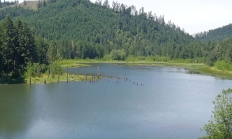
SALEM, Ore. – ODFW staff received a report of an incident involving a coyote biting an adult along Orchard Heights Rd., just outside the city limits of West Salem that occurred on Feb. 11. The Polk County Sherriff's Office (PCSO) initially responded to the area to conduct a site investigation…
February 18, 2026
Article
Each year ODFW stocks millions of trout in dozens of reservoirs, lakes and ponds across the state. Finding these locations is easy using our trout stocking maps.
Article
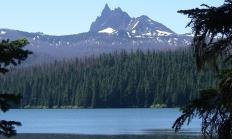
More fish are probably lost because of improperly tied knots than any other single reason. Yet anglers who spend hours practicing their casting or making lures often neglect this simple fundamental. But if tying better knots might help us land more fish, it makes sense to give knot tying a little more attention.

Article
The areas around Bandon, on the Coquille River, have productive softshell beds. The areas near Bandon Marsh National Wildlife Refuge tend to be the most popular. Populations of other bay clams may be found close to the jettys but are mostly subtidal.

Press Release
Note: Recreational ocean crabbing is closed through Nov 30. SALEM, Ore.- Get outdoors with friends and family and enjoy free fishing, crabbing and clamming on Friday and Saturday, Nov. 28 and 29. Statewide free fishing days are a great chance to take someone new fishing and celebrate Oregon's natural resources…
November 21, 2025
Landing page
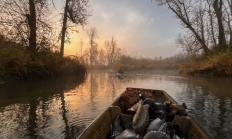
Oregon requires all hunters under the age of 18 to complete a hunter safety education course before hunting in the state. Upon course completion, students will receive a temporary Hunter Safety certification card to be carried while hunting in Oregon until a permanent card is received in the mail to replace it. Hunters over 18 are encouraged to take the online education course, as it may be required for out of state hunts. Note: Youth under the age of 9 may struggle with the course material and may not have the physical strength needed to safely handle a firearm during…
November 13, 2024
Article
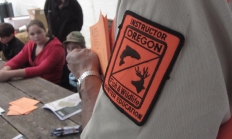
All Oregon-licensed anglers fishing for salmon, steelhead or sturgeon (catch-and-release and retention) on all rivers and tributaries in the Columbia River Basin need to have a Columbia River Basin Endorsement (CRBE). Washington-licensed anglers need a Columbia River Salmon and Steelhead Endorsement (CRSSE) from the Washington Department of Fish and Wildlife (WDFW).
January 29, 2026
Landing page
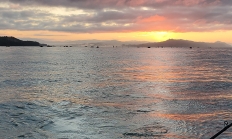
Jewell Meadows Wildlife Area is located in the Oregon Coast Range Mountains, in the northwestern part of the state. The wildlife area was established in 1969, with an initial purchase of 183 acres. It now encompasses 1,114 acres. The wildlife area’s purpose is to protect and enhance habitat to benefit native wildlife species, to reduce wildlife damage to adjacent properties, and to provide the public with an opportunity to observe wildlife in a natural setting.
February 07, 2018