
Search myodfw.com
Showing 561 - 580 of 694 results
The Columbia Basin Wildlife Areas are a composition of four Oregon Department of Fish and Wildlife (department) managed wildlife areas located along the Columbia River, in the Columbia Basin. The four wildlife areas (Power City, Irrigon, Coyote Springs and Willow Creek) are within the Columbia Plateau ecoregion. Management agreements for these areas were initially established between 1971 and 1977 between the department and Federal agencies which own the lands. The Columbia Basin Wildlife Areas, which total approximately 1,885 acres, provide an important landbase for the conservation and recreation of fish and wildlife within a highly privatized and altered landscape and…

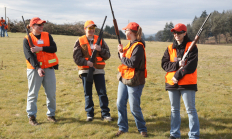

Willamette Trout Hatchery and the adjacent Oakridge Salmon Hatchery were combined in 1983 and operate today as Willamette Hatchery. The trout hatchery was constructed in 1922 and the salmon hatchery in 1911. The U.S. Army Corps of Engineers (USACE) rebuilt the salmon hatchery in 1952 to mitigate for fishery losses caused by Hills Creek, Lookout Point and the Dexter hydroelectric/flood control projects. The trout side was rebuilt between 1950 and ‘56. Today, Willamette Hatchery is used for adult holding/spawning, egg incubation and rearing of spring chinook and rainbow trout. In addition, both summer and winter steelhead are reared at this…
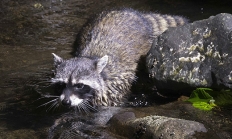
Raccoons are found throughout the state, excluding high mountains and desert regions. They have adapted well to residential life because of their flexible diet and nocturnal nature. Raccoons are opportunistic feeders and have a diverse diet that includes insects, plants, and small animals—but also unnatural foods, like pet food and trash, when they have the chance. Raccoons are notorious for getting into garbage cans and eating pet food left on a porch or food left out at campsites. Raccoons that are fed by people often lose their fear of humans and may become aggressive. Do not attempt to feed or…
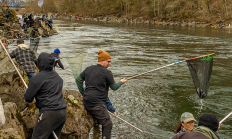
SALEM, Ore. – Recreational harvest of eulachon smelt on the Sandy River will be open from 12-7 p.m. on Wednesday, March 11 only. Regulations : Open area: From the mouth of the Sandy River upstream to the Stark Street Bridge. Limit: 10 pounds per dipper. Each dipper must dip smelt…
Look here to find out how waterfowl counts this week compare to years past.
Summer Lake Wildlife Area was established in 1944, with primary objectives of protecting and improving waterfowl habitat and providing a public hunting area. It is now a popular destination for hunting, wildlife viewing and environmental education due to its geographic setting, the abundance of wildlife present and species diversity.
Updated February 19, 2026 Subscribe for updates Starting Jan. 1, 2026, an Ocean Endorsement is needed for most recreational anglers fishing in the ocean. Check the Ocean Endorsement page for more information. Ocean Endorsement
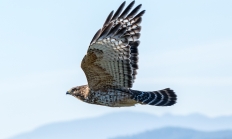
A medium-sized hawk, the Red-shouldered hawk has bold black-and-white flight feathers and rusty shoulder patches. Seen in flight from underneath, especially when lit from the sun, its wings show a translucent 'window' near the tips. It relies on perches for hunting and is closely affiliated with wooded wetlands and riparian bottomlands. In the breeding season this hawk is found in moist woodlands with at least a few deciduous trees. It prefers riparian bottoms, especially those near shallow wetlands or open meadows. In winter, it may use more open lands such as found in the Rogue and Willamette valleys, depending on…
Features: Their eyed-side is greenish-brown to dark brown or black with lighter blotches. Their blind side is white to milky-white. They have a large, stout but flat body, shaped like an elongated diamond . Pacific halibut have been known to reach 500 pounds, but on average are 40 pounds. Habitat: Halibut are a large flatfish and so they spend much time near the bottom of the ocean looking above for food. They prefer chilly water and are primarily found in the Gulf of Alaska. Technique: Boat anglers use heavy rods to fish on or near gravel bottoms in water 150-500…


This is one of the most widespread and familiar waterbirds in Oregon. It is the largest heron in North America, standing approximately four feet tall. It is slate gray with a white crown, cheeks, and throat, rusty thighs and a uniformly yellow bill. Adults develop long gray-white plumes on chest, neck, and back during breeding. Juveniles have similar plumage but may be distinguished by absence of breeding plumes, a dark crown, and dark upper bill. Great blue herons frequent many habitats from shallow areas of marshes, lakes, streams, and oceans, where they feed on fish, amphibians, and aquatic invertebrates; to…

