Search myodfw.com
Showing 601 - 620 of 672 results

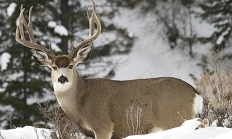
The mule deer is the larger member of the genus in Oregon. The ears are long, the metatarsal gland is surrounded by hairs similar in color but considerably longer than those on the remainder of the metatarsus, and the tail is short and constricted basally. Among adult males, the antlers are dichotomously branched with tines of approximately equal length. In winter, the basic pelage color is cinnamon buff. The chest is nearly black at the midline grading to grayish on the sides. The nose, sides of face, chin, and throat are whitish to pale buff. Spots of black occur immediately…
Wizard Falls Hatchery was constructed in 1947. Many improvements have been made to the facility since original construction. The hatchery has a rainbow trout broodstock which supply rainbow trout to the Deschutes sub-basin and southeast Oregon. The hatchery is used for incubation and rearing of kokanee salmon and rainbow trout to provide for recreational fishing program objectives, and the incubation and rearing of spring Chinook and summer steelhead as part of a reintroduction program in the upper Deschutes Basin. Brook trout and cutthroat trout fingerlings are reared for the air stocking program on odd years. Kokanee salmon are spawned remotely.
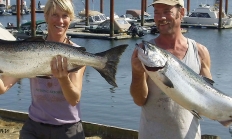
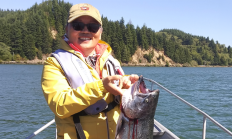
The North Nehalem Fish Hatchery was originally constructed in 1966. The hatchery replaced the Foley Creek Hatchery which was constructed in 1926. The facility is used for adult collection, spawning, egg incubation and rearing of fall Chinook, coho, winter steelhead and rainbow trout.
SALEM, Ore. – ODFW is accepting public comments on potential rule changes to commercial Dungeness crab fishing and trap check times for bear and cougar. Comment using the links provided on ODFW's rulemaking page. The deadline to comment is July 24 at 8 a.m. These policy proposals will be considered…

SALEM, Ore. – ODFW staff at the Ashland Boat Inspection Station found golden mussels on a watercraft that was being transported to a new owner from the Sacramento River Delta to Oregon on April 4. The watercraft was decontaminated at the inspection station and all golden mussels attached to the…
The Umatilla Hatchery began operation in 1991. The hatchery is used for egg incubation and rearing of spring Chinook, fall Chinook and summer steelhead.
Oak Springs Hatchery was constructed in several phases beginning in 1922 with the last major construction in 1996. The facility is currently used for egg production, incubation and rearing of rainbow trout, incubation and rearing of summer and winter steelhead, and maintains one resident rainbow trout and one resident cutthroat broodstock.
Round Butte Hatchery was constructed in 1972 to mitigate for the fishery losses caused by Pelton/Round Butte (PRB) Hydroelectric Complex. Round Butte and its satellite, Pelton Ladder, are used for adult collection, egg incubation and rearing of spring Chinook, summer steelhead, and sockeye salmon.

SALEM, Ore. — Oregon's Fish and Wildlife Commission meets June 25-26 in Redmond. View the agenda online. On Thursday, Commissioners will visit projects showcasing the landscape scale work underway with partners to protect and restore sagebrush habitat for mule deer in central Oregon. To join the tour, meet at Comfort…
PRINEVILLE, Ore. – A single dead adult quagga mussel was found out of water on the shoreline at Prineville Reservoir on June 6 during a routine survey for aquatic invasive species. This marks the first time that this highly invasive freshwater mussel species has been found in or near an…
SALEM, Ore.—Oregon's Fish and Wildlife Commission meets April 23-24 in Lincoln City. View the agenda online. Commissioners will visit coastal coho habitat restoration and monitoring projects in the Siletz River Basin during a field tour on Thursday. To join the tour, meet at the Shearwater Inn, 120 Inlet Court at…
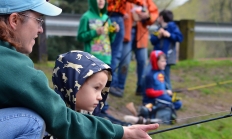
WALDPORT, Ore. — The Oregon Department of Fish and Wildlife and First Baptist Church of Waldport will host the 27th annual family fishing event at Eckman Lake on Saturday, May 16. The event will take place from 9 a.m. to 2 p.m. for youth ages 17 and younger. Each participant…