
Search myodfw.com
Showing 621 - 640 of 903 results

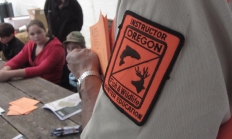
Oregon requires all hunters under the age of 18 to complete a hunter safety education course before hunting in the state. Upon course completion, students will receive a temporary Hunter Safety certification card to be carried while hunting in Oregon until a permanent card is received in the mail to replace it. Hunters over 18 are encouraged to take the online education course, as it may be required for out of state hunts. Note: Youth under the age of 9 may struggle with the course material and may not have the physical strength needed to safely handle a firearm during…
Clackamas Hatchery began operation in 1979 and is used for adult collection, egg incubation and rearing of spring Chinook and winter steelhead, rearing of coho and acclimation of summer steelhead.
The original portion of Fall River Hatchery construction was completed in 1929. Many improvements have been made since original construction. In 1952 the ten raceways were completed. The hatchery produces legal and trophy sized rainbow trout, and provides rainbow, brook and cutthroat trout fingerlings for air stocking programs throughout the state. The facility traps and spawns brown trout at a remote site.
Roaring River Hatchery was constructed in 1924. Many improvements have been made to the hatchery since the original construction. In 1987 and 1996 new raceway ponds were constructed to replace the original raceways. The hatchery is a mixed-stock facility, producing both anadromous fish and resident trout. The hatchery is used for rearing summer and winter steelhead from fingerling to smolt. The rainbow trout program involves broodstock maintenance, spawning, egg incubation and rearing.
SALEM, Ore.—Oregon's Fish and Wildlife Commission meets online Friday, Jan. 16 to amend the formula for setting Landowner Preference tags for mule deer hunts and modify the Coquille River Fall Chinook conservation hatchery program to allow the use of hatchery origin broodstock. See the full meeting agenda at https://myodfw.com/articles/commission-agenda-january-16-2026 The…
Oxbow Hatchery was originally constructed in 1913 to provide additional rearing facilities for Bonneville Hatchery. It was relocated to this present site in 1937 following the construction of Bonneville Dam. Oxbow operated as a state-funded hatchery until 1952 when it was remodeled and expanded as part of the Columbia River Fisheries Development Program (Mitchell Act) – a program to enhance declining fish runs in the Columbia River Basin. The hatchery is presently used for interim egg incubation and early rearing of coho and spring Chinook salmon. No adult fish are collected or spawned at Oxbow and there are no fish…
ODFW's legislatively adopted 2025-27 budget did not include funding to continue the operation of Salmon River Hatchery. The hatchery is shifting fish production to other facilities but will remain open for public/fishing access with a volunteer host and occasional staff on site. Learn more.
The major portion of Elk River Hatchery construction was completed in 1968. In 1971 the hatchery completed final construction on an intake and ten new ponds. The purpose of the facility is to supplement natural production of fall Chinook in the Elk and Chetco Rivers and winter steelhead in the Chetco River. The facility is used to collect Elk River fall Chinook, to incubate eggs and rear both natural and hatchery fall Chinook and winter steelhead.
LA GRANDE, Ore. – Effective Aug. 1 through Sep. 30, minimum and maximum size limits as well as the daily and possession bag limits for rainbow trout and bass are suspended for Thief Valley Reservoir (Southeast Zone) located in Union County. Harvest will be allowed by hand, dip net, or…
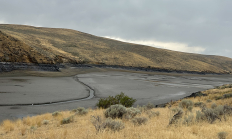
Enterprise, Ore. – Beginning Friday, Sept. 19 through Friday, Oct. 31, harvest of wild adult Chinook salmon (non-adipose clipped, ≥ 24 inches) will be closed in the Snake River from the Oregon/Washington border upstream to Hells Canyon Dam. During this period, anglers may continue to harvest adipose-clipped (hatchery) fall Chinook…
Secretive little birds, wrens creep through vegetation and take flight in erratic patterns. Kinglets are insectivores.

Although called warblers, many of these perching birds may not necessarily be closely related to one another. They are usually easier to hear than see.

Bitterns, herons, and egrets are all long-legged wading birds with long necks and pointed bills for spearing fish or other prey.



MARINE FISHING May 21, 2026 Announcements As of Jan. 1, 2026, an Ocean Endorsement is needed for most recreational anglers fishing in the ocean. Check the Ocean Endorsement page for more information. Saltwater News Bulletins Be among the first to know about in-season changes! You can subscribe to receive emails and text message alerts for marine topics that interest you. It's easy to unsubscribe at any time. Your contact information will remain confidential. Three different lists of interest to ocean enthusiasts are available: bottomfish, halibut and ocean salmon. Bottomfish A few reminders Visit the sport bottomfish seasons page to see…
Fun little birds to watch, chickadees and nuthatches are common in Oregon. With short, strong bills, they feed on insects and seeds and are often seen in groups.
