
Search myodfw.com
Showing 721 - 740 of 897 results
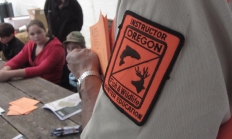
Oregon requires all hunters under the age of 18 to complete a hunter safety education course before hunting in the state. Upon completing the course (and a Field Day for youth), participants will receive a Hunter Safety certification number and card. Adults are also encouraged to take the online course, as it may be required for out of state hunts. Note: Youth under the age of 9 may struggle with the course material and may not have the physical strength needed to safely handle a firearm during a Field Day, particularly during muzzle control, loading, and unloading drills.
Offered Year Round
Statewide
SALEM, Ore.— The Commission set 2026 groundfish regulations during their meeting in Salem today. The daily catch limit for lingcod will increase from 2 to 3 fish next year, since lingcod populations are healthy and bycatch of yelloweye rockfish (a protected species) is still low. The daily limit for general…
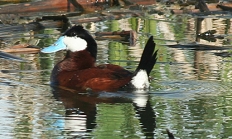
Small in size and displaying a showy, almost comical alternate plumage, the male ruddy duck is an unforgettable sight. Breeding males are unmistakable with their rich chestnut back, black crown, white cheek, sky-blue bill, and proportionately long stiff tail. Female plumage is drab in comparison, being dusky dark brown with a dark facial strip across the mostly white cheek, quite similar to the male's basic plumage. Known for their peculiar courtship display in which the male draws his head down and slaps his bill against his breast repeatedly in increasing tempo, creating a bubbling in the water and a hollow…
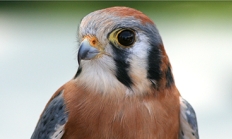
Formerly known in American literature as the Sparrow hawk, this is the smallest (dove-sized) and most familiar and abundant member of the family Falconidae in North America and one of the easiest raptors to observe. It has two considerably different plumages: adult male and female and juvenile males differ somewhat from adult males until post-juvenile mold in fall. Adult males have rufous backs and tails with blue-grey upper wing coverts. The tail has a wide black subterminal band. Juvenile males are similar to adult males but have heavily streaked breasts. Females are slightly larger than males and have reddish-brown backs…
Features: California halibut are usually solid brown to black or mottled with light and dark patches on the eyed side and white underneath. They have the ability to change skin color patterns to blend in with the ocean floor. The eyes on a California halibut are most commonly on the left side but may be on the right side as they are on a Pacific halibut. The upper jaw in a California halibut extends to the rear of the lower eye, while on a Pacific halibut the upper jaw only extends to the front of the lower eye. In both…

The Larch Mountain salamander is one of the rarest amphibians in the Pacific Northwest. This small woodland salamander has a reddish-brown or yellow black-spotted stripe along its back and has a pink belly. The Larch Mountain salamander is one of the lungless salamanders that has to breathe through its skin. Mature adults can grow to four inches in total length. This salamander like’s steep basalt talus (piles of volcanic rock fragments). Forested areas are also important because trees block out sunlight, allowing moss to grow on rock piles which keeps the ground damp all year. Larch Mountain salamanders prefer slopes…

Adults have smooth, moist skin that is brown or reddish-brown in color with black flecks on their backs, sides and legs. They may also have a dark colored mask. Adults have red underlegs, hence their name. Females, growing to four inches in length, are almost twice the size of males. Adult red-legged frogs like cool damp coniferous or deciduous forests and forested wetlands. During the non-breeding season, adult frogs spend most of their time on land in woodlands along streams, in moist sedge or brush, along shaded pond edges or under logs and other forest debris. Damp weather permits them…

When mention is made of ducks, many people first think of the mallard. Its ability to tolerate human disturbance and adapt to urban as well as rural habitats make it the Northern Hemisphere's most abundant and widespread waterfowl. Females are mottled-brown, with dark brown stripe through the eye, orange bill with black splotching and have yellowish-orange legs. Immatures resemble adult females until males acquire nuptial plumage usually by mid-November. Males enter the eclipse molt in June and resemble hens until mid-September. Wings of both sexes have a violet-blue speculum bordered in front and behind by a pronounced white stripe. They…

The Tufted Puffin is extremely charismatic and the most recognized seabird in Oregon. It is easily identified in the breeding season by the colorful laterally compressed bill, a distinct white face with long cream-colored facial plumes, black body, and reddish-orange feet. In winter it moves offshore and loses most of its colorful plumage and bill plates. Tufted Puffins are burrow-nesters and feed at sea. Along the Oregon coast, they primarily nest on soil-covered islands free of mammalian predators. They also occasionally nest on headlands such as Cape Mears, Cape Lookout, Cape Foulweather, and Yaquina Head. Tufted Puffin populations have…

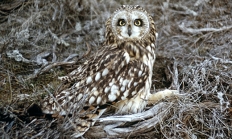
The Short-eared owl is one of our most conspicuous owls owing to its use of open country and crepuscular habits. It is often seen hunting low over the ground across marshes, fields, and other open areas on its buoyant, long wings, flying slowly and irregularly like a giant moth. This owl also differs from most other owls as it seldom vocalizes and is more often seen than heard. It was named for its inconspicuous "ear" tufts arising from the center of the forehead, though field observers rarely see these tufts. Distinguishing characteristics include a pale buff facial disk and a…
Rosy-finches are the highest-altitude breeding birds throughout most of their range. They are long-winged and generally dull-looking unless seen at close range, when the pinkish hues and combinations of brown, gray, and black can be seen. Their conical bill is usually dark, during spring and early summer and yellowish especially in fall and winter. These birds usually perch on the ground, but occasionally alight on buildings, trees, bushes, phone, and fence wires. They typically walk rather than hop, but do the latter occasionally. They also swipe with their bill rather than digging with feet as some sparrows and finches do…

The coyote is a typical canid intermediate in size between the foxes and the gray wolf. The pelage of the coyote is grayish, buff, pinkish cinnamon, or brownish, or a combination of those colors, often overlain by blackish tipped hairs on the ears, muzzle feet, and dorsum. The lips and eyelids are black, accentuated by contrasting borders of white fur. The underparts are paler than the remainder of the body. Considerable variation in color and markings of coyotes is evident among individuals and regionally east and west of the Cascade Range. True albinos with pink eyes and pink foot pads…

The ringtail is shaped somewhat like a marten with an elongated body and tail of approximately equal length. The ringtail is named for its tail which has has eight dark bands alternating with seven buffy bands. The dorsum is buff overlain with blackish or dark-brownish guard hairs; the venter is whitish or light buff. The face mask is whitish, but the eyes are fringed with a narrow band of black. The toes are equipped with semi-retractile claws, and except for the pads, furred on the ventral surface. The ears are long and set wide apart on a nearly horizontal plane…

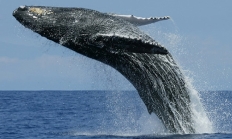
Humpback whales are seen during their north and south migrations from northern waters to breeding grounds near Hawaii and also feeding offshore during the summer. Humpbacks have been documented travelling 3,000 miles between Alaska and Hawaii in as few as 36 days. They are usually five to 15 miles offshore, so they are most often seen by fishers. Humpback whales live in all major oceans from the equator to sub-polar latitudes. Humpbacks eat primarily krill and small fish and can consume 3,000 pounds of food a day. Humpbacks grow to 60 feet in length with a stocky body, an obvious…
Features: The coloration tends to be golden-brownish with dark brown or black spots on the body, and on the dorsal and adipose fins. Usually few or no spots appear on the tail fin. Many body spots, especially those below the lateral line, are edged with pink, red, or orange, forming rings or halos. Breeding males develop strong teeth and a hooked snout. Size can range from 11-inches long in small streams to over 30-inches in large rivers or lakes. Habitat: Although brown trout can adapt themselves to sluggish streams and warmer temperatures than other trout, cold, spring-fed tributary streams with…

Del Norte salamanders are solid brown or black in color. Some individuals, especially younger salamanders, have a reddish-orange to red stripe along their backs, but it generally fades as they mature. As the species’ scientific name suggests, individuals have long bodies in relation to their short limbs. The Del Norte salamander is one of the lungless salamander species that breathes through it’s skin. They can grow to six inches in total length. Del Norte salamanders live in older redwood or Douglas-fir forests and commonly use rocky substrates rubble, talus (rock fragment piles) and rock outcroppings for cover. During hot and…

The majestic trumpeter swan is the largest of our native waterfowl and one of the heaviest flying birds in the world with males sometimes exceeding 30 pounds. Historically hunted to the brink of extinction, it was recognized as an endangered species long before there was an Endangered Species Act, and its recovery is a conservation success story. The adult's snow-white plumage with contrasting black bill and feet and 8-foot wingspan define this magnificent bird. Their neck is as long as their body and is used to reach food at the marsh bottom. In spring, the trumpeter swan is a locally…

The skies near favored stopover locations are filled twice annually with the sights and sounds of these geese as they migrate between Arctic breeding grounds and wintering areas farther south. Snow geese share very similar all-white plumage and black wing tips with the less common Ross's goose. These are Oregon's only wild white geese. It is predominantly a spring and fall migrant, especially abundant in large wetland and agricultural complexes such as Malheur National Wildlife Refuge, Silvies River floodplain in Harney County, Lower Klamath National Wildlife Refuge and Klamath Wildlife Area. Wintering snow geese in Oregon are found primarily along…
