Search myodfw.com
Showing 781 - 800 of 1128 results
These lizards are found in open desert shrublands, particularly where islands of sand have accumulated around shrubs and are absent where a dense grass understory would inhibit their ability to run. The Long-nosed leopard lizard eats large insects, such as grasshoppers, crickets, and beetles, and also takes small vertebrates, including pocket mice, side-blotched lizards, whiptails, and Western fence lizards. Some plant material (flowers, berries) is eaten when available. Photo by Charlotte Ganskopp

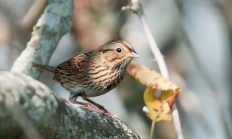
This small tan-and-gray sparrow with a delicately streaked upper breast is found in summer in wet mountain meadows where its bubbly song can be heard from low shrubs. It winters in brushy lowland areas where it skulks in tall grass and weeds and is usually seen for only a moment. It breeds locally above 3,000 feet in the west Cascades and winters in the valleys west of the cascades. Hear the song of the Lincoln's sparrow Photo by Kelly Colgan-Azar, Flickr
UPDATE: The National Marine Fisheries Service (NMFS) did not authorize a wild coho season in the Alsea Basin for 2026 because escapement is not projected to meet full seeding requirements as required in the Oregon Coast Coho FMEP. Wild coho retention will remain closed in the Alsea Basin for the…
This drab, greenish, diminutive species is similar in appearance to the Hutton's vireo, and sometimes confused with that species in western Oregon. Slighter-billed and smaller than the vireo, this little bundle of energy seems always to be moving as it flicks its wings and hops from twig to twig. The male Ruby-crowned kinglet sports a bright red crown spot, typically visible only when the bird is agitated, and in spring pours fourth a delightful melody, surprising for such a small, drab bird. This species breeds in high elevation forests, primarily east of the Cascade crest, where it is common in…

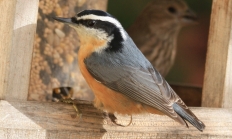
The Red-breasted nuthatch is a happy, jolly little bird, quick and agile in its motions and seemingly always in a hurry to scramble over the branches. It is distinguished from other nuthatches by white eyebrows, black eyelines and cap, reddish breast, and nasal yank yank song. Although males have a blacker cap and redder breast than females, distinguishing sexes in the field is difficult. During winter, is can be observed foraging in mixed-species flocks with Chickadees, Brown creepers, Kinglets, Townsend's carblers, and Dark-eyed junkos. The Red-breasted nuthatch breeds and winters throughout Oregon where conifer or mixed conifer-hardwood forests are present…
This small, rich-brown wren is only slightly larger than a quarter, and has a tail quite short for a wren. A quiet observer in the forest will see these birds hop in and out and all over logs, snags, shrubs, twigs, and limbs on the forest floor. It has been said that the song of this bird is larger than the bird itself. The Winter wren breed from Coos County southward and in eastern Oregon in the Blue and Steens mountains. It retreats from high altitudes in winter where snow pack is heavy. Migration probably occurs throughout the state, but…

SALEM, Ore. – Oregon's deer and elk give birth from May through July each year. It's natural for mother animals to leave their young alone for extended periods of time while they go off to feed. If you come across a fawn or calf by itself, don't assume it's orphaned…
SALEM, Ore. – ODFW staff at the Ashland Boat Inspection Station found golden mussels on a watercraft that was being transported to a new owner from the Sacramento River Delta to Oregon on April 4. The watercraft was decontaminated at the inspection station and all golden mussels attached to the…
Find maps, boundary descriptions and the percent public land for the Trask Unit.
The information provided here is intended to help you get an idea of your odds of drawing a reservation in the Eastside and Oak Island hunt areas. First off, the number of permits available in each hunt unit does change throughout the season. See the NUMBER OF RESERVATIONS AVAILABLE FOR EASTSIDE AND OAK ISLAND UNITS link to view the number of permits that are available for each unit and hunt period.
Find maps, boundary descriptions and the percent public land for the Indigo Unit.
Find maps, boundary descriptions and the percent public land for the Minam Unit.
Find maps, boundary descriptions and the percent public land for the Silvies Unit.
Find maps, boundary descriptions and the percent public land for the Saddle Mountain Unit.
Find maps, boundary descriptions and the percent public land for the Santiam Unit.
Find maps, boundary descriptions and the percent public land for the Sled Springs Unit.
Spring, fall and winter are the seasons when most big game hunters will be in the woods or on the grasslands. Visit e-regulations