Search myodfw.com
Showing 81 - 100 of 408 results
NEWPORT, Ore. – ODFW is holding a June 16 public meeting to evaluate the commercial market squid fishery. Oregon commercial squid fishers, producers and interested public are encouraged to attend. The meeting is held from 1 – 3 p.m. at Hatfield Marine Science Center in the Guin Library Seminar Room…
The original Riverside Tract is adjacent to the Malheur River near the former railroad community of Riverside. It was purchased from the Blaylock family in 1976 and has been administered by ODFW as Riverside Wildlife Area since that time. The purpose of this initial acquisition was to provide public fishing and hunting access to a previously privately held portion of the Malheur River canyon. In addition, this purchase provided the opportunity for the department to emphasize fish and wildlife habitat management in the river canyon. Additional acres were added to this tract in 1977. In 1972, the department purchased a…
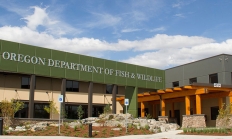
SALEM, Ore.—Oregon's Fish and Wildlife Commission will meet Friday, Aug. 15 in Salem at ODFW Headquarters, 4034 Fairview Industrial Drive SE. The meeting will be livestreamed from the Commission page. See the agenda here. (Note that Commission materials have moved to myodfw.com while ODFW's older website odfw.com is transitioned to…
SALEM, Ore. — Oregon's Fish and Wildlife Commission meets June 25-26 in Redmond. View the agenda online. On Thursday, Commissioners will visit projects showcasing the landscape scale work underway with partners to protect and restore sagebrush habitat for mule deer in central Oregon. To join the tour, meet at Comfort…
Updated December 31, 2025 Subscribe for Sport Bottomfish Regulation Updates
Cole Rivers Hatchery is the largest producer of hatchery fish on the coast of Oregon. Almost all of the fish production at Cole Rivers is done to mitigate for the fish production that was lost when miles of high quality fish habitat was blocked by Applegate Dam (Applegate Reservoir) and William Jess Dam (Lost Creek Reservoir). Visit Cole Rivers Hatchery
Updated April 29, 2026 Sign up for Halibut Regulation Updates
NEWPORT, Ore. – The Oregon Department of Fish and Wildlife is hosting a Feb. 2 public meeting beginning at 6 p.m. to get input on the number and timing of fixed and back-up dates for the central Oregon coast spring all-depth Pacific halibut season. The meeting is in the conference…
SALEM, Ore.—Members of the Oregon Hunters Association's Klamath Chapter, the West Cascade Chapter of Back Country Horsemen and Wallowa County landowner Lionel Sauvage were recognized for their contributions to Oregon's fish and wildlife during today's meeting in Salem. Landowner Lionel Sauvage and the Sauvage Family of Wallowa County received the…
NEWPORT, Ore. – To reduce the risk of humpback whale entanglements in commercial Dungeness crab gear, the Oregon Department of Fish and Wildlife is moving the May 1 "late-season" regulations to April 1 this year. These regulations require commercial crab fishermen to fish in waters less than 40 fathoms, use…
ROSEBURG, Ore – A temporary rule prohibits wild spring Chinook salmon harvest on the mainstem Umpqua River and keeps the North Umpqua bag limit the same as 2025, ODFW announced today. Feb. 1 – June 30, 2026: Mainstem Umpqua River: only hatchery spring Chinook may be kept. Harvesting wild spring…
SALEM, Ore.—Oregon's Fish and Wildlife Commission meets April 23-24 in Lincoln City. View the agenda online. Commissioners will visit coastal coho habitat restoration and monitoring projects in the Siletz River Basin during a field tour on Thursday. To join the tour, meet at the Shearwater Inn, 120 Inlet Court at…
OTIS, Ore.—ODFW's recent legislatively adopted budget did not include funding to continue the operation of Salmon River Hatchery, one of more than 30 hatcheries that ODFW maintains in the State. The cost of operating and maintaining the hatchery exceeded available revenue, but funding is just one of the issues facing…