
Search myodfw.com
Showing 101 - 120 of 897 results
SALEM, Ore.—ODFW is excited to announce that Oregon's State Wildlife Action Plan (SWAP) has been officially approved by the U.S. Fish and Wildlife Service. This milestone marks the final step in adopting the 2026 SWAP, a science‑based roadmap to maintain healthy fish and wildlife populations, prevent further declines of at‑risk…

NEWPORT, Ore. – The Oregon Department of Fish and Wildlife is hosting a Feb. 2 public meeting beginning at 6 p.m. to get input on the number and timing of fixed and back-up dates for the central Oregon coast spring all-depth Pacific halibut season. The meeting is in the conference…
Features: The pronghorn is deer-sized (up to 150 lbs) with relatively long and thin legs and feet, only two digits on each foot (no "dew claws"), a relatively small tail, and unique horns. Bright white sides, underside and rear end help hunters spot them in the field. Habitat: Pronghorn are found in the High Desert sagebrush of eastern Oregon and the Columbia Plateau. Techniques: Most pronghorn hunts happen in August, before other big game seasons, so be ready for the High Desert’s warm summer temperatures. All pronghorn hunting is limited entry (apply by May 15) and it can take several…

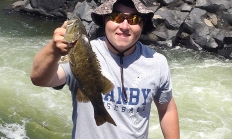

SW Fishing June 18, 2026 Best bets for weekend fishing: Trolling at Lost Creek and Applegate Reservoirs continues to be very good. Howard Prairie and Hyatt Reservoirs have plenty of legal-size rainbow trout. Holdovers from last year are a good size. Spring Chinook are moving through the Middle Rogue, and a few anglers are reporting success. Try plugs or plunking along current seams on the inside bends of the river to intercept them. Early morning or evening when sunlight is not directly on the water will be the best time to intercept migrating springers. Cooper Creek Reservoir looks nice and…
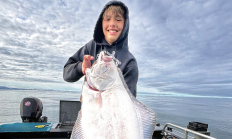
Oregon’s beaches, bays and ocean waters have more kinds of fishing than anywhere in the state. From chasing surfperch in the… well, surf, to hooking cabezon from a rocky jetty, to going deep after rockfish and halibut, to the line-screaming runs of an albacore tuna, this zone offers a species and fishing technique for every angler. Subscribe for updates Starting Jan. 1, 2026, an Ocean Endorsement is needed for most recreational anglers fishing in the ocean. Check the Ocean Endorsement page for more information. Ocean Endorsement

Features: Greater sage-grouse are a large grouse species. They are mottled gray-brown with black undersides. Males have black on the head and throat, while females have white behind their eyes. Habitat: Sage-grouse were originally found through much of the sagebrush dominated areas of eastern Oregon, but were eliminated from large areas by the mid 1900s through conversion of land for agricultural purposes. There has been little change in sage-grouse range, however since the 1950s. They live exclusively in sagebrush steppe habitat. During dry years, they may be concentrated in the vicinity of water sources. Technique: Due to greater sage-grouse fluctuating…

This striking songbird is best known for its habit of impaling prey on thorns and barbed wire, or wedging items in a v-shaped branch for easier handling and storage. The Loggerhead shrike breeds in open habitats east of the Cascades where they are rare but regular in the winter, especially at low-elevation sites. They are uncommon and declining in northeast Oregon. West of the Cascades, there are usually a few records each year during fall, winter, and spring in open habitats of the coast and the Willamette, Umpqua, and Rogue valleys. The Loggerhead shrike is an Oregon Conservation Strategy Species…

The bobcat is the smallest wild felid in Oregon, with females being considerably smaller than males. The bobcat is about twice the size of a domestic cat, but its legs are longer, its tail is shorter, and its body is more muscular and compact. The feet are relatively small and the bobcat is not well adapted to negotiate deep snow. In general, the variously spotted pelage is yellowish with grayish overtones in winter and with reddish overtones in summer, reflecting the two annual molts. The ears are black with a large white spot and are equipped with short black tufts…

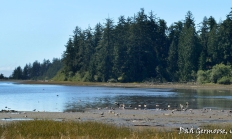
Features: Along Oregon's coast there are two species of mussel. Bay mussels ( Mytilus edulis) are bluish-black and grow to about 3 inches in length. California surf mussels ( Mytilus californianus) are brown or black and grow to about 7 inches long. Habitat: Mussels often inhabit boulders in the upper tidal zone so it is best to go looking for them during low-tide. Technique: Wearing a glove, use a twisting motion to pull mussels off the rocks, then immediately pull the "beard" off the bottom, the hairs that previously anchored the shellfish to the rocks. Be sure to check the…

The original portion of Fall River Hatchery construction was completed in 1929. Many improvements have been made since original construction. In 1952 the ten raceways were completed. The hatchery produces legal and trophy sized rainbow trout, and provides rainbow, brook and cutthroat trout fingerlings for air stocking programs throughout the state. The facility traps and spawns brown trout at a remote site.