

Search myodfw.com
Showing 101 - 120 of 1415 results
Article
Hunting regulations level the playing field for all hunters and maintain fair chase standards. New technology threatens both.
October 2, 2025
Species and Subspecies
Features: Rocky Mountain elk are one of two subspecies of elk found in Oregon, with a population estimate of more than 74,000 in the state. They are lighter in color and slightly smaller in size than Roosevelt elk, but their antlers are the largest of all elk and can weigh up to 40 pounds. Habitat: Rocky Mountain elk inhabit most of eastern Oregon with concentrations in the Blue Mountains and south-central Oregon. Techniques: Rocky Mountain elk live in much more open country that Roosevelts so try glassing, still hunting, spot and stalk and calling. Rifle, archery and muzzleloader seasons are…

Article
Youth game bird hunt opportunities give young hunters a chance to hunt in a controlled setting with a focus on safety and success.
August 5, 2025
Article
A beginner's guide to waterfowl hunting on Sauvie Island - an introduction. Part 1 of a 5 part series.

Article
Rules for permits and releasing birds, pursuit seasons and competitive dog trials. Game Bird Release Permit.
December 19, 2025

Article
An emergency hunt is an unanticipated hunt held on short notice to address acute agricultural damage. Many damage situations are addressed by controlled hunts during annual big game seasons. ODFW expects to implement very few emergency hunts during any year. On average, about 200 tags are issued annually statewide. Emergency hunt tags are in addition to tags for general seasons, controlled hunts or leftover hunts. Emergency hunt participants are selected from a list established on a county-by-county basis. You may apply for only one county.

Article
Wildfire season in Oregon and access to the place you like to hunt, fish or recreate may be impacted. So be sure to check for access restrictions before heading out.
August 29, 2025

Zones or Areas
From the rugged Coast Range to the Cascade Mountains, this vast area offers good general season hunting opportunities.
Workshop and Events
Date
Additional events coming soon
Location
Multiple locations
Site Sections
Oregon's diverse habitats and terrain offers something for every hunter. From the densely forested Coast Range to the expansive sage steppe of the Great Basin, hunting opportunities are practically unlimited. Visit e-regulations
Article
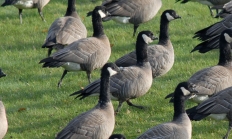
Get your permit to hunt goose in the northwest corner of Oregon- part of the Pacific Flyway for migrating waterfowl.
Zones or Areas
From the eastern flanks of Crater Lake National Park through the national forests of Douglas fir and ponderosa pine forests to the California border, there's plenty of public land to find your hunt.

Article
Didn't draw a big game tag this year? Here are some other ways to have a great hunting season.

Species and Subspecies
Features: Oregon is home to an estimated 25,000-30,000 black bears, which is North America’s most common bear species. They are the only type of bear found in Oregon. Despite their name, black bears are often brown in color. Habitat: Black bears are found statewide, with concentrations in the Coast and Cascade ranges and the Blue Mountains. Techniques: Oregon offers a controlled spring season (apply by Feb. 10) and a general fall season. Glassing open areas where bears are feeding on grass and shrubs works early spring season. Later in the season, some hunters turn to predator calls. Most fall bears…

Article
"I was out hunting near a reserve, and I shot a white-tailed deer. I didn’t know it was a white-tailed deer. The rules don’t say what kind of deer to hunt, they just say a deer, and I shot a deer, but I guess it’s a white-tail. What do I do now?" "Do I have to turn myself in to OSP?" -- recent call to ODFW
December 8, 2020

Press Release
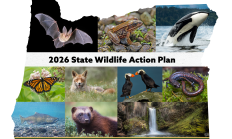
SALEM, Ore.—ODFW is excited to announce that Oregon's State Wildlife Action Plan (SWAP) has been officially approved by the U.S. Fish and Wildlife Service. This milestone marks the final step in adopting the 2026 SWAP, a science‑based roadmap to maintain healthy fish and wildlife populations, prevent further declines of at‑risk…
April 10, 2026
Article
Check out the latest point summary reports for all big game, and use the information to strategize while deciding which controlled hunts to apply for next season. Mark your calendar and apply early, starting December 1st: Apply now for a controlled hunt
September 30, 2025
Zones or Areas
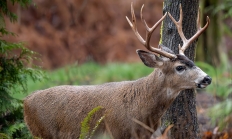
The transition from forested foothills of Mt. Hood to the beginnings of the Columbia Basin offers big game hunters an array of opportunities. The challenge can be finding public land or getting permission to hunt on private land.

Zones or Areas
This vast area covers the Columbia Basin through the Blue, Wallowa and Elkhorn mountains to Hells Canyon. Some of Oregon's most prized big game hunts are managed in this area.
