
Search myodfw.com
Showing 1061 - 1080 of 1699 results
Lookingglass Hatchery was constructed in 1982 as part of the Lower Snake River Compensation Program (LSRCP) – a program to mitigate for spring Chinook and summer steelhead losses caused by four federal dams constructed on the lower Snake River. Lookingglass is used to rear spring Chinook for the Grande Ronde and Imnaha rivers as part of LSRCP. Lookingglass Hatchery serves as an adult collection, egg incubation, and rearing and release site for the spring Chinook destined for the Grande Ronde River systems. The Imnaha Satellite Facility is used for the collection of spring Chinook adults returning to the Imnaha River…
Alsea Hatchery was constructed in 1936 and is operated with state funds. Many improvements have been made to the hatchery since original construction. The hatchery produces both winter steelhead and rainbow trout. The facility is used for adult collection, spawning, egg incubation and rearing of winter steelhead, and egg incubation and rearing of rainbow trout.
Updated December 31, 2025 Subscribe for updates Starting Jan. 1, 2026, an Ocean Endorsement is needed for most recreational anglers fishing in the ocean. Check the Ocean Endorsement page for more information. Ocean Endorsement
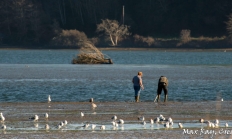

Sauvie Island Wildlife Area protects vital waterfowl habitat and provides a public hunting area while supporting a rich diversity of wildlife, including hundreds of bird, mammal, reptile, and plant species.
Jewell Meadows Wildlife Area is located in the Oregon Coast Range Mountains, in the northwestern part of the state. The wildlife area was established in 1969, with an initial purchase of 183 acres. It now encompasses 1,114 acres. The wildlife area’s purpose is to protect and enhance habitat to benefit native wildlife species, to reduce wildlife damage to adjacent properties, and to provide the public with an opportunity to observe wildlife in a natural setting.
The E.E. Wilson Wildlife Area came into existence in 1950 when the U.S. Government gave quitclaim title to the property to the Oregon Department of Fish and Wildlife. The wildlife area covers approximately 1,788 acres, is located on Highway 99W about 10 miles north of Corvallis and is situated on the Willamette Valley floor. SHOTGUN RANGE BACK OPEN AS OF LATE OCTOBER 2025: The renovation is complete and the shotgun range is back open. Improvements include: four times as many shooting lanes, fully paved ADA-compliant walkway with pullouts that will make it easier for disabled shooters, a new covered pole…
Following droughts in the 1930s that affected most of North America, major conservation efforts, both private and governmental, were enacted to reverse trends of degrading and disappearing wetlands. During this time period there was a major creation and expansion of Federal refuges and State wildlife areas. As the concept of waterfowl flyway management was endorsed and developed, wildlife areas were acquired and managed as part of a larger plan focused on migratory waterfowl needs. Klamath Wildlife Area was one of several wetland-focused wildlife areas established in Oregon. KWA was established in 1958, with primary objectives of protecting and improving waterfowl…
Lower Deschutes Wildlife Area was established in 1983, with the initial donation of land by the Oregon Wildlife Foundation (OWF) of 2,758 acres. In 1986 OWHF donated an additional 5,158 acres of land to the department. The Lower Deschutes Wildlife Area was initially established to provide permanent public angler access. However, especially with the 1986 acquisition, the wildlife area has grown to provide enhanced wildlife and fish habitat (i.e. through removal of livestock, riparian vegetation improvements, etc.) and more wildlife-oriented recreational activities such as hunting, boating, hiking and biking. In 2015, ODFW partnered with the Trust for Public Land to…
The original Riverside Tract is adjacent to the Malheur River near the former railroad community of Riverside. It was purchased from the Blaylock family in 1976 and has been administered by ODFW as Riverside Wildlife Area since that time. The purpose of this initial acquisition was to provide public fishing and hunting access to a previously privately held portion of the Malheur River canyon. In addition, this purchase provided the opportunity for the department to emphasize fish and wildlife habitat management in the river canyon. Additional acres were added to this tract in 1977. In 1972, the department purchased a…
The development of the WWA began in 1953 with the acquisition of five parcels of land consisting of 4,400 acres. The Department continued to purchase additional lands, acquiring 1,670 acres in 1954 and another 760 acres in 1955. From 1961 to the present the department has purchased or received another 4,219 acres. The wildlife area currently consists of 12,419 acres owned by the department. In addition, the department, through agreements with the Bureau of Land Management (BLM), manage 1,329 acres within or adjacent to the wildlife area. The WWA was established in response to continuing complaints from landowners concerned with…
Establishment of the Bridge Creek Wildlife Area initially started in 1961 when a parcel of land was purchased from the Frank Hilbert estate. After the initial purchase, several private holdings were acquired to consolidate the land under department ownership. The last parcel was purchased from the Colvin Cattle Company in 1975. The primary purpose of the wildlife area is to maintain and protect a key historic winter range for Rocky Mountain elk ( Cervus elaphus nelsoni).
The Columbia Basin Wildlife Areas are a composition of four Oregon Department of Fish and Wildlife (department) managed wildlife areas located along the Columbia River, in the Columbia Basin. The four wildlife areas (Power City, Irrigon, Coyote Springs and Willow Creek) are within the Columbia Plateau ecoregion. Management agreements for these areas were initially established between 1971 and 1977 between the department and Federal agencies which own the lands. The Columbia Basin Wildlife Areas, which total approximately 1,885 acres, provide an important landbase for the conservation and recreation of fish and wildlife within a highly privatized and altered landscape and…
The Columbia Basin Wildlife Areas are a composition of four Oregon Dept of Fish & Wildlife managed wildlife areas located along the Columbia River, in the Columbia Basin. The four wildlife areas (Power City, Irrigon, Coyote Springs and Willow Creek) are within the Columbia Plateau ecoregion. Management agreements for these areas were initially established between 1971 and 1977 between the department and Federal agencies which owns the lands. The Columbia Basin Wildlife Areas, which total approximately 1,885 acres, provide an important landbase for the conservation and recreation of fish and wildlife within a highly privatized and altered landscape and play…
The Columbia Basin Wildlife Areas are a composition of four Oregon Dept. of Fish & Wildlife managed wildlife areas located along the Columbia River in the Columbia Basin. The four wildlife areas (Power City, Irrigon, Coyote Springs, and Willow Creek) are within the Columbia Plateau ecoregion. Management agreements for these areas were initially established between 1971 and 1977 between the department and Federal agencies which own the lands. The Columbia Basin Wildlife Areas, which total approximately 1,885 acres, provides an important landbase for the conservation and recreation of fish and wildlife within a highly privatized and altered landscape and play…
Phillip W. Schneider Wildlife Area provides winter range for mule deer populations and year-round habitat for a variety of wildlife including mammals, birds, reptiles and amphibians. Elk, deer, and bighorn sheep viewing is often good during winter and early spring. Bird watching is excellent all year. Native habitats include sagebrush shrubland, riparian, ponderosa pine forest, western juniper woodland and mixed conifer which support a diversity of fish and wildlife. The riparian areas along the mainstem John Day River, South Fork John Day River and Murderers Creek provide excellent habitat for many birds. Upland areas provide important habitat for passerines and…