
Search myodfw.com
Showing 221 - 240 of 665 results
Find maps, boundary descriptions and the percent public land for the Owyhee Unit.
CENTRAL POINT, Ore. – Learn how to spot and identify animal tracks, splash around in a stream to check out aquatic bugs, and play "survival of the fish-est." Join the Oregon Department of Fish and Wildlife, Jackson County Parks, and Rogue River Watershed Council for Wildlife Wisdom every Saturday from…
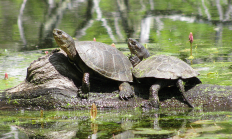
The Columbia Basin Wildlife Areas are a composition of four Oregon Dept of Fish & Wildlife managed wildlife areas located along the Columbia River, in the Columbia Basin. The four wildlife areas (Power City, Irrigon, Coyote Springs and Willow Creek) are within the Columbia Plateau ecoregion. Management agreements for these areas were initially established between 1971 and 1977 between the department and Federal agencies which owns the lands. The Columbia Basin Wildlife Areas, which total approximately 1,885 acres, provide an important landbase for the conservation and recreation of fish and wildlife within a highly privatized and altered landscape and play…
Note: Recreational ocean crabbing is closed through Nov 30. SALEM, Ore.- Get outdoors with friends and family and enjoy free fishing, crabbing and clamming on Friday and Saturday, Nov. 28 and 29. Statewide free fishing days are a great chance to take someone new fishing and celebrate Oregon's natural resources…

Check out the latest Chinook and steelhead counts at Leaburg Dam.
Find maps, boundary descriptions and the percent public land for the Saddle Mountain Unit.
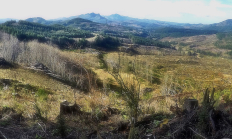
Each fathom line, conservation area, and marine reserve is defined by a connecting series of waypoints (latitude and longitude). The waypoints are used for regulatory enforcement, while maps are provided for visual reference.
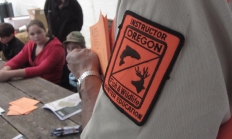
Oregon requires all hunters under the age of 18 to complete a hunter safety education course before hunting in the state. Upon completing the course (and a Field Day for youth), participants will receive a Hunter Safety certification number and card. Adults are also encouraged to take the online course, as it may be required for out of state hunts. Note: Youth under the age of 9 may struggle with the course material and may not have the physical strength needed to safely handle a firearm during a Field Day, particularly during muzzle control, loading, and unloading drills.
Year Round
Statewide
PENDLETON, Ore. – From Oct. 18 through Nov. 30, 2025, the adult daily salmon and steelhead bag limit on the Umatilla River from the Hwy 730 bridge upstream to Threemile Dam is three fish total, but retention of Chinook will be closed. The closure of Chinook retention is necessary due…
Find maps, boundary descriptions and the percent public land for the Santiam Unit.
Seeing killer whales off the Oregon coast is a rare treat, but whale watchers can usually count on a pod of orca’s patrolling the coast in mid-April – just in time to intercept baby gray whales. Orcas are most often seen in the ocean off Depoe Bay and Newport, but can be spotted coastwide. The first thing you are likely to see when sighting killer whales is their dorsal fin. Male orcas have a dorsal fin that can be six feet in height, juveniles and females have shorter fins. These large fins can be seen from quite a distance. There…

Columbia Fishing April 9, 2026 Current and upcoming fishing opportunities: Spring Chinook reopens below Bonneville Dam for three days beginning April 11 With the additional days, the following regulations are in effect: Dates: Chinook retention allowed Saturday, April 11 – Monday, April 13 Daily adult bag limit: Two adult hatchery salmonids (Chinook or steelhead) per day, but only one may be a Chinook. Open area: Buoy 10 line upstream to Beacon Rock plus only the Oregon and Washington banks from Beacon Rock upstream to the Bonneville Dam deadline. Shad may also be retained. Columbia River regulation changes for the 2026 spring Chinook fishery…
Find maps, boundary descriptions and the percent public lands in the Sumpter Unit.
Regulating harvest, health, and enhancement of wildlife populations Living with wildlife Oregon's permitted wildlife control operators (WCO) are an individual, business owner, or the business owner's designee charging a fee to control furbearers, unprotected mammals (excluding moles) and western gray squirrels causing damage, creating a public nuisance or posing a public health or safety concern in incorporated city limits and associated urban development areas. They are permitted by ODFW and governed by a set of rules.