
Search myodfw.com
Showing 341 - 360 of 672 results
In 1925 the first fish hatchery on the South Santiam River began operations about 5 miles upstream from today’s present site, rearing annually approximately 100,000 spring Chinook in dirt ponds for release into the South Santiam River. The present site came about with the construction of Foster Dam. In 1968 the facility was dedicated for the rearing of spring Chinook and summer steelhead. This facility was built and annually funded in part by the US Army Corps of Engineers to compensate for the loss of spawning and rearing areas above the dams on the South Santiam River.
Protecting and enhancing Oregon’s fish and wildlife, and the habitats they use, for the use and enjoyment of present and future generations is at the heart of what we do.
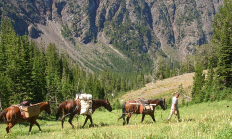

SALEM, Ore. – Effective June 1 through Sep. 30, minimum and maximum size limits as well as the daily and possession bag limits for rainbow trout and bass are suspended for Thief Valley Reservoir, Pilcher Creek Reservoir, and Wolf Creek Reservoir which are all located within the Southeast Zone in…
The North Nehalem Fish Hatchery was originally constructed in 1966. The hatchery replaced the Foley Creek Hatchery which was constructed in 1926. The facility is used for adult collection, spawning, egg incubation and rearing of fall Chinook, coho, winter steelhead and rainbow trout.
Leaburg Hatchery was built in 1953 to mitigate for lost fishing opportunity because of the many dams on Willamette Basin rivers. These dams include Cougar, Blue River, Carmen-Smith, Lookout, Dexter, and others. The hatchery rears rainbow trout, summer steelhead and Chinook salmon, and has a staff of four employees. Come visit our show pond and see huge white sturgeon and rainbow trout. There’s a viewing platform built by the McLaren School for Boys in 1993 to allow visitors to get a close up look at spring Chinook salmon spawning in the creek below.
Sandy Hatchery began operation in 1951 as a state-funded facility. In 1959, the hatchery became part of the Columbia River Fisheries Development Program (Mitchell Act) – a program to enhance declining fish runs in the Columbia River Basin. The facility is currently used for the adult collection of spring Chinook, winter and summer steelhead, and coho salmon. Coho and winter steelhead eggs are taken, hatched, ponded and reared to release on station.
LA GRANDE, Ore. – Effective Aug. 1 through Sep. 30, minimum and maximum size limits as well as the daily and possession bag limits for rainbow trout and bass are suspended for Thief Valley Reservoir (Southeast Zone) located in Union County. Harvest will be allowed by hand, dip net, or…
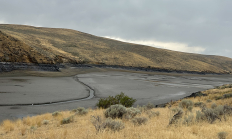
Enterprise, Ore. – Spring Chinook fishing in Hells Canyon will be closed starting June 4, after harvest quotas for the season were reached earlier than anticipated due to a run size downgrade. Spring Chinook fishing on the Snake River is open April 22 to Aug. 17 under permanent regulations but…
Roaring River Hatchery was constructed in 1924. Many improvements have been made to the hatchery since the original construction. In 1987 and 1996 new raceway ponds were constructed to replace the original raceways. The hatchery is a mixed-stock facility, producing both anadromous fish and resident trout. The hatchery is used for rearing summer and winter steelhead from fingerling to smolt. The rainbow trout program involves broodstock maintenance, spawning, egg incubation and rearing.
Bandon Hatchery was constructed in 1925. Various renovations have taken place since original construction and more are planned for the future. The facility is used for adult collection, egg incubation and rearing of both natural and hatchery fall Chinook, winter steelhead, and trophy-sized rainbow trout.
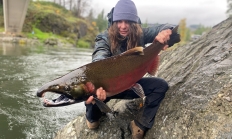
KLAMATH FALLS, Ore. – Sept. 30 will be the last day to fish on Spencer Creek this year, as this tributary of the Klamath River will be closed as of Oct. 1 to protect spawning fall Chinook salmon. Spencer Creek has traditionally been closed to fishing from Nov. 1 to…
Enterprise, Ore. – Beginning Friday, Sept. 19 through Friday, Oct. 31, harvest of wild adult Chinook salmon (non-adipose clipped, ≥ 24 inches) will be closed in the Snake River from the Oregon/Washington border upstream to Hells Canyon Dam. During this period, anglers may continue to harvest adipose-clipped (hatchery) fall Chinook…
Alsea Hatchery was constructed in 1936 and is operated with state funds. Many improvements have been made to the hatchery since original construction. The hatchery produces both winter steelhead and rainbow trout. The facility is used for adult collection, spawning, egg incubation and rearing of winter steelhead, and egg incubation and rearing of rainbow trout.
The Umatilla Hatchery began operation in 1991. The hatchery is used for egg incubation and rearing of spring Chinook, fall Chinook and summer steelhead.