
Search myodfw.com
Showing 361 - 380 of 795 results
Features: Brook trout are easily identified by the worm-like pale yellow markings on their backs and red dots with blue halos and white borders on their lower fins. In small streams brook trout are often 5- to 7-inches long but can reach 25 inches or more in large rivers or lakes. Habitat: Brook trout are an introduced species, first stocked in the early 1900s. They are widely distributed from high mountain lakes to headwater tributaries, and thrive in cold, mountainous streams and lakes where other species are unable to do well. Many barren lakes have been stocked with brook trout…

SALEM, Ore. – Oregon's deer and elk give birth from May through July each year. It's natural for mother animals to leave their young alone for extended periods of time while they go off to feed. If you come across a fawn or calf by itself, don't assume it's orphaned…

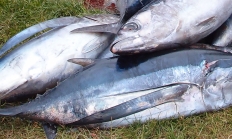
Features: These fish have dark blue backs, silver sides and bellies, and very long pectoral (side) fins. Albacore caught off the Pacific Coast are generally 21 to 30 inches long with the largest fish running about 35 pounds. Habitat: Tuna are pelagic species, meaning they spend their lives in the open ocean. Albacore generally show up 15-200 miles or more off the Pacific Coast in mid-July and stick around through September. Albacore are usually found where surface water temperatures are at least 59 degrees Fahrenheit and the water has a distinct clear blue color (this is where chlorophyll levels are…

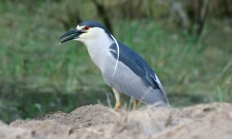
Although quite common in the U.S., the Black-crowned night-heron's nocturnal and crepuscular feeding habits can make it difficult to locate. Its habitat consists of marshes, lakes, rivers, and other wetlands, where it feeds mostly on fish. It is a thick-billed, medium-sized, stocky heron with relatively short neck and legs. Adults have a black back and cap which contrast with the pale gray or whitish underparts. Immatures have brown backs with large pale spots and heavily streaked underparts. A distinctive choking squawk call is often heard at dusk. It is a fairly common summer resident east of the Cascades where it…
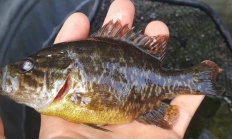
Features: Sacramento perch are blackish above with about seven vertical dark bars that are irregular in form and position. They are not a true perch, but a sunfish. It is the only member of the sunfish family native to the west coast and, in Oregon, is found only in the Klamath Basin. Sacramento perch are distinguished from the other sunfish in Oregon by having 12 or 13 dorsal fin spines whereas all the others have 10 or fewer. Maximum size in Oregon is about 12-inches in length and a weight of about 3/4 pound, although in California they have been…

Find maps, boundary descriptions and the percent public land for the Trask Unit.
The information provided here is intended to help you get an idea of your odds of drawing a reservation in the Eastside and Oak Island hunt areas. First off, the number of permits available in each hunt unit does change throughout the season. See the NUMBER OF RESERVATIONS AVAILABLE FOR EASTSIDE AND OAK ISLAND UNITS link to view the number of permits that are available for each unit and hunt period.
Features: Redear sunfish are often confused with bluegill, but differ by having a red or orange border around the black ear flap and by lacking the spot on the dorsal fin and the vertical bars on the side. Habitat: In Oregon, redear sunfish are found only in a few ponds in the Willamette Valley and the central part of the state. In their native range, redear sunfish prefer warm, large lakes and reservoirs and bayous with vegetated shallow areas and clear water. They feed primarily on the bottom and seldom take surface insects. The diet consists mostly of zooplankton, insect…

Features: Warmouth have more of a bass-shaped body and a larger mouth than the other sunfishes, other than the green sunfish. Warmouth are yellowish brown in color with three or four brownish bars radiating back from the eye over the gill cover. They can be distinguished from the green sunfish by the absence of turquoise mottling on the gill cover and the lack of a dark spot at the rear base of the dorsal fin. Habitat: In Oregon, warmouth are present in a few coastal lakes and widely distributed in the Columbia basin, but are not commonly caught by anglers…
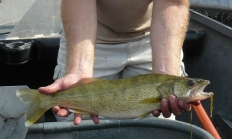
Features: Color varies, but walleye are generally dark olive-brown on top grading to almost white below. Walleye have two well-separated dorsal fins; the first fin has a large black spot at its rear base. The opaque eyes, giving the fish its common name, and canine teeth are other prominent features. Habitat: Walleye are found in the Columbia, Willamette and Snake rivers. In the Willamette River, the walleye fishery is generally limited to the section downstream from Willamette Falls at Oregon City, although a few have been documented as far upstream as Dexter Dam. Walleye prefer large, clean and cold or…
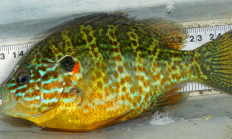
Features: Pumpkinseeds may be identified by the orange or red spot on the ear flap and the orange cheeks with wavy blue or turquoise stripes. Color is exceedingly brilliant and somewhat variable; olive to brassy-green above, the back finely dusted with gold or emerald. Habitat: Pumpkinseeds are found in the same habitats and often in association with bluegills. Adults often congregate beneath old deadheads and trees that have fallen into the water. Food habits are also similar to bluegill. They consume large numbers of snails by browsing on the stalks of aquatic vegetation. Techniques: Pumpkinseed are found in many of…
Trout fishing opportunities abound in this zone, known for its high desert climate, sage-covered canyons, glacial peaks and mountain lakes. Anglers will find year-round trout fishing in the Deschutes, Metolius, Fall and Crooked rivers, while several central Oregon lakes and reservoirs are renowned for their trout and kokanee fishing – and their beauty. The Hood and lower Deschutes – both tributaries of the Columbia River – offer high desert fishing for Chinook salmon and summer steelhead.

Find maps, boundary descriptions and the percent public land for the Indigo Unit.
Find maps, boundary descriptions and the percent public land for the Minam Unit.
Find maps, boundary descriptions and the percent public land for the Silvies Unit.