
Search myodfw.com
Showing 661 - 680 of 741 results
The majestic trumpeter swan is the largest of our native waterfowl and one of the heaviest flying birds in the world with males sometimes exceeding 30 pounds. Historically hunted to the brink of extinction, it was recognized as an endangered species long before there was an Endangered Species Act, and its recovery is a conservation success story. The adult's snow-white plumage with contrasting black bill and feet and 8-foot wingspan define this magnificent bird. Their neck is as long as their body and is used to reach food at the marsh bottom. In spring, the trumpeter swan is a locally…

Gnat Creek Hatchery was constructed in 1960 as part of the Columbia River Fisheries Development Program (Mitchell Act)—a program to enhance declining fish runs in the Columbia River Basin. The facility is used for egg incubation and rearing of spring Chinook and winter steelhead. Most of the production is released off-station. The hatchery is an easy drive toward Oregon’s coast on Highway 30 and a visitor-friendly place for the entire family. With lots to do, located on beautiful Gnat Creek and tucked away amid the rainforest, this is a worthwhile stop on the way to the coast.
SALEM, Ore. — ODFW is seeking applicants to serve on two public advisory committees that support its Fish Screening and Fish Passage Programs. These programs play a vital role in protecting native fish populations across the state. Through collaboration with landowners, agencies, and conservation partners, the programs work to keep…

SALEM, Ore. – The Fish and Wildlife Commission meets Friday, July 11 at 10 a.m., at The Dalles Civic Auditorium (323 East 4th St., The Dalles). See the agenda here. The meeting will also be livestreamed from the Commission page. At Friday's meeting, the Commission will be asked to consider…

The kit fox is the smallest canid that occurs in Oregon. It has the typical canid conformation: the body is slim, the legs are long and thin, and the ears are large and erect. The tail is about 40 percent of the total length and is tipped with black, but has no dark mane on the dorsal surface. The feet and legs are whitish interiorly, light rusty-brown posteriorly. The dorsum is grizzled brownish-gray medially blending to grizzled gray then to light buff laterally and finally to white on the chest and venter. The head and posterior surface of the ears…

The Canada lynx is only slightly larger than the bobcat. Nevertheless, long legs and long fur produce the illusion that the lynx is considerably larger than it actually is. Documented accounts of wild lynx are rare and lynx are not expected to currently reside in Oregon. However, if lynx were to be observed, it is likely to occur at higher elevations such as in the Cascade Range, Blue Mountains or Wallowa Mountains. Habitats used by lynx often are defined in terms of habitats used by their primary prey species, thus good snowshoe hare habitat usually is considered to be good…

BAKER CITY, Ore. – ODFW along with Baker County Parks will host a Free Fishing Day event at Holcomb Park, Brownlee Reservoir, on Saturday, June 7 from 10 a.m. to 3 p.m. This event is designed to help kids and their families learn fishing basics and enjoy a day outside…

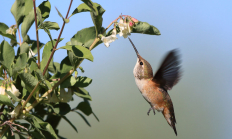
SALEM, Ore. – ODFW staff received a report of an incident involving a coyote biting an adult along Orchard Heights Rd., just outside the city limits of West Salem that occurred on Feb. 11. The Polk County Sherriff's Office (PCSO) initially responded to the area to conduct a site investigation…

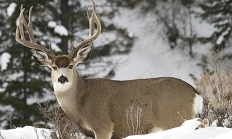
The mule deer is the larger member of the genus in Oregon. The ears are long, the metatarsal gland is surrounded by hairs similar in color but considerably longer than those on the remainder of the metatarsus, and the tail is short and constricted basally. Among adult males, the antlers are dichotomously branched with tines of approximately equal length. In winter, the basic pelage color is cinnamon buff. The chest is nearly black at the midline grading to grayish on the sides. The nose, sides of face, chin, and throat are whitish to pale buff. Spots of black occur immediately…
Wizard Falls Hatchery was constructed in 1947. Many improvements have been made to the facility since original construction. The hatchery has a rainbow trout broodstock which supply rainbow trout to the Deschutes sub-basin and southeast Oregon. The hatchery is used for incubation and rearing of kokanee salmon and rainbow trout to provide for recreational fishing program objectives, and the incubation and rearing of spring Chinook and summer steelhead as part of a reintroduction program in the upper Deschutes Basin. Brook trout and cutthroat trout fingerlings are reared for the air stocking program on odd years. Kokanee salmon are spawned remotely.
The North Nehalem Fish Hatchery was originally constructed in 1966. The hatchery replaced the Foley Creek Hatchery which was constructed in 1926. The facility is used for adult collection, spawning, egg incubation and rearing of fall Chinook, coho, winter steelhead and rainbow trout.
SALEM, Ore. – ODFW is accepting public comments on potential rule changes to commercial Dungeness crab fishing and trap check times for bear and cougar. Comment using the links provided on ODFW's rulemaking page. The deadline to comment is July 24 at 8 a.m. These policy proposals will be considered…