
Search myodfw.com
Showing 741 - 760 of 847 results
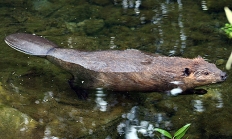
In Oregon, the nutria is considered an invasive species. The nutria is a large rat-like semiaquatic rodent. The species has a hunched body; a round, nearly hairless tail; a valvular mouth and nose; and pentadactyl feet with naked soles. The toes of the hind feet, except for the hallux, are included in a web. As an adaption to the aquatic environment, the eyes, nostrils, and small ears are set high on the sides. The pelage consists of long, course guard hairs and soft, dense underfur. Overall, the color usually ranges from dark brown to yellow-brown. The muzzle is frosted with…

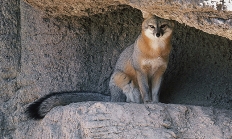
The gray fox is among the smaller canids in Oregon. The basic color of the gray fox is grizzled gray, but the stiff middorsal hairs have long black tips that extend onto the tail as a black mane. Guard hairs are banded white, gray, and black. The throat, venter, and inside of the legs are white; a cinnamon-rufous border to the white throat extends on the flanks and underside of the tail A blackish patch on the side of the face extends onto the lower jaw and a grayish black "exclamation point" extends upward from the interior margin of each…
CORVALLIS, Ore. — The Oregon Hatchery Research Center Board will meet in Corvallis on Tuesday, December 2 from 11:00 a.m. to 1:00 p.m. at the Oregon Department of Fish and Wildlife South Willamette Watershed District Office (7118 NE Vandenberg Avenue, Corvallis, OR 97330). In addition to the regularly scheduled items…
The American marten is weasel-like with a long body and pointy face. The legs are short; the toes, including the pads, are completely furred; and the nails are semiretractile. The tail is bushy and long. The pelage in winter is luxuriant, with a dense underfur and sparse covering of guard hairs. The color varies, but usually is a golden brown shading to dark brown on the feet and tail; the head is lighter. The throat and chest are splotched with orange or yellow. A small dark stripe extends upward from the medial corner of each eye, giving the appearance of…

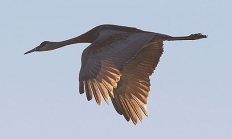
The Greater sandhill crane is Oregon's tallest bird. This large majestic crane has a guttural gurgling or bugling call, and is easily noticed in flight by its profile, with long neck and head extending straight ahead and long legs trailing behind. The Greater sandhill crane is distinguished by its red crown and white cheek patches, contrasting with with a light gray body. Fledged young resemble adults, but have a feathered forehead, a lighter tawny plumage, and lack the red crown and white cheek patches during their first fall. Fledged young have a squeaky cheap call often heard in flight during…
The American beaver, the largest rodent in North America, commonly weighs in excess of 55 pounds. The beaver is highly modified for aquatic life with a compact body, paddle shaped tail, webbed hind feet, valves that close their ears and nose while diving, and a rich oil gland that waterproofs their fur. Under water, membranes cover the eyes. Claws on the first and second toes are split and function in grooming; the ears and eyes are small; the tail is broad, scaly and nearly without hairs. The thick underfur is overlain with coarse guard hairs; overall, the pelage (coat) is…
The Wolverine is the largest terrestrial mustelid in Oregon that, to some degree, resembles a small bear. It is powerfully built with a broad, dog-like head; short round ears; small eyes; a slightly humped back; relatively short legs and a bushy, somewhat drooping tale. The pelage consists of a dense, wooly, crimped under fur overlain by course, stiff and somewhat shaggy guard hairs. Fur on the tail is about twice as long as on the body. The base color is blackish brown with a pale brown stripe extending along the sides from the head or shoulders to the base of…

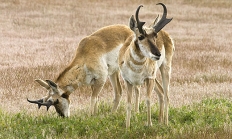
The pronghorn, often called "antelope," is deer-sized with relatively long and thin legs and feet with just two digits on each foot, a relatively small tail, and unique horns consisting of deciduous keratin sheaths set on bony cores arising from the fontal bones. Among males, the laterally flattened sheaths are long, branched and recurved, but in those females that possess horns they are short and simple. The horns and hooves are black. The front feet are larger and carry most of the weight when the pronghorn runs. The pelage is course. The dorsum is a light buff and is separated…
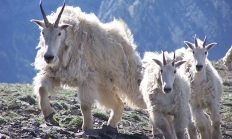
The mountain goat is a stockily built bovid with black scimitar-shaped horns, large black hooves and prominent dew claws, and an entirely white, wooly pelage. Sometimes the pelage contains scattered brown hairs on the dorsum and rump. A long beard, pointed ears, and a squarish muzzle are also characteristic. Males are larger, and have longer, larger-diameter, and more evenly curved horns that females. Mountain goats are denizens of high altitudes, remote, and barren montane regions where they are capable of moving through exceedingly rugged and precipitous terrain with speed and agility. Nevertheless, mountain goats are known to fall occasionally, whereupon…

NW Fishing July 30, 2026 Trout season is open for Northwest Zone streams. See the regulation booklet for limits, open areas, and bait restrictions. Cutthroat trout are present in most areas open to angling and provide a good fishery in the rivers and streams that will continue to improve from now through the end of the season (October 31). Sea-run cutthroat are in the bays and tidewaters right now and fishing has been good recently. Nehalem Bay has "summer" Chinook coming in. These fish are early returning fall Chinook that start returning to the bay and river in late July…
The tail is brown dorsally with a white fringe, and white ventrally. In males, antlers with tines typically arise from a single main beam. In winter, the pelage is a dark buffy-gray and consists of relatively long, thick, and somewhat brittle hairs; in summer, the pelage is lighter with more tawny tones and is shorter and thinner. The midline of the dorsum is darker and the fade lighter; in males, the patch between the antlers is darker. Pelage markings include white on the venter, throat, muzzle and lower lip, and around the openings of the metatarsal and interdigital glands; a…

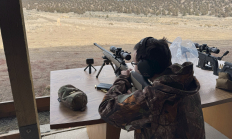
This hands-on course is designed for adults eager to enter (or advance in) big game hunting with a modern, scoped bolt-action rifle—the most popular and precise choice for ethical big game pursuits.
Additional events coming soon!
Various locations
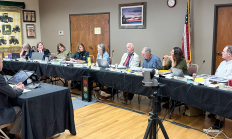
CORVALLIS, Ore. — The Oregon Hatchery Research Center Board will meet in Corvallis on Tuesday, June 17 from 10:00 a.m. to 2:00 p.m. at the Oregon State University, Nash Hall Room 032, 2820 SW Campus Way. In addition to the regularly scheduled items, the agenda includes OHRC research updates, an…

SW WILDLIFE VIEWING July 30, 2026 Coos and Curry counties Coquille Valley Wildlife Area (CVWA) Coquille Valley Wildlife Area (CVWA) in Coos County is open to public access. Permits for access are required and are available, free of charge, at the kiosk located in the parking lot along North Bank Road. You must access CVWA through this point. Please fill out the upper half ("A" half) of the permit and deposit it in the slot located on the post of the kiosk. Sign and carry the lower half ("B" half) with you while you enjoy CVWA. At the end of your visit please fill out the B…
