
Search myodfw.com
Showing 381 - 400 of 542 results
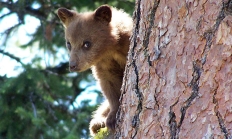
Black bears are the largest extant carnivores in Oregon. They are, however, smaller than grizzly bears, and they lack the grizzly's distinctive shoulder hump. A black bear is heavily built with stout legs and large feet. The eyes and ears are relatively small and the tail is extremely short. The claws are recurved but relatively short with those on the forefeet equal to or only slightly longer than those on the hind feet. The characteristic humped shoulders and dished face of the grizzly bear are absent. During spring-autumn seasons, black bears tend to be more active during daylight and crepuscular…

OTIS, Ore.—ODFW's recent legislatively adopted budget did not include funding to continue the operation of Salmon River Hatchery, one of more than 30 hatcheries that ODFW maintains in the State. The cost of operating and maintaining the hatchery exceeded available revenue, but funding is just one of the issues facing…
Sauvie Island Wildlife Area was established in 1947 with primary objectives of protecting and improving waterfowl habitat and providing a public hunting area. The initial purchase of five acres in 1940 and subsequent purchases through 2012 has brought the wildlife area to its present size of 11,643 acres, of which 8,153 acres are under fee title to the department and 3,490 acres are managed through a cooperative agreement with the Oregon Department of State Lands. Currently, the wildlife area supports a biologically diverse association of wildlife which includes at least 275 species of birds, 37 species of mammals, 12 species…
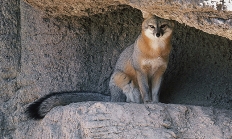
The gray fox is among the smaller canids in Oregon. The basic color of the gray fox is grizzled gray, but the stiff middorsal hairs have long black tips that extend onto the tail as a black mane. Guard hairs are banded white, gray, and black. The throat, venter, and inside of the legs are white; a cinnamon-rufous border to the white throat extends on the flanks and underside of the tail A blackish patch on the side of the face extends onto the lower jaw and a grayish black "exclamation point" extends upward from the interior margin of each…
The North Nehalem Fish Hatchery was originally constructed in 1966. The hatchery replaced the Foley Creek Hatchery which was constructed in 1926. The facility is used for adult collection, spawning, egg incubation and rearing of fall Chinook, coho, winter steelhead and rainbow trout.
Sandy Hatchery began operation in 1951 as a state-funded facility. In 1959, the hatchery became part of the Columbia River Fisheries Development Program (Mitchell Act) – a program to enhance declining fish runs in the Columbia River Basin. The facility is currently used for the adult collection of spring Chinook, winter and summer steelhead, and coho salmon. Coho and winter steelhead eggs are taken, hatched, ponded and reared to release on station.
The major portion of Elk River Hatchery construction was completed in 1968. In 1971 the hatchery completed final construction on an intake and ten new ponds. The purpose of the facility is to supplement natural production of fall Chinook in the Elk and Chetco Rivers and winter steelhead in the Chetco River. The facility is used to collect Elk River fall Chinook, to incubate eggs and rear both natural and hatchery fall Chinook and winter steelhead.
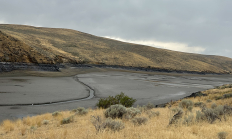
LA GRANDE, Ore. – Effective Aug. 1 through Sep. 30, minimum and maximum size limits as well as the daily and possession bag limits for rainbow trout and bass are suspended for Thief Valley Reservoir (Southeast Zone) located in Union County. Harvest will be allowed by hand, dip net, or…
Find maps, boundary descriptions and hunts available in the new Devils Garden Hunt Area. Download printable PDF map

The present facility was constructed in 1925, across the North Umpqua River from an earlier trout hatchery built in 1920. The hatchery was closed in 1975 due to low stream flows and high water temperatures, and was reopening in 1979 after extensive reconstruction. In 2012 a state of the art fish passage ladder was completed. It included a fish viewing window for Rock Creek basin fish inventory and a fish trap facility. The hatchery produces fall and spring Chinook, coho, summer and winter steelhead, and rainbow trout. The facility is used for adult collection, spawning, incubation, and rearing of Chinook…
Cole Rivers Hatchery was constructed by the US Army Corps of Engineers (USACE) in 1973 to mitigate for spawning and rearing areas blocked by the construction of Lost Creek, Applegate, and Elk Creek Dams. The hatchery was named in honor of Cole M. Rivers, a biologist on the Rogue River for 20 years. The facility is used for adult collection, spawning, egg incubation and rearing of spring Chinook, coho, summer steelhead, and winter steelhead, and egg incubation and rearing of fall Chinook and rainbow trout. Infrastructure Repair and Renovation Updates
The Umatilla Hatchery began operation in 1991. The hatchery is used for egg incubation and rearing of spring Chinook, fall Chinook and summer steelhead.
The Klamath Fish Hatchery was originally constructed in 1929. Many improvements have been made since original construction. The hatchery produces legal and trophy sized rainbow trout, fingerling rainbow trout, brown trout, and cutthroat trout for release throughout the Klamath Basin, Deschutes Basin, Umpqua Basin and the southeast part of the state. The hatchery assist with remote egg takes for wild rainbow and brown trout at Crane Prairie and Wickiup Reservoirs.
Bandon Hatchery was constructed in 1925. Various renovations have taken place since original construction and more are planned for the future. The facility is used for adult collection, egg incubation and rearing of both natural and hatchery fall Chinook, winter steelhead, and trophy-sized rainbow trout.
Alsea Hatchery was constructed in 1936 and is operated with state funds. Many improvements have been made to the hatchery since original construction. The hatchery produces both winter steelhead and rainbow trout. The facility is used for adult collection, spawning, egg incubation and rearing of winter steelhead, and egg incubation and rearing of rainbow trout.
This 141-acre property along both sides of the Yachats River was first purchased in the early 1980s to provide forage for elk and help alleviate elk damage to surrounding agricultural land. It also provides public access to the Siuslaw National Forest along the Yachats River Highway, where there are few public access points.
Leaburg Hatchery was built in 1953 to mitigate for lost fishing opportunity because of the many dams on Willamette Basin rivers. These dams include Cougar, Blue River, Carmen-Smith, Lookout, Dexter, and others. The hatchery rears rainbow trout, summer steelhead and Chinook salmon, and has a staff of four employees. Come visit our show pond and see huge white sturgeon and rainbow trout. There’s a viewing platform built by the McLaren School for Boys in 1993 to allow visitors to get a close up look at spring Chinook salmon spawning in the creek below.