
Search myodfw.com
Showing 661 - 680 of 699 results
Bandon Hatchery was constructed in 1925. Various renovations have taken place since original construction and more are planned for the future. The facility is used for adult collection, egg incubation and rearing of both natural and hatchery fall Chinook, winter steelhead, and trophy-sized rainbow trout.
The Umatilla Hatchery began operation in 1991. The hatchery is used for egg incubation and rearing of spring Chinook, fall Chinook and summer steelhead.
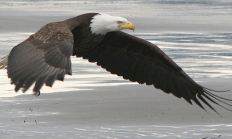
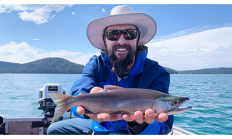
The McKenzie River originates in the Cascade Range and empties into the Willamette River near Eugene, which then flows northward into the Columbia River. McKenzie Hatchery was first constructed in 1938 and rebuilt in 1975. Today, 30 rearing ponds, a visitor's center, spawning room, egg incubation facility, office, feed storage, shop area, fish ladder and picnic area are the main components of the facility layout. McKenzie Hatchery is temporarily closed to comply with Oregon Department of Environmental Quality permit conditions. Visitors should be aware that no fish are present in the facilities' production raceways and show ponds. Fish have been…
Wallowa began operation in 1920 as a resident trout hatchery. In 1985, the hatchery was renovated as part of the Lower Snake River Compensation Program (LSRCP) – a program to mitigate for spring Chinook and summer steelhead losses caused by the four federal dams constructed on the lower Snake River. Wallowa Hatchery is used for adult collection, spawning, acclimation and release of summer steelhead.
Piloted in 2014, the Tag Team program helps ODFW fish biologists better evaluate resident gamefish, bass, and stocked rainbow trout fisheries. It's also a chance for anglers to participate in fishery management and, perhaps, come away with up to $50.
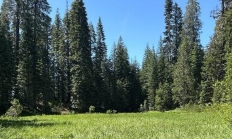
Jewell Meadows Wildlife Area is located in the Oregon Coast Range Mountains, in the northwestern part of the state. The wildlife area was established in 1969, with an initial purchase of 183 acres. It now encompasses 1,114 acres. The wildlife area’s purpose is to protect and enhance habitat to benefit native wildlife species, to reduce wildlife damage to adjacent properties, and to provide the public with an opportunity to observe wildlife in a natural setting.
The development of the WWA began in 1953 with the acquisition of five parcels of land consisting of 4,400 acres. The Department continued to purchase additional lands, acquiring 1,670 acres in 1954 and another 760 acres in 1955. From 1961 to the present the department has purchased or received another 4,219 acres. The wildlife area currently consists of 12,419 acres owned by the department. In addition, the department, through agreements with the Bureau of Land Management (BLM), manage 1,329 acres within or adjacent to the wildlife area. The WWA was established in response to continuing complaints from landowners concerned with…
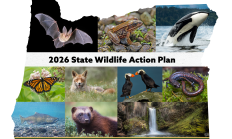
SALEM, Ore.—ODFW is excited to announce that Oregon's State Wildlife Action Plan (SWAP) has been officially approved by the U.S. Fish and Wildlife Service. This milestone marks the final step in adopting the 2026 SWAP, a science‑based roadmap to maintain healthy fish and wildlife populations, prevent further declines of at‑risk…
Teach, restore, study, host, build, communicate When you sign up to be an ODFW volunteer, you are helping to protect Oregon's fish and wildlife, manage ODFW properties and spark a passion in others to hunt, fish and appreciate the outdoors building and enhancing fish, wildlife and their habitats for current and future generations. Donating even one day a year is all it takes to be helpful. We can be as flexible as possible to find the right opportunity to fit your schedule. Join thousands of volunteers by sharing your time and talents with ODFW.


Gnat Creek Hatchery was constructed in 1960 as part of the Columbia River Fisheries Development Program (Mitchell Act)—a program to enhance declining fish runs in the Columbia River Basin. The facility is used for egg incubation and rearing of spring Chinook and winter steelhead. Most of the production is released off-station. The hatchery is an easy drive toward Oregon’s coast on Highway 30 and a visitor-friendly place for the entire family. With lots to do, located on beautiful Gnat Creek and tucked away amid the rainforest, this is a worthwhile stop on the way to the coast.
SAUVIE ISLAND WILDIFE AREA, Ore.— To manage ongoing traffic and parking problems at Sauvie Island Wildlife Area's beaches, ODFW is introducing a new limited-entry parking pilot program. Starting July 4, vehicles will need a free Sauvie Island Beaches Pass in addition to the Wildlife Area Parking Permit ($10 daily) to…
