
Search myodfw.com
Showing 161 - 180 of 897 results
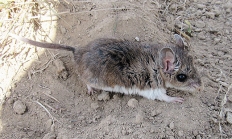
The Northern grasshopper mouse is a stockily built mouse with a thick tail. The dorsal pelage is dark sepia long the midline grading moderately sharply to a light tannish along the sides. The ventral pelage is white. A dark sepia line extends across the face between the eyes. The ears are thinly furred, sepia on the external surface and light grayish-tan on the internal surface. The feet and tip of the tail are white. In Oregon, Northern grasshopper mice have been found in grassland and desert areas in Crook, Deschutes, Gilliam, Harney, Jefferson, Klamath, Lake , Malheur, Morrow, Sherman, Umatilla…
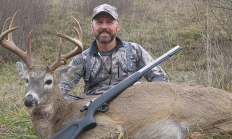
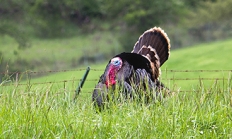
Wild turkeys are not native to Oregon but were first successfully introduced in 1961. Since then more than 10,000 turkeys have been transplanted to locations all over Oregon and continue to thrive in most game units through the state. Turkey hunting is a popular activity in Oregon and has grown more than ten-fold since a statewide spring season opened in 1987. Oregon’s six-week spring turkey season is among the most liberal in the United States. Hunters have an opportunity to take up to three gobblers during the spring season and up to two birds during the fall, one of which…

Even in the most barren and desolate reaches of the Great Basin, the cheerful song of the hardy Rock wren will contradict any notion that the desert is devoid of life. This specialist of cracks and crevices can be found almost anywhere there is exposed rock. One of its most unique features is the mysterious pebble path is constructs from its stone-cave nest to the outside entrance. Drab and pale overall, the gray head and back, white to tawny underparts, and gray tail with buff-tipped corners distinguish this species from other wrens. The Rock wren is a common breeder in…

The graceful short-distance flight of a bright male bluebird is a memorable sight. The Mountain bluebird haunts open country, providing an irreplaceable color note in the gray sagebrush landscape; particularly when in migration their brilliant blues flash in the desert sun in startling contrast to the prevailing dull colors of most other birds. Like other bluebirds, it readily accepts nest boxes. This accessibility, along with its sky-blue color, have always endeared it to nature lovers and made it a favorite of many. In Oregon, it is a common breeder and transient east of the Cascade summit except in treeless expanses…

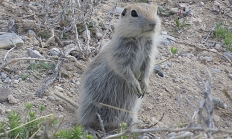
The Piute ground squirrel is the other of the two small gray ground squirrels without stripes or spots. In Oregon, it occurs south of Sheepshead and Cedar mountains in Malheur County. It is a species of the High Desert and commonly occurs in habitats in which the dominant shrub is big sagebrush, saltbush, or greasewood. It is commonly associated with rocky outcrops, levees, railroad embankments, ditchbanks, and sand dunes. Some occur in fencerows and edges of alfalfa and small-grain fields. These ground squirrels are usually active for three to five months each year. They emerge from their hibernacula in February…

The Turkey vulture, known locally as a "buzzard," is a common sight spring through fall throughout the state, except in the highest mountains and featureless desert expanses in summer where they are uncommon. Seeing Turkey vultures returning is a welcome sign of spring. Turkey vultures are large-winged soaring birds with overall dark plumage except for a silvery sheen on the undersides of the flight feathers. Adults have small, featherless, red heads, while juveniles have gray heads. The Turkey vulture is a common to abundant transient throughout the state and an uncommon to common summer resident except in high mountains. It…

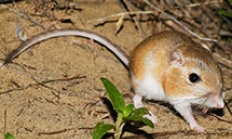
The Ord's kangaroo rat is a medium-sized kangaroo rat with awl-shaped lower incisors. It is the lightest-colored kangaroo rat in Oregon; overall the dorsum is a rich buff with gray overtones. The venter, upper lip, feet and side of the tail are white; there is a white spot above each eye and behind each ear; and a white stripe crosses each thigh. The moustache, eyelids, and ears are blackish. In Oregon, it occurs east of a line connecting The Dalles, Hood River County; Sisters, Deschutes County; and Lakeview, Lake County except in the Ochoco, Blue, and Wallowa mountains. Although occasionally…
These large toads are well camouflaged in earth tones with dry bumpy skin that aids in protection from predators. Their color can be highly variable among individuals ranging from gray or reddish-brown to yellow or green. They have a light colored stripe that runs along the center of the back. Adult female toads are larger than males, growing to five inches in length. They live mainly on land in a range of habitats from forests to mountain meadows to desert flats. During the non-breeding season, they are nocturnal. They dig their own burrows in loose soil, use existing burrows or…


Large and primarily white, the American white pelican has the longest wingspan of any bird in Oregon. It also has an enormous orange bill, and flies with neck withdrawn. During the breeding season the top of the bird's head becomes dusted with black and a horn grows on the upper mandible; this projection serves as a target for aggressive encounters to avoid injury to the essential bill pouch, but is shed after the eggs are laid. This pelican makes unusually long flights for feeding and migration, and at great distances, soaring flocks have been reported as UFOs. In Oregon, it…

The original Riverside Tract is adjacent to the Malheur River near the former railroad community of Riverside. It was purchased from the Blaylock family in 1976 and has been administered by ODFW as Riverside Wildlife Area since that time. The purpose of this initial acquisition was to provide public fishing and hunting access to a previously privately held portion of the Malheur River canyon. In addition, this purchase provided the opportunity for the department to emphasize fish and wildlife habitat management in the river canyon. Additional acres were added to this tract in 1977. In 1972, the department purchased a…
Coquille Valley Wildlife Area was initially established in 2013 with two equally important primary objectives; (1) To protect, enhance, and restore fish and wildlife habitats located on the WA, and (2) to provide a wide variety of wildlife-oriented recreational and educational opportunities to the public.
The wild turkey is the largest game bird in North American with mature males weighing upwards of 20 pounds and standing 40 inches tall. These large terrestrial birds are generally dark brown to black in appearance but iridescent color in feathers ranging from gold and copper to green and black gives a metallic appearance, particularly in full sunlight. Males and about 10 percent of females sport a unique beard of keratinous filament that protrudes from the junction of the breast and neck. Beards grow continuously but rarely exceed 10 inches in length. Females are smaller and duller in appearance. Densities…
The bright yellow, red, and black plumage of the male Western Tanager, so conspicuous in open situations is very obscure in forested areas where it tends to blend into the shaded foliage. The species perhaps is best known in migration when it visits city parks, orchards, and other open urban and suburban areas. It is attracted to birdbaths but seldom to bird feeders. It breeds in open coniferous forests and mixed coniferous and deciduous woodlands, primarily in mountains. They usually nest in conifers - rarely deciduous trees - at varying heights, usually well out on a branch, often at the…

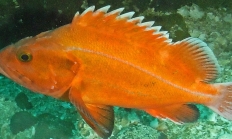
Features: They are orange red to orange yellow with a bright yellow eyes. Their fin tips may be black. On the top of their head they have a pair of rough ridges. Yelloweye, canary and vermilion rockfish can look similar. See this rockfish identification article for distinguishing features of each species Take the "Yelloweye Rockfish or Not?" quiz Habitat: Juveniles and subadults prefer shallower water than adults, and are associated with rocky reefs,and kelp canopies. Adults move into deeper water as they grow, and prefer rocky bottoms. Technique: Yelloweye rockfish are currently prohibited in the catch. Anglers are required to…
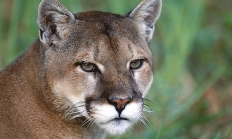
The skull of the cougar, also know as mountain lion, is massive; the canine teeth are large and slightly recurved. The heel pads of both fore and hind feet have three lobes on the posterior margin which are useful in separating the tracks of a cougar from those of other felids, such as the lynx. The dense and soft dorsal fur typically is tawny, but slate gray and reddish brown individuals are known. The venter is whitish. The back of the ears and tip of the very long tail are brownish black. The upper lip is white. Young cougars are…
SALEM, Ore. – Last week in a Corvallis neighborhood, residents worked together to ensure a newborn fawn spotted on a grass strip between a sidewalk and road was left alone. By early evening, its mother returned for her fawn. ODFW biologists praised the residents for recognizing that does often leave…

This active and often unwary woodpecker, the smallest in North America, is generally the most often seen black and white woodpecker in human-settled areas. A preference is shown for decayed wood for nesting, though sound wood is also utilized. Nest sites are usually 10 to 12 feet off of the ground. It is found mostly at low to moderate elevations in deciduous and mixed deciduous-coniferous forests throughout much of the state, and less often in coniferous forests. Hear the call of the Downy woodpecker Photo by ©Keith Kohl, ODFW
